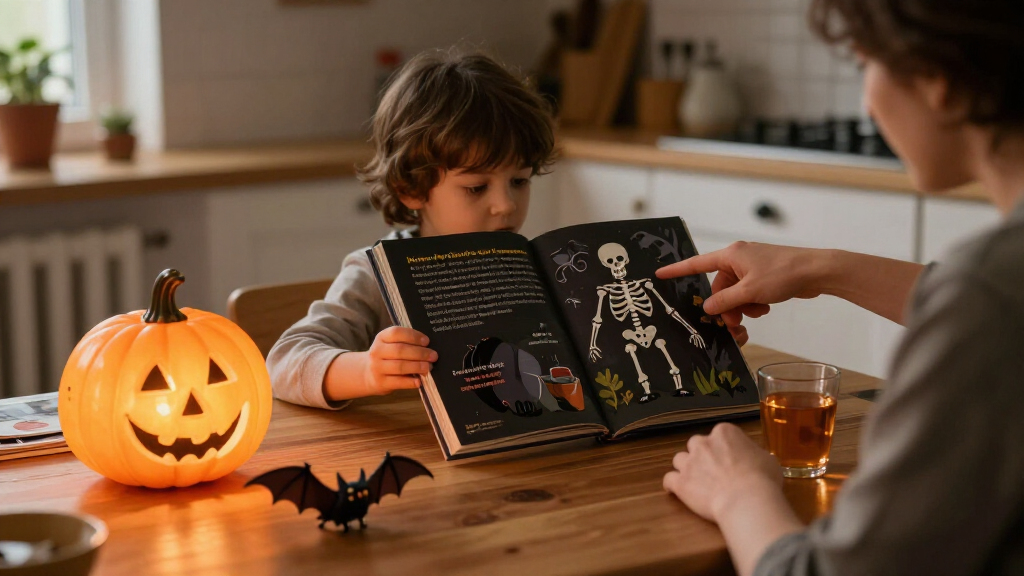
For a mix of spooky fun and useful learning, my strongest picks are Weird But True! Halloween for fact-loving kids, Halloween (National Geographic Kids Readers, Level 1) for a first nonfiction reading step, and School Zone Spooky Halloween Surprises Workbook for preschoolers who learn by doing. Each serves a different kind of young reader: quick facts, supported nonfiction, or hands-on practice. The tradeoff is that a workbook builds early skills through activities rather than stories, while the story collections offer more reading practice but less clearly described factual learning.

Prime made for students and young adults
- Fast, free delivery for dorm and study essentials
- Prime Video and Amazon Music included
- Member-only deals
I ranked these books by how clearly they connect spooky subject matter with a child-friendly learning purpose, how well their stated reading levels and age ranges support independent or shared reading, and how much variety each offers. The product details supplied for some titles are sparse, so I distinguish confirmed features from what a buyer may want to check before choosing. My picks are aimed at families looking for Halloween-season reading that can also support literacy, curiosity, or early learning—not simply the scariest story.
Key Takeaways
- Best for fact-led curiosity: Weird But True! Halloween offers 300 spooky facts, making it the clearest pick for children who prefer short nonfiction snippets to a continuous story.
- Best for preschool practice: School Zone Spooky Halloween Surprises Workbook combines coloring, mazes, hidden pictures, dot-to-dots, stickers, and learning activities for ages 3 to 6.
- Best for a first nonfiction step: Halloween (National Geographic Kids Readers, Level 1) has the most beginner-oriented reading label in this lineup, though the supplied details do not confirm its specific content or features.
- Best for a small story library: My Favorite Spooky Stories Box Set bundles five Halloween books at I Can Read Level 2, giving a beginning reader several titles in one package.
- Best for a single spooky story collection: In a Dark, Dark Room and Other Scary Stories is listed for ages 4–8 and I Can Read Level 2; it suits readers seeking several scary stories, not a fact workbook.
| Weird But True! Halloween: 300 Spooky Facts to Scare You Silly |  | Best for Curious Fact Collectors | Format: Halloween-themed fact collection | Fact count: 300 | Theme: Spooky Halloween facts | VIEW LATEST PRICE | See Our Full Breakdown |
| School Zone Spooky Halloween Surprises Workbook |  | Best for Preschool Learning Through Play | Format: Activity workbook | Pages: 48 | Recommended ages: 3 to 6 | VIEW LATEST PRICE | See Our Full Breakdown |
| Halloween (National Geographic Kids Readers, Level 1) |  | Best for a First Leveled Nonfiction Read | Format: Leveled reader | Series: National Geographic Kids Readers | Reading level: Level 1 | VIEW LATEST PRICE | See Our Full Breakdown |
| My Favorite Spooky Stories Box Set: 5 Halloween Books for Beginning Readers (I Can Read Level 2) |  | Best for a Multi-Book Reading Set | Format: Box set | Number of books: 5 | Reading level: I Can Read Level 2 | VIEW LATEST PRICE | See Our Full Breakdown |
| In a Dark, Dark Room and Other Scary Stories: A Spooky Story Collection for Children (Ages 4–8) (I Can Read Level 2) |  | Best for a Defined Age-Range Story Collection | Format: Spooky story collection | Age range: 4–8 years | Reading level: I Can Read Level 2 | VIEW LATEST PRICE | See Our Full Breakdown |
| spooky educational books for kid | Format | Theme | Reading level | Age range |
|---|---|---|---|---|
| Weird But True! Halloween: 300 | Halloween-themed fact collection | Spooky Halloween facts | Not specified in supplied details | Not specified in supplied details |
| School Zone Spooky Halloween S | Activity workbook | Halloween | Not specified in supplied details | — |
| Halloween | Leveled reader | Halloween | Level 1 | Not specified in supplied details |
| My Favorite Spooky Stories Box | Box set | Halloween | I Can Read Level 2 | Not specified in supplied details |
| In a Dark | Spooky story collection | Scary stories | I Can Read Level 2 | 4–8 years |
More Details on Our Top Picks
Weird But True! Halloween: 300 Spooky Facts to Scare You Silly
This is my first choice for a child who learns by asking questions and enjoys information in small, shareable bites. Its clearest distinction is the promise of 300 spooky facts: rather than asking a reader to follow a plot, it offers a large collection of Halloween-focused material. That format can suit kids who dip in and out, read a few items aloud, or like passing surprising bits along to family. Among these five books, it makes the strongest explicit claim to factual learning.
The comparison with the National Geographic Kids Level 1 reader is useful. That title is framed as a leveled reading choice, while this book is framed around fact count; I would choose this one for variety and curiosity, and the Level 1 title when structured beginner nonfiction reading is the priority. Against the two I Can Read Level 2 collections, this is less about sustained story practice and more about stopping points. The supplied details do not identify the topics, reading level, layout, or factual depth, so I would not assume all 300 entries are equally suited to a particular age.
Its limitation is also its format: facts can be fun, but a collection of snippets may not provide the narrative momentum or sequential reading practice of a storybook. The title promises spooky material, so it may not suit a child who avoids Halloween scares, even if the information format feels less intense than a scary-story collection. For children who want spooky knowledge more than spooky plots, it is the most distinctive educational pick here; for phonics practice or preschool activities, another book is a better match.
Pros:- Includes a stated collection of 300 spooky facts.
- Halloween focus gives the facts a seasonal theme.
- Fact-led format differs from the lineup’s story collections and workbook.
- Short-form information may suit children who prefer brief reading sessions.
Cons:- The supplied information does not specify age range or reading level.
- No details are provided about topics, page count, illustrations, or fact organization.
- A fact collection may offer less sustained story-reading practice than the Level 2 titles.
Best for: Children who enjoy surprising Halloween information, short reading sections, and sharing facts with an adult or sibling.
Not ideal for: Beginning readers who need clearly stated leveled support, children who prefer continuous stories, or families wanting verified topic and age details before buying.
- Format:Halloween-themed fact collection
- Fact count:300
- Theme:Spooky Halloween facts
- Reading level:Not specified in supplied details
- Age range:Not specified in supplied details
- Page count:Not specified in supplied details
- Publisher series:Weird But True!
Our verdict“I recommend it for curious kids who want spooky facts in place of a traditional Halloween story.”
School Zone Spooky Halloween Surprises Workbook
For ages 3 to 6, I rank this workbook highly because its educational purpose is visible in the activity list. Coloring, mazes, hidden pictures, dot-to-dots, stickers, and other learning activities provide different ways to engage a young child, instead of relying on independent reading. That variety gives caregivers options for a short tabletop activity, a quiet stretch of practice, or shared Halloween-themed fun. It is the most hands-on choice in this group.
Compared with the books labeled I Can Read Level 2, this is better suited to children who are still building early skills and may not yet read stories independently. It also differs from Weird But True! Halloween: the fact collection invites children to read or listen for information, while this workbook asks them to mark, find, trace, or color. Those formats support different kinds of attention. The 48-page length gives a buyer a concrete sense of the workbook’s scope, though the supplied description does not identify how many pages are devoted to each activity or whether skills progress in a particular order.
This is not a story collection, so it will disappoint a child whose main request is a spooky tale to read at bedtime. Stickers and activity pages also make it more of a consumable, sit-down item than a book intended for repeated narrative reading. Its Halloween framing adds seasonal appeal, but the learning value depends on whether the listed activities match the child’s interests and current abilities. For preschool and kindergarten practice with a spooky wrapper, it is the most clearly age-targeted option; for a child ready to read full stories, I would move to one of the leveled books.
Pros:- Lists several activity types, including mazes and hidden pictures.
- Specifies a recommended age range of 3 to 6.
- Designed for preschool and kindergarten learners.
- Forty-eight pages offer a defined activity-workbook format.
Cons:- It is an activity workbook rather than a collection of stories.
- The supplied details do not describe skill progression or activity difficulty.
- Its Halloween theme may make it less appealing as a year-round learning resource.
Best for: Preschool and kindergarten children ages 3 to 6 who enjoy coloring, puzzles, stickers, and short learning activities.
Not ideal for: Children looking for a read-aloud story collection or beginning readers who want sustained independent reading practice.
- Format:Activity workbook
- Pages:48
- Recommended ages:3 to 6
- Grade levels:Preschool and kindergarten
- Activities:Coloring, mazes, hidden pictures, dot-to-dots, stickers, and learning activities
- Theme:Halloween
- Reading level:Not specified in supplied details
Our verdict“I would choose this for young children who learn best by coloring, finding, tracing, and completing activities.”
Halloween (National Geographic Kids Readers, Level 1)
The Level 1 label makes this my pick for a child beginning to read short nonfiction with support. In this lineup, it provides a different route into spooky learning from the fiction-forward I Can Read Level 2 titles: its series and level positioning suggest a beginner reader format, rather than a collection of Halloween stories. For families who want the subject matter to carry a child into early informational reading, that distinction matters more than simply having a spooky cover.
I place it below the workbook and fact collection because the supplied product information is unusually limited. The title confirms a Halloween subject and a National Geographic Kids Readers Level 1 designation, but no description, age range, page count, or specific content details were provided. I can therefore identify its likely role as a leveled reader, but I cannot make claims about particular topics, photographs, vocabulary features, or how much factual material it contains. Compared with Weird But True! Halloween, the clearest known difference is the reading-level structure, not the breadth of facts.
That gap should guide a buyer’s choice. If a child is ready to practice reading at Level 1, this may be a more targeted starting point than Level 2 story collections. If the goal is guaranteed activity variety, the School Zone workbook lists far more concrete features; if the child wants a known quantity of facts, the Weird But True title specifies 300. I would check the full edition details and any sample pages before choosing it for a particular reader. Its strongest case is beginner nonfiction positioning, while its sparse description makes it harder to compare on content depth.
Pros:- Clearly identified as a National Geographic Kids Readers title.
- Level 1 designation signals a beginner-oriented reading option.
- Halloween subject connects the reading choice to spooky seasonal interests.
- Offers a nonfiction-oriented alternative to the lineup’s story collections.
Cons:- The supplied product description contains no further content details.
- Age range, page count, and specific educational features are not provided.
- The available information is too limited to compare its factual depth with the 300-fact collection.
Best for: A child starting leveled nonfiction reading who is interested in Halloween and benefits from a Level 1 reader designation.
Not ideal for: Buyers who need a confirmed age range, page count, detailed topic list, or activity features before selecting a book.
- Format:Leveled reader
- Series:National Geographic Kids Readers
- Reading level:Level 1
- Theme:Halloween
- Age range:Not specified in supplied details
- Page count:Not specified in supplied details
- Specific content:Not specified in supplied details
Our verdict“I would shortlist it for a beginner nonfiction reader, then verify the edition details before purchase.”
My Favorite Spooky Stories Box Set: 5 Halloween Books for Beginning Readers (I Can Read Level 2)
This boxed set makes sense when the child wants more than one Halloween story and is ready for I Can Read Level 2. Five books give a family several separate reading choices in one set, which can help keep a young reader interested across multiple short sessions. It is the broadest story bundle in the lineup: the other story collection, In a Dark, Dark Room, also includes multiple spooky stories, but the supplied description does not give a number of separate books. Here, the five-book count is explicit.
Compared with the Level 1 National Geographic Kids reader, this set is a better fit for a child whose focus is story reading at the stated Level 2 stage, not a first nonfiction step. It also differs from the single-volume scary-story collection by offering five books as a box set, though the available information does not list their individual titles or describe how varied their plots are. That makes the bundle’s breadth clear, but leaves the content itself less easy to evaluate before purchase.
The main tradeoff is that multiple stories do not automatically make the set more educational than a focused reader or workbook. The supplied details confirm a beginning-reader label and Halloween theme, but do not spell out specific literacy exercises, vocabulary support, age range, or the intensity of the scares. Children who need a Level 1 entry point may find Level 2 less appropriate, and readers hoping for factual Halloween learning should choose the facts or nonfiction reader instead. For a developing reader who wants several seasonal stories, this is my strongest bundle option, provided the child is ready for the stated level.
Pros:- Includes five Halloween-themed books in one box set.
- Identifies a reading level of I Can Read Level 2.
- Offers multiple story choices for repeated seasonal reading.
- Designed for beginning readers rather than only for read-aloud use.
Cons:- The supplied details do not name or describe the five individual books.
- No age range or specific literacy features are provided.
- Story format offers less direct factual learning than the nonfiction-oriented picks.
Best for: Beginning readers who are ready for I Can Read Level 2 and want several Halloween storybooks in one set.
Not ideal for: Children needing Level 1 support, families seeking nonfiction facts, or buyers who want detailed descriptions of each included story.
- Format:Box set
- Number of books:5
- Reading level:I Can Read Level 2
- Theme:Halloween
- Audience:Beginning readers
- Story details:Individual titles and plots not specified in supplied details
- Age range:Not specified in supplied details
Our verdict“I recommend this set for Level 2 readers who want a small collection of Halloween stories rather than one book.”
In a Dark, Dark Room and Other Scary Stories: A Spooky Story Collection for Children (Ages 4–8) (I Can Read Level 2)
This is the most clearly age-framed spooky story collection in the lineup: its supplied description names children ages 4–8 and identifies the book as I Can Read Level 2. That pairing gives parents a more specific starting point than the boxed set, whose age range is not supplied. I would choose this title for a child who wants several scary stories in one book and is ready for the stated reading level, particularly when an age guide helps narrow the options.
Compared with My Favorite Spooky Stories Box Set, this collection offers a defined age range but not a stated count of separate books. The box set, by contrast, explicitly includes five books, so it may suit families who value a bundled selection and multiple volumes. Both are Level 2 story options, while the National Geographic Kids title is Level 1 and is the more natural choice for a child beginning leveled nonfiction reading. The workbook and Weird But True collection are still more different: they focus on activities and facts rather than a sequence of scary tales.
The tradeoff is that the information supplied does not explain how frightening the stories are, how many stories are included, or what reading support appears on the page. The title indicates a scary story collection, so it may be a poor match for sensitive readers even if an adult reads along. It also offers less clearly described educational variety than the workbook and does not promise a factual learning component. Its advantage is the combination of age guidance and Level 2 story positioning; choose it for reading practice and spooky fiction, not as a Halloween facts resource.
Pros:- Provides a stated age range of 4–8 years.
- Identifies the reading level as I Can Read Level 2.
- Includes multiple spooky stories in one collection.
- Offers a more specific age guide than the boxed set’s supplied details.
Cons:- The supplied details do not state how many stories are included.
- Story intensity and reading-support features are not described.
- It focuses on fiction rather than explicit factual or workbook-style learning.
Best for: Children ages 4–8 who want a spooky story collection and are suited to I Can Read Level 2.
Not ideal for: Children sensitive to scary stories, readers who need Level 1 material, or families prioritizing facts and hands-on learning activities.
- Format:Spooky story collection
- Age range:4–8 years
- Reading level:I Can Read Level 2
- Theme:Scary stories
- Number of stories:Not specified in supplied details
- Series:I Can Read
- Story intensity:Not specified in supplied details
Our verdict“I would choose it for an age-guided Level 2 reader who wants scary stories in one collection.”
How We Picked
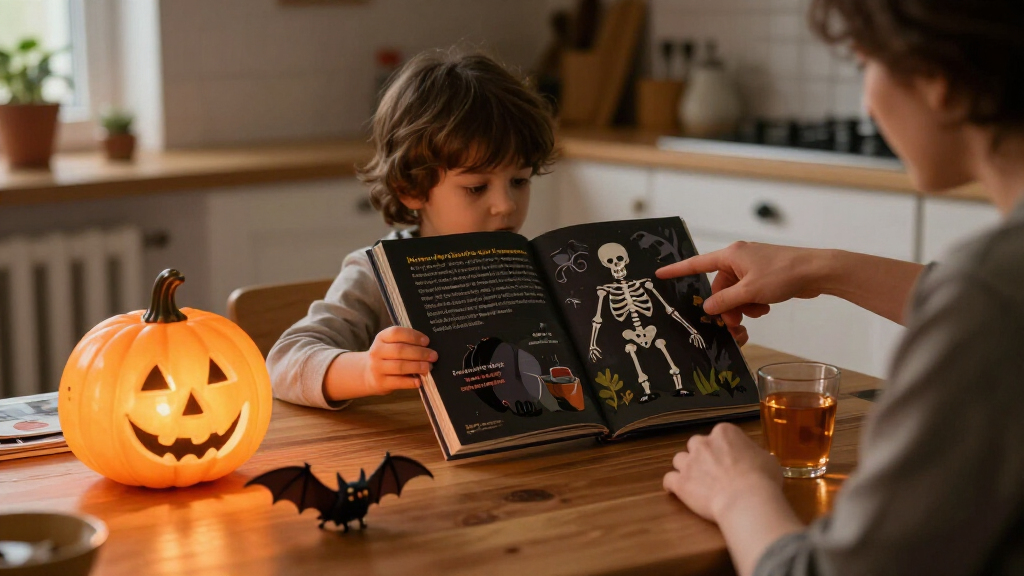
I sorted these five options by the kind of learning they appear to support, rather than treating every Halloween book as interchangeable. A child who is practicing decoding needs something different from a preschooler tracing a path through a maze or an older child who wants unusual facts. My ranking favors products with a clear, age-appropriate purpose and enough supplied detail to judge that purpose with confidence.
Literacy fit was one factor. The two I Can Read Level 2 titles are positioned for developing readers, while the National Geographic Kids title is labeled Level 1. Those labels help frame a choice, but they do not tell me every child’s actual reading ability; adult support, confidence, and familiarity with vocabulary still matter. I ranked the Level 1 title as the clearer entry point to nonfiction reading, and the Level 2 titles as stronger choices for children ready for more independent story reading.
I also looked at learning format and variety. The workbook lists concrete activities and an age range, so families can see how it may occupy and engage preschool and kindergarten learners. The fact book gives a specific count of 300, but the supplied information does not say what subjects those facts cover or how they are organized. The story titles promise spooky reading, yet they do not provide detailed information about story length, illustration style, or educational features. I avoid filling those gaps with assumptions.
Finally, I weighed spooky appeal against practical fit. Halloween themes can make reading and practice feel seasonal and inviting, but a child who dislikes scares may prefer facts or gentle activities to scary tales. My order gives priority to clear educational value and fit, then to breadth of reading material. These are editorial recommendations based on the supplied descriptions and specifications, not claims of firsthand use. Before buying, I would check the edition’s full description and any age guidance if a child is sensitive to frightening content.
| spooky educational books for kid | Format | Theme | Reading level |
|---|---|---|---|
| Weird But True! Halloween: 300 | Halloween-themed fact collection | Spooky Halloween facts | Not specified in supplied details |
| School Zone Spooky Halloween S | Activity workbook | Halloween | Not specified in supplied details |
| Halloween | Leveled reader | Halloween | Level 1 |
| My Favorite Spooky Stories Box | Box set | Halloween | I Can Read Level 2 |
| In a Dark | Spooky story collection | Scary stories | I Can Read Level 2 |
Factors to Consider When Choosing Spooky Educational Books For Kids
I would choose by the learning activity a child is most likely to enjoy, then use age and reading-level information to narrow the list. “Spooky educational” can mean early pencil-and-paper practice, nonfiction facts, or literacy through scary stories; these books do not teach in the same way.
Match the format to the child’s learning style
A child who likes to draw, spot objects, or solve simple puzzles may get more from School Zone Spooky Halloween Surprises Workbook than from a storybook. Its listed coloring, mazes, hidden pictures, dot-to-dots, stickers, and learning activities give it the broadest hands-on format. A child who asks for facts may prefer Weird But True! Halloween, whose stated 300-fact count signals a collection built for curiosity. Kids who want characters and plots are better served by the two Level 2 story options. I would treat these formats as alternatives, not assume one is a substitute for another.
Use reading levels as a guide, not a guarantee
The Level 1 label on Halloween (National Geographic Kids Readers) points to a more beginner-oriented reading choice than the two I Can Read Level 2 titles. A level label can help a buyer shortlist books, but each child’s confidence, vocabulary, and need for adult help vary. The two Level 2 books share a reading label yet differ in packaging: one is five Halloween books in a box, while the other is a single collection listed for ages 4–8. If a child is between levels, previewing a sample or reading together can help avoid a frustrating jump.
Decide whether the goal is facts or story practice
For informational reading, the facts title is the most explicit choice because it promises 300 spooky facts; the National Geographic Kids book is the more clearly leveled nonfiction option based on its title and series designation. The supplied details do not describe the latter’s specific content, so buyers who need a topic list should check the full listing. For story practice, the box set offers five separate books, while In a Dark, Dark Room gives a named collection and an age range. Neither story description lists explicit fact-learning features, so I would select them primarily for reading enjoyment and literacy practice.
Check comfort with spooky material
“Spooky” means different things to different children. A young reader may enjoy Halloween colors and puzzles but dislike scary plots, while another may actively seek ghost stories. The workbook gives a family a non-story route into the seasonal theme; facts may also feel less like a sustained scary narrative, though the title still promises spooky material. The two story collections are the clearest fiction choices, and the supplied descriptions do not explain how intense their stories are. If a child is sensitive, I would check sample pages or read the first story together rather than relying on the title or age label alone.
Read sparse product details carefully
Not every listing supplies the same amount of information. The workbook has an age range, grade levels, page count, and activity list; the box set states its number of books and reading level; In a Dark, Dark Room supplies an age range and level. The fact collection states its fact count, while the National Geographic Kids entry only confirms the Halloween subject and Level 1 series designation. Where information is missing, I avoid inferring page count, illustration style, exact difficulty, or educational content. Check the edition’s full listing when one of those details matters to your decision.
Frequently Asked Questions
Which book is best for a preschooler who is not reading independently yet?
I would start with School Zone Spooky Halloween Surprises Workbook for a child ages 3 to 6 who enjoys hands-on activities. Its listed coloring, mazes, hidden pictures, dot-to-dots, stickers, and learning activities do not depend on a child reading a whole story alone. For a preschooler who prefers being read to, a story collection may still work with adult help, but the supplied story details do not describe how much assistance a child may need.
Which option offers the clearest factual learning angle?
Weird But True! Halloween is the clearest fact-led choice because its title specifies 300 spooky facts. That makes its learning format easier to identify than the story collections. Halloween (National Geographic Kids Readers, Level 1) may suit a child practicing beginner nonfiction reading, but the supplied information does not describe its topics or educational features. I would compare the full descriptions if the exact subject matter is a deciding factor.
Should I choose the five-book set or In a Dark, Dark Room?
Choose My Favorite Spooky Stories Box Set if a child wants several separate Halloween books and is ready for I Can Read Level 2; the set explicitly contains five books. Choose In a Dark, Dark Room and Other Scary Stories if the stated age range of 4–8 helps you select a fit and one collected volume is preferable. The set does not provide an age range in the supplied details, while the collection does not specify how many stories it contains.
Are these books suitable for children who are easily frightened?
That depends on the child and the specific content. The workbook is the clearest non-story option, while the fact collection may suit a child who prefers brief information to a continuous scary plot. Both story titles identify spooky or scary stories, but the supplied details do not describe their intensity. For a sensitive reader, I would preview sample pages or read along before handing over a story collection as independent reading.
Can these books support reading practice as well as Halloween fun?
The two I Can Read Level 2 titles are the most direct choices for story-reading practice at their stated level, and the National Geographic Kids book is labeled Level 1 for a beginner-oriented route. The workbook supports a different kind of early learning through listed activities rather than continuous reading. The fact collection may encourage informational reading, but its level and age range are not included in the supplied details, so I would check its full listing for a child’s particular reading stage.
Conclusion
My final choice depends on the child’s age, reading confidence, and preferred way to learn. For preschool and kindergarten activity practice, I would choose School Zone Spooky Halloween Surprises Workbook. For a child who wants bits of spooky information, Weird But True! Halloween is the strongest facts-first pick. A beginner ready for leveled nonfiction can consider Halloween (National Geographic Kids Readers, Level 1), though I would verify its full content details first.
For a developing reader who wants several seasonal stories, I would pick My Favorite Spooky Stories Box Set because it clearly includes five Level 2 books. For a child ages 4–8 who prefers one named story collection, In a Dark, Dark Room offers the more explicit age guide. Neither story choice is the best fit for factual learning, and both merit a content check for children sensitive to scares. Matching the book to the kind of learning a child enjoys will matter more than choosing the spookiest-sounding title.
Halloween Picks
halloween
As an affiliate, we earn on qualifying purchases.