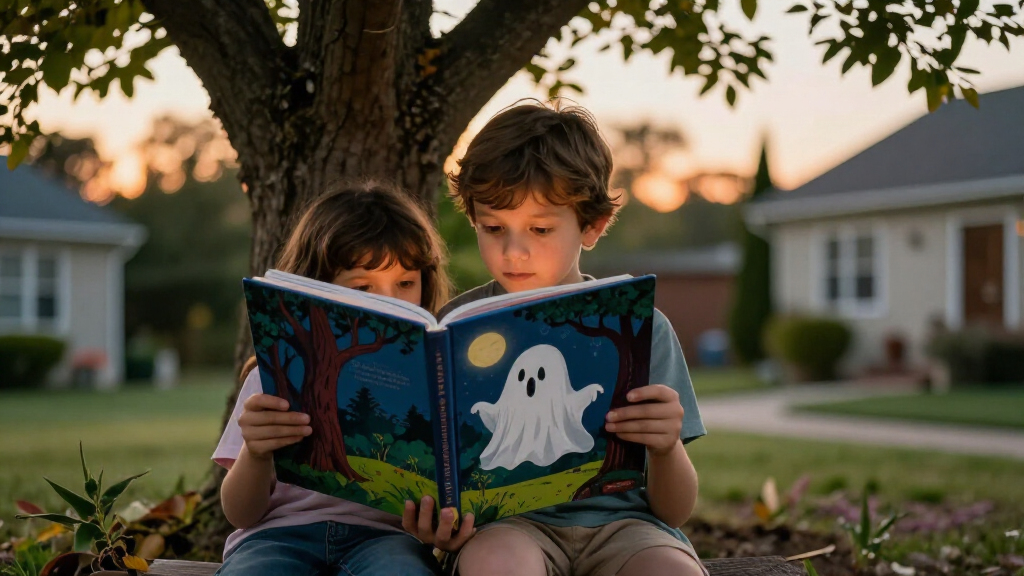
How to Make Friends with a Ghost is my best overall pick for children who want a gentle, imaginative story with room to talk about friendship and empathy. For early independent readers, In a Dark, Dark Room and Other Scary Stories pairs short tales with an accessible reading level, while Ghost Stories for Kids Ages 9–12 suits older children seeking more suspense. The main tradeoff is between a reassuring, age-friendly read and scarier stories that may hold an older reader’s attention but unsettle a sensitive child. Some books support literacy or emotional discussion more directly than they teach factual history or science, so “educational” can mean different things here. Read on for my full comparison of all 12 books, including who each one suits and where each has limitations.

Prime made for students and young adults
- Fast, free delivery for dorm and study essentials
- Prime Video and Amazon Music included
- Member-only deals
Key Takeaways
- How to Make Friends with a Ghost stands out for discussion of friendship and empathy; it is a better fit for gentle reflection than for readers seeking traditional scares.
- In a Dark, Dark Room and Other Scary Stories is the clearest match for early reading practice, while older children may want longer or more suspenseful tales.
- Ten Tiny Ghosts and Ten Timid Ghosts are aimed at younger children; their simple storytelling and playful tone are not substitutes for a substantial collection for older readers.
- True Ghost Stories for Kids, Don’t Read This Book Before Bed, and Campfire Ghost Stories lean toward spooky entertainment, so adults should check the intensity and framing before sharing them with sensitive children.
- The roundup spans picture books, early readers, and collections, showing that age guidance, reading stamina, and the kind of learning a family wants matter more than the word “ghost” on the cover.
| Ten Timid Ghosts (Read With Me Paperbacks) |  | Best for Counting-Along Read-Alouds | Format: Paperback | Series or edition label: Read With Me Paperbacks | Subject: Ghosts | VIEW LATEST PRICE | See Our Full Breakdown |
| Ghost Stories for Kids Ages 9–12 |  | Best for Older Kids’ Group Storytelling | Format: Book | Age range: 9–12 years | Content type: Collection of short spooky stories | VIEW LATEST PRICE | See Our Full Breakdown |
| Campfire Ghost Stories for Ages 6–12 | 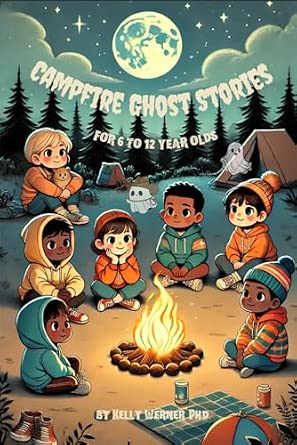 | Best for Broad-Age Campfire Reading | Recommended age: 6–12 years | Content type: Collection of ghost stories | Primary theme: Ghosts | VIEW LATEST PRICE | See Our Full Breakdown |
| Don’t Read This Book Before Bed: Thrills, Chills, and Hauntingly True Stories |  | Best for Kids Who Want a Scarier, True-Story Frame | Format: Not provided | Age range: Not provided | Content type: Collection of stories | VIEW LATEST PRICE | See Our Full Breakdown |
| The Big Book of Spooky Stories for Kids Ages 8–12 |  | Best for Spooky Stories with Life Lessons | Format: Book | Age range: 8–12 years | Content type: Collection of Halloween stories | VIEW LATEST PRICE | See Our Full Breakdown |
| Leo: A Ghost Story |  | Best for Gentle Ghost-Themed Reading | ASIN: 1452131562 | Title: Leo: A Ghost Story | Subject: Ghost story | VIEW LATEST PRICE | See Our Full Breakdown |
| How to Make Friends with a Ghost |  | Best for Friendship-Themed Ghost Reading | ASIN: 1101919019 | Title: How to Make Friends with a Ghost | Subject: Ghost story | VIEW LATEST PRICE | See Our Full Breakdown |
| Inspirational Ghost Stories for Kids |  | Best for Positive Lessons | ASIN: 1957515805 | Format: Book | Audience: Kids | VIEW LATEST PRICE | See Our Full Breakdown |
| The Tailypo: A Ghost Story |  | Best for a Traditional Ghost-Story Picture Book | ASIN: 0395300843 | Author: Paul Galdone | Format: Picture book | VIEW LATEST PRICE | See Our Full Breakdown |
| Ten Tiny Ghosts: A Ghost Book for Toddlers |  | Best for Toddlers | ASIN: B09ZCL1C43 | Title: Ten Tiny Ghosts: A Ghost Book for Toddlers | Recommended age: 3–6 years | VIEW LATEST PRICE | See Our Full Breakdown |
| True Ghost Stories for Kids: Fifty Spine-Tingling Ghostly Tales |  | Best for Story Variety | Title: True Ghost Stories for Kids: Fifty Spine-Tingling Ghostly Tales | ASIN: 1980260788 | Number of stories: 50 | VIEW LATEST PRICE | See Our Full Breakdown |
| In a Dark, Dark Room and Other Scary Stories: A Spooky Story Collection for Children (Ages 4–8) (I Can Read Level 2) |  | Best for Early Readers | Title: In a Dark, Dark Room and Other Scary Stories: A Spooky Story Collection for Children (Ages 4–8) (I Can Read Level 2) | ASIN: 0062643371 | Age range: 4–8 years | VIEW LATEST PRICE | See Our Full Breakdown |
| educational ghost story books for kid | Format | ASIN | Recommended age |
|---|---|---|---|
| Ten Timid Ghosts | Paperback | — | — |
| Ghost Stories for Kids Ages 9– | Book | — | — |
| Campfire Ghost Stories for Age | Not provided | — | 6–12 years |
| Don’t Read This Book Before Be | Not provided | — | — |
| The Big Book of Spooky Stories | Book | — | — |
| Leo: A Ghost Story | Not specified | 1452131562 | Not specified |
| How to Make Friends with a Gho | Not specified | 1101919019 | Not specified |
| Inspirational Ghost Stories fo | Book | 1957515805 | Not specified |
| The Tailypo: A Ghost Story | Picture book | 0395300843 | Not specified |
| Ten Tiny Ghosts: A Ghost Book | Book | B09ZCL1C43 | 3–6 years |
| True Ghost Stories for Kids: F | — | 1980260788 | — |
| In a Dark | Story collection | 0062643371 | — |
More Details on Our Top Picks
Ten Timid Ghosts (Read With Me Paperbacks)
I’d choose Ten Timid Ghosts for a younger child who enjoys repeating patterns and counting as part of a spooky story. Its paperback format makes it a straightforward pick for shared reading, while the title points to a timid, less threatening ghost premise rather than the older-child chills suggested by Ghost Stories for Kids Ages 9–12. That gentler approach can make it easier to use for a first Halloween storytime, though the supplied product details don’t confirm its plot, reading level, page count, or educational features. Compared with The Big Book of Spooky Stories for Kids Ages 8–12, this is the more focused choice, not a broad collection of ghosts, monsters, and life lessons. I’d skip it if you need verified age guidance or a book explicitly described as teaching skills.
Pros:- Paperback format is suited to hands-on shared reading
- The title signals a counting-oriented ghost premise
- Timid ghosts suggest a gentler entry point than campfire-focused collections
- A focused title may suit a short themed storytime better than a broad anthology
Cons:- No age range or reading-level information was provided
- The supplied details do not verify educational activities or specific learning outcomes
- No plot, length, or illustration details are available for judging fit
Best for: Adults seeking a paperback ghost-story title for shared reading with children who like counting themes and gentler spooky premises
Not ideal for: Buyers who need confirmed age recommendations, detailed educational content, or a collection of stories for older children
- Format:Paperback
- Series or edition label:Read With Me Paperbacks
- Subject:Ghosts
- Title-indicated story element:Ten timid ghosts
- Age range:Not provided
- Reading level:Not provided
Our verdict“Choose this paperback for a focused, likely gentler ghost-story read-aloud, but look elsewhere if verified age guidance or explicit learning content matters.”
Ghost Stories for Kids Ages 9–12
Ghost Stories for Kids Ages 9–12 has the clearest age targeting among these picks for readers ready for spooky tales beyond a very young child’s storytime. Its short-story format is described as suitable for sharing around a campfire or at Halloween, giving families a natural way to read one tale at a time. That makes it a better match for group storytelling than the single-title, paperback presentation of Ten Timid Ghosts. The tradeoff is that the supplied description gives no story count, reading-level detail, educational features, or guidance about how frightening the stories are. For a buyer prioritizing lessons or adventure themes, The Big Book of Spooky Stories for Kids Ages 8–12 has more explicit thematic information; this title is the more occasion-driven choice.
Pros:- Specifically intended for children ages 9–12
- Short stories suit reading one selection at a time
- Description names campfire and Halloween storytelling occasions
- Collection format offers more variety than a single focused story
Cons:- No story count or individual story summaries were provided
- The level of scariness is not specified
- No educational activities or learning outcomes are described
Best for: Families and group leaders seeking short ghost stories to share with children ages 9–12 at Halloween or around a campfire
Not ideal for: Adults shopping for younger or easily frightened children, or who need documented learning activities and story-content details
- Format:Book
- Age range:9–12 years
- Content type:Collection of short spooky stories
- Primary theme:Ghost stories
- Suggested occasions:Campfires and Halloween
- Story count:Not provided
Our verdict“Pick this collection for age-targeted group storytelling, but choose a title with clearer learning themes if education is the main priority.”
Campfire Ghost Stories for Ages 6–12
I’d shortlist Campfire Ghost Stories for Ages 6–12 when the setting matters as much as the stories: its description directly identifies campfire use and a broad intended age span. That makes it a more occasion-specific option than The Big Book of Spooky Stories for Kids Ages 8–12, whose description emphasizes Halloween, monsters, and life lessons. The wider age range may help a family or group with children at different stages share one book, but it also leaves open whether the tales work equally well for a six-year-old and a twelve-year-old. The available information doesn’t say whether the stories are short, how frightening they are, or what educational content they include. I’d treat it as a themed storytelling pick, not a verified learning resource.
Pros:- Intended for a broad 6–12 age range
- Campfire storytelling is explicit in the product description
- Ghost-story theme fits a focused seasonal or outdoor reading session
- May suit mixed-age groups better than a title aimed only at older children
Cons:- No further story or content details were supplied
- The broad age span does not clarify suitability for younger versus older readers
- Educational value and scariness level are not specified
Best for: Families, camp leaders, or educators looking for a campfire-themed ghost-story book for a mixed-age group from 6 to 12
Not ideal for: Buyers who want a clearly graded reading level, known story length, or confirmed educational lessons
- Recommended age:6–12 years
- Content type:Collection of ghost stories
- Primary theme:Ghosts
- Suggested setting:Campfire storytelling
- Format:Not provided
- Story count:Not provided
Our verdict“Choose it for campfire-themed reading across a mixed-age group, but not when you need detailed age-level or educational guidance.”
Don’t Read This Book Before Bed: Thrills, Chills, and Hauntingly True Stories
The title of Don’t Read This Book Before Bed signals a more intense mood than the gentler or more age-specific choices in this group. Its “hauntingly true stories” framing may appeal to children who like spooky material presented as real, while the warning-style title makes it feel aimed at readers who actively seek a scare. Compared with Ghost Stories for Kids Ages 9–12, the supplied details do not give a target age range or say whether the stories are short enough for group reading. That missing information matters for a roundup about educational ghost stories: no learning themes or activities are documented here. I’d choose it for atmosphere, not as the clearest fit for younger children or a lesson-centered read.
Pros:- The title clearly signals a chilling tone for readers seeking stronger scares
- Hauntingly true framing gives the stories a distinct angle
- Thrills-and-chills positioning separates it from gentler ghost-story picks
Cons:- No age recommendation was provided
- The description does not clarify how the stories are presented as true
- No educational themes, reading level, or story-length details are supplied
Best for: Older or confident young readers who enjoy a dramatic, supposedly true-story approach to spooky tales
Not ideal for: Caregivers seeking a verified age range, gentle bedtime reading, or explicit educational content
- Format:Not provided
- Age range:Not provided
- Content type:Collection of stories
- Stated story framing:Hauntingly true stories
- Themes:Thrills and chills
- Reading level:Not provided
Our verdict“Choose this for confident young readers drawn to a more intense true-story frame, and skip it for gentle or explicitly educational reading.”
The Big Book of Spooky Stories for Kids Ages 8–12
The Big Book of Spooky Stories for Kids Ages 8–12 is the strongest match here for buyers who want spooky entertainment with a stated educational angle: its stories include life lessons alongside ghosts, monsters, Halloween, and adventure. That gives it a clearer learning-related promise than Campfire Ghost Stories for Ages 6–12, whose description confirms the setting and age span but not lessons. The 8–12 range also narrows the intended audience compared with that broader campfire title, which may make this an easier fit for middle-grade readers. The tradeoff is that the supplied details don’t identify the lessons, story count, or reading level. I’d choose it for thematic variety and a values-oriented angle, but not if you need a specific curriculum tie-in.
Pros:- Explicitly intended for children ages 8–12
- Includes ghosts, monsters, Halloween, and adventure themes
- Life lessons provide a stated educational dimension
- Broad spooky-story framing offers more thematic variety than a narrowly campfire-focused title
Cons:- The specific life lessons are not identified
- No story count or reading-level information was provided
- The supplied format detail does not clarify whether this is paperback, hardcover, or another edition
Best for: Families and educators seeking Halloween ghost-and-monster stories for ages 8–12 with stated life lessons
Not ideal for: Buyers seeking a confirmed curriculum connection, detailed reading-level guidance, or stories aimed at children under eight
- Format:Book
- Age range:8–12 years
- Content type:Collection of Halloween stories
- Themes:Ghosts, monsters, Halloween, life lessons, and adventures
- Educational element:Life lessons
- Story count:Not provided
Our verdict“Choose this for middle-grade Halloween stories that pair spooky adventures with life lessons, but not for a defined curriculum or younger readers.”
Leo: A Ghost Story
Leo: A Ghost Story is the most suitable pick here for families seeking a single ghost-themed picture book rather than a collection of scary tales. The available product information confirms the title but gives no details about its plot, age range, reading level, or educational content, so I would not choose it on the assumption that it teaches a specific lesson. Compared with Inspirational Ghost Stories for Kids, which is described as a collection built around positive themes, Leo has no documented focus on courage or friendship. That lack of detail is a real limitation for a deliberate learning choice, even if a picture-book format may suit shared reading. I would place it ahead of more overtly spooky options only for buyers prioritizing a single ghost-story title and willing to check the edition before buying.
Pros:- Identified as a ghost story in the title
- A single title rather than a multi-story collection
- Could suit families seeking a picture-book option, though format details are not supplied
Cons:- No plot, age range, or reading-level details are provided
- No specific educational theme or learning outcome is documented
- The supplied information is too limited to judge how frightening it may be
Best for: Caregivers looking for a single ghost-themed book to preview and share with a child, rather than a documented anthology of spooky stories.
Not ideal for: Buyers who need confirmed age guidance, a specified educational theme, or a description of the story before choosing.
- ASIN:1452131562
- Title:Leo: A Ghost Story
- Subject:Ghost story
- Format:Not specified
- Recommended age:Not specified
- Reading level:Not specified
Our verdict“Choose Leo: A Ghost Story only if you want a single ghost-themed title and can verify its suitability for your child before purchase.”
How to Make Friends with a Ghost
The title How to Make Friends with a Ghost points toward a friendly, relationship-centered take on a ghost story, making it a promising contrast to the more traditionally spooky framing of The Tailypo: A Ghost Story. But the supplied information includes no synopsis, age recommendation, format, or educational details. I can’t confirm from the title alone whether friendship is a central lesson or simply part of the premise, so this is a less evidence-backed choice than Inspirational Ghost Stories for Kids, whose described themes include friendship and kindness. Its apparent emphasis on making a connection may appeal to families who want a softer entry point into ghost stories, but buyers should check the book’s contents and reading level first. That uncertainty keeps it from ranking as a clear learning pick.
Pros:- Title suggests a social, friendship-centered premise
- Ghost theme may offer a softer alternative to explicitly spooky collections
- Could be a useful conversation starter about friendship if the story supports that theme
Cons:- No synopsis or story details are provided
- No age range, format, or reading-level information is supplied
- Educational value and level of scariness cannot be confirmed from the available details
Best for: Families interested in a potentially gentle ghost story with a friendship-centered premise, who are comfortable checking the edition for age and content details.
Not ideal for: Readers who need verified educational themes, an age recommendation, or a confirmed low-scare story.
- ASIN:1101919019
- Title:How to Make Friends with a Ghost
- Subject:Ghost story
- Suggested theme from title:Friendship
- Format:Not specified
- Recommended age:Not specified
Our verdict“Pick this for its friendship-oriented title if you can confirm the story and age fit, but choose Inspirational Ghost Stories for Kids for documented positive themes.”
Inspirational Ghost Stories for Kids
Inspirational Ghost Stories for Kids is the clearest match for families who want spooky reading tied to personal and social lessons: its described themes include courage, confidence, friendship, and kindness. That gives it a stronger educational case than Leo: A Ghost Story or How to Make Friends with a Ghost, whose supplied details do not confirm any specific lesson. The collection format also suggests multiple stories for themed reading, though no story count, reading level, or age range is provided. I would choose it for a Halloween session focused on discussion and positive messages, not for a precisely leveled reading plan. The main tradeoff is that there is no description of the individual stories, so I can’t judge their quality, scariness, or how naturally the lessons are handled.
Pros:- Described themes give adults clear topics for follow-up discussion
- Combines spooky stories with positive messages
- Collection format offers multiple stories for seasonal reading
- Explicitly presented as a children’s book
Cons:- No individual story summaries or story count are provided
- Recommended age and reading level are not specified
- Available details do not establish how frightening or educational each story is
Best for: Parents and teachers planning Halloween reading or discussion time around courage, confidence, friendship, and kindness.
Not ideal for: Buyers who need a confirmed reading level, age range, story-by-story content, or a well-documented estimate of scariness.
- ASIN:1957515805
- Format:Book
- Audience:Kids
- Collection type:Spooky short stories
- Themes:Courage, confidence, friendship, kindness, and life lessons
- Suggested occasion:Halloween reading
- Recommended age:Not specified
Our verdict“Choose this collection when positive themes matter more than a confirmed reading level or detailed story descriptions.”
The Tailypo: A Ghost Story
The Tailypo: A Ghost Story is identified as a picture book by Paul Galdone, giving it a clearer format cue than titles here with no format details. That makes it easier to place as a shared-reading option, though the supplied information says nothing about its plot, age range, or learning themes. Compared with Ten Tiny Ghosts: A Ghost Book for Toddlers, it has no stated toddler age target, so I would be more cautious about choosing it for very young listeners. It also lacks the explicit kindness and confidence themes described for Inspirational Ghost Stories for Kids. The appeal is its straightforward ghost-story identity and picture-book format; the tradeoff is that buyers cannot judge the story’s scariness or educational value from the available description.
Pros:- Identified as a picture book
- Author is named as Paul Galdone
- Clearly presented as a ghost story
Cons:- No plot summary or educational themes are supplied
- No recommended age or reading level is provided
- Scariness and suitability for young or sensitive children are unclear
Best for: Adults seeking a named-author ghost-story picture book for shared reading and willing to preview it for age suitability.
Not ideal for: Caregivers who need a toddler-specific recommendation, documented life lessons, or a clear description of how scary the story is.
- ASIN:0395300843
- Author:Paul Galdone
- Format:Picture book
- Subject:Ghost story
- Recommended age:Not specified
- Reading level:Not specified
Our verdict“Choose The Tailypo for a ghost-story picture-book format, but favor Ten Tiny Ghosts when a stated toddler age range is the priority.”
Ten Tiny Ghosts: A Ghost Book for Toddlers
Ten Tiny Ghosts: A Ghost Book for Toddlers is the most clearly age-directed option in this group, with a stated range of 3–6 years. That makes it a more straightforward fit for early shared reading than The Tailypo: A Ghost Story, which has no supplied age guidance, or the ungraded collections aimed at older children. Its toddler-focused framing and playful ghost theme suggest an accessible introduction to spooky subject matter, but the provided details do not describe specific skills, such as counting or vocabulary, so I would not assume a particular learning outcome from the title alone. The tradeoff is a narrower age fit: older children looking for longer stories, stronger scares, or complex lessons may outgrow it quickly. I’d choose it for the age guidance, not for undocumented educational claims.
Pros:- Recommended age range is stated as 3–6 years
- Designed for toddlers and young children
- Playful ghost theme may provide an accessible introduction to spooky stories
- Educational storybook positioning suits shared-reading routines
Cons:- No specific learning skills or story lessons are identified
- No plot details are provided
- The stated age focus may be too young for older children seeking more complex stories
Best for: Caregivers of children ages 3–6 seeking a toddler-focused ghost book for shared reading.
Not ideal for: Older children who want developed ghost stories, stronger suspense, or confirmed educational content beyond an age-appropriate format.
- ASIN:B09ZCL1C43
- Title:Ten Tiny Ghosts: A Ghost Book for Toddlers
- Recommended age:3–6 years
- Audience:Toddlers and young children
- Subject:Ghost-themed storybook
- Format:Book
- Educational positioning:Educational reading experience
Our verdict“Choose Ten Tiny Ghosts for a ghost-themed read with a stated preschool-age range, not for a confirmed lesson plan or older-child suspense.”
True Ghost Stories for Kids: Fifty Spine-Tingling Ghostly Tales
Fifty stories give this collection a clear advantage for families who want many short ghostly tales in one book. That quantity can make it easier to choose a story for a quick read or keep the book in rotation over multiple bedtime sessions. Compared with In a Dark, Dark Room and Other Scary Stories, which is identified for ages 4–8 and an early reading level, this title provides less guidance about reading difficulty or age fit. The available product details also do not say whether the stories teach folklore, build reading skills, or suit sensitive readers. I’d choose it for older or ghost-story-ready children who want variety, but skip it if you need a clearly stated age range or educational approach.
Pros:- Includes 50 ghost stories in one collection
- Offers substantial variety for choosing stories by mood or available reading time
- Can support repeated read-aloud sessions without relying on a single tale
Cons:- Product details do not specify age range or reading difficulty
- No educational focus or learning outcomes are identified
- Story length and scariness are not described, making it harder to match individual readers
Best for: Families seeking a large selection of ghost stories to read aloud across multiple sessions, especially when the child already enjoys spooky tales.
Not ideal for: Caregivers choosing a first spooky book for a sensitive young child or needing a stated age range, reading level, or learning focus.
- Title:True Ghost Stories for Kids: Fifty Spine-Tingling Ghostly Tales
- ASIN:1980260788
- Number of stories:50
- Audience:Kids
- Genre:Ghost stories
- Collection type:Story collection
Our verdict“Choose this collection for a ghost-story fan who values a large supply of tales, but pick In a Dark, Dark Room for clearer age and reading-level guidance.”
In a Dark, Dark Room and Other Scary Stories: A Spooky Story Collection for Children (Ages 4–8) (I Can Read Level 2)
Age guidance and a named reading level make this the most straightforward pick here for families choosing a first spooky collection for a young reader. The I Can Read Level 2 designation gives caregivers a clearer starting point for matching the book to a child’s reading practice than the available details for True Ghost Stories for Kids, which list 50 tales but no age or level. Its ages 4–8 positioning also helps narrow the audience, though children vary in reading ability and comfort with scary material. The tradeoff is that the supplied description does not give a story count or explain any specific educational content beyond its reading-level designation. Choose it for supported early reading; look elsewhere if you want a large, clearly quantified set of tales.
Pros:- Identifies a target age range of 4–8 years
- Names the I Can Read Level 2 reading level
- Collects multiple spooky stories for varied reading sessions
- Reading-level labeling can help caregivers select practice material
Cons:- The supplied details do not specify how many stories are included
- No particular educational theme or learning outcomes are described
- The age range alone cannot indicate how frightening each story may feel to an individual child
Best for: Caregivers of children ages 4–8 who want a spooky story collection with an explicitly identified early-reader level.
Not ideal for: Families seeking a specified large story count, an older-child challenge, or a clearly described lesson in folklore or ghost-story history.
- Title:In a Dark, Dark Room and Other Scary Stories: A Spooky Story Collection for Children (Ages 4–8) (I Can Read Level 2)
- ASIN:0062643371
- Age range:4–8 years
- Reading level:I Can Read Level 2
- Format:Story collection
- Content type:Spooky stories
Our verdict“Pick this for a young child who is building reading confidence and benefits from a stated level, rather than a larger but less age-specific collection.”
How We Picked
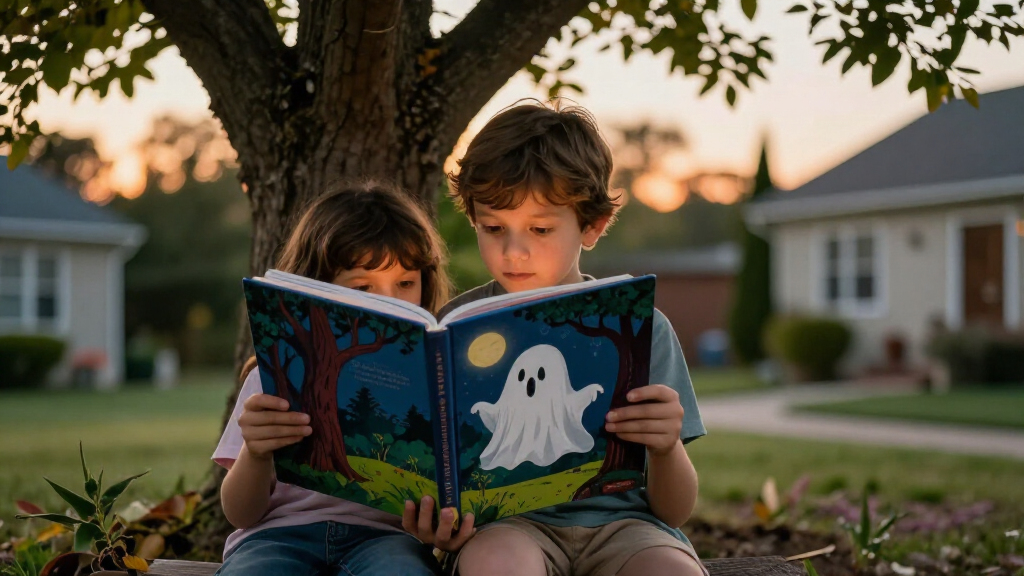
I compared these books as choices for children who want ghost stories with a useful purpose beyond a scare. My criteria included stated age and reading-level guidance, language difficulty, story length and format, how manageable the scariness may be for young readers, and whether the subject offers a clear opening for literacy, empathy, imagination, or conversation. I also considered whether a book is suited to a shared read-aloud, a child beginning to read independently, or an older reader ready for a collection.
The ranking favors books with a clear match between audience, format, and potential learning value, rather than treating every spooky title as equally educational. Gentle, discussable stories and accessible reading practice rank ahead of collections whose main appeal is suspense; those collections still have a place for older children who enjoy chills. Because children vary in sensitivity and reading ability, age ranges are starting points, not guarantees, and caregivers should review a story’s tone before reading aloud.
| educational ghost story books for kid | Format |
|---|---|
| Ten Timid Ghosts | Paperback |
| Ghost Stories for Kids Ages 9– | Book |
| Campfire Ghost Stories for Age | Not provided |
| Don’t Read This Book Before Be | Not provided |
| The Big Book of Spooky Stories | Book |
| Leo: A Ghost Story | Not specified |
| How to Make Friends with a Gho | Not specified |
| Inspirational Ghost Stories fo | Book |
| The Tailypo: A Ghost Story | Picture book |
| Ten Tiny Ghosts: A Ghost Book | Book |
| True Ghost Stories for Kids: F | — |
| In a Dark | Story collection |
Factors to Consider When Choosing Educational Ghost Story Books For Kids
Choosing a ghost story for a child means balancing what they want from the book with what they can comfortably read and enjoy. These broader checks can help you pick a story that supports a good reading experience without mistaking scariness for educational value.
Match the reading task to the child
Start by deciding whether the book will be read aloud, shared with an adult, or tackled independently. A child who is still building decoding skills may benefit more from short sentences, familiar vocabulary, and brief stories than from a thick collection labeled for their age. Older children can still enjoy picture books, but may want richer plots or more room to read on their own. A common mistake is choosing by age on the cover alone, since reading stamina and confidence develop at different rates. If the goal is practice, look for a format the child can finish without turning every session into a struggle. If the goal is family reading, prioritize rhythm and discussion over independent-level labels.
Decide what “educational” should mean
Ghost stories can support learning in different ways: vocabulary and fluency, emotional discussion, imagination, or curiosity about folklore and storytelling. They do not automatically teach reliable facts about ghosts or history, especially when a title presents tales as “true” without offering context. Before buying, name the outcome you want: a child may learn to discuss fear and courage from fiction, while a folklore-focused reader may need a book that explains traditions and story origins. Avoid assuming that a spooky subject alone makes a book educational. For young children, a story that invites questions may be more useful than one that simply delivers a scare. For older readers, you can extend the learning by comparing how different stories build suspense or explain the supernatural.
Set a comfort level for suspense
Children respond differently to dark settings, threatening characters, and stories described as true. A child who likes mild mystery may not enjoy a book built around intense chills, even if the intended age range seems suitable. Check the tone and premise before reading, and consider sharing the first story together rather than handing over a full collection. It can help to talk beforehand about whether the ghosts are playful, friendly, unexplained, or frightening. Do not use age guidance as the only signal; a confident reader can still be sensitive to certain themes. If bedtime reading is the aim, a gentler story may be a better fit than a collection designed to create suspense.
Choose between one story and a collection
A single picture book offers a more controlled experience: one plot, a consistent tone, and an easy stopping point. Collections provide variety and can keep an enthusiastic reader occupied, but the stories may vary in intensity, length, and style. A large anthology is not automatically better value for a child who prefers repetition or loses focus during longer reading sessions. Short, separate tales can work well for brief read-alouds, while a connected narrative may help a child follow character development. Check whether a collection is organized for the child’s age or reading level, not just its total number of stories. If the child is unsure about spooky fiction, start with a book that makes it easy to try one story at a time.
Look for discussion value, not just a moral
A book does not need to state a lesson directly to prompt useful conversation. Ask whether its characters offer a natural way to discuss kindness, loneliness, courage, or how people respond to fear. Some books lend themselves to these topics through their premise, while others are mainly designed for suspense and entertainment. A forced moral can make a story feel like a lesson disguised as a read, which may reduce a child’s interest. For shared reading, open-ended questions such as “What did you think the character would do?” can develop comprehension without interrupting the story. Choose a book whose themes match the conversations you actually want to have.
Treat age labels as a starting point
Age ranges offer a rough guide to language and content, but they cannot account for every child’s reading ability or fears. A younger child may enjoy a story written for older readers when it is read aloud, while an independent reader may want more complexity than a picture book provides. Also check whether the age guidance refers to reading level, subject matter, or both. When buying for a group of children, choose for the most sensitive listener if the book will be read aloud to everyone. For a personal library, it can be useful to have both a comfortable, rereadable option and a more challenging book for later. This avoids expecting one title to serve every stage of a child’s reading life.
Frequently Asked Questions
Which of these books is best for a child who is easily frightened?
I would start with a gentle, playful picture book such as How to Make Friends with a Ghost or Ten Tiny Ghosts, rather than a collection marketed around chills or true tales. Read the description and, if possible, preview the story before sharing it, since children can react strongly to particular images or situations. Reading together lets you pause and answer questions without making the child manage the suspense alone. If the child is unsettled, stop and choose a lighter story; finishing the book matters less than preserving a comfortable reading experience. The age range alone cannot predict how frightening a story will feel to an individual child.
Are “true ghost stories” educational or factual?
A title that calls stories true does not by itself establish that supernatural events are verified facts. These books may still be useful for discussing how stories are told, why people share unexplained experiences, and how to distinguish a claim from evidence. If your goal is research or factual learning, pair the story with age-appropriate material about folklore, local history, or evaluating sources. Ask the child what details are known, what is interpretation, and what evidence would help answer questions. That approach lets a spooky collection support critical thinking without presenting paranormal claims as settled science.
Should I choose an early reader or a story collection for independent reading?
Choose an early reader when the child needs manageable text, familiar vocabulary, and a clear sense of progress. A collection may offer more variety, but its stories can differ in difficulty and intensity, so the child may need help choosing what to read next. Check the actual reading-level information as well as the age label, and consider whether the child can sustain attention across several pages. If the aim is confidence, a short book the child can finish independently is often a better starting point than a longer anthology. Collections make more sense when the reader already enjoys spooky fiction and likes selecting stories by mood.
Can a scary book be a good bedtime read?
It can be, but a book’s label or age range does not tell you whether its suspense will linger after lights-out. Children who enjoy mild chills may find a short, reassuring story entertaining, while more intense or “true” ghost tales may make settling down harder. Consider reading scarier material earlier in the day, then ending with a familiar or calming book. If a child asks to stop, accept that response rather than treating bravery as the goal. The best bedtime choice is the one that leaves that particular child feeling comfortable.
How can I make a ghost story educational without interrupting the fun?
Let the story come first, then choose one question that follows naturally from what happened. You might discuss a character’s choices, notice new vocabulary, compare the story’s beginning and ending, or ask how the author created suspense. For a tale presented as a legend or true account, separate what the book claims from what can be checked elsewhere. Avoid turning every page into a quiz, since that can make a recreational read feel like homework. A short conversation after the story often gives children space to share ideas while keeping the experience enjoyable.
Conclusion
Best overall: I recommend How to Make Friends with a Ghost for a gentle story with strong conversation potential. Best for beginners: In a Dark, Dark Room and Other Scary Stories is the clearest choice for children building independent reading skills. Best value for variety: a collection such as The Big Book of Spooky Stories for Kids Ages 8–12 makes more sense for a reader who wants several tales in one book, though adults should check the tone story by story. Best for toddlers and preschoolers: choose Ten Tiny Ghosts for a simple, age-conscious introduction. Best for older kids seeking stronger chills: compare Ghost Stories for Kids Ages 9–12 and the more intense collections, then pick based on the child’s comfort with suspense. For a child who is sensitive to frightening material, start with a playful picture book rather than a title promising spine-tingling or true stories.
Fall Picks
fall essentials
As an affiliate, we earn on qualifying purchases.