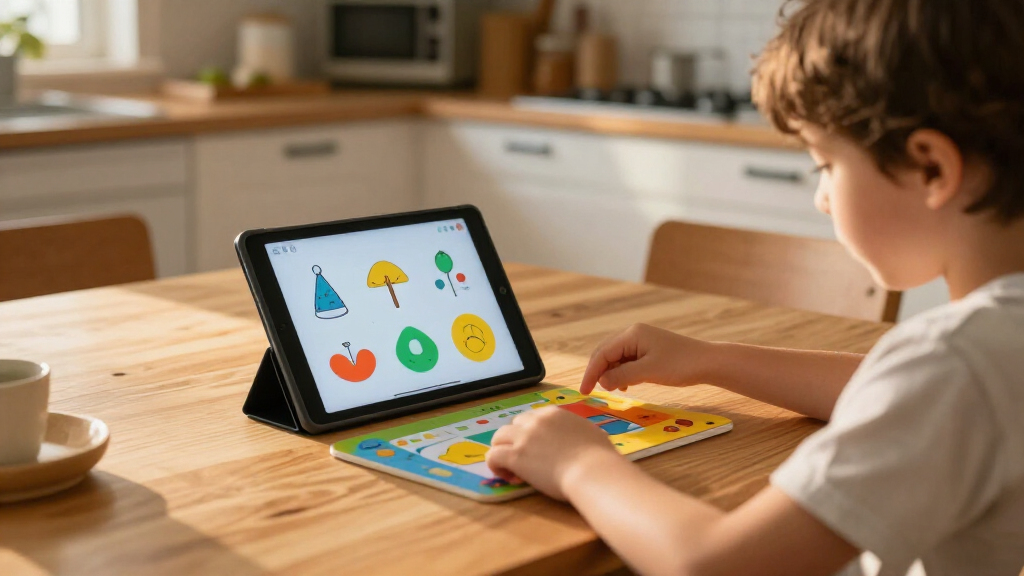

Digital learning tablets for kids range from app-capable Android devices to simple, screen-based writing boards, so the best choice depends on what your child will actually do. I name the LeapFrog LeapPad Academy my best overall pick for its child-focused learning approach, while the Evermyth 10-inch Android tablet stands out for families who want a larger general-purpose device and the TECJOE four-pack for shared drawing and writing. The main tradeoff is between guided, age-focused activities and the flexibility of Android, while LCD writing tablets offer a simpler, lower-distraction way to practice. Screen size, parental controls, durability, and whether activities need Wi-Fi all affect the fit. Read on for the full breakdown and help matching a tablet to your child and household.

Prime made for students and young adults
- Fast, free delivery for dorm and study essentials
- Prime Video and Amazon Music included
- Member-only deals
Key Takeaways
- The lineup splits into three distinct types: Android tablets run broader apps, LeapFrog devices focus on guided learning, and LCD writing tablets suit drawing and handwriting practice rather than multimedia lessons.
- The LeapFrog LeapPad Academy leads for structured learning: its child-focused format gives it a clearer educational role than the general-purpose Android models, though it is less flexible for families who want a conventional tablet.
- Evermyth is the standout large Android option: its 10-inch screen, stylus, and protective case suit varied activities, while the 7-inch Android picks are easier for small hands to carry.
- Multipacks change the value equation: TECJOE, TQU, and Genialba four-packs make more sense for siblings, classrooms, or group activities than buying one device for a single child.
- Writing tablets are not substitutes for app-based learning: the ORSEN 16- and 20-inch models favor a larger drawing area, while compact single tablets such as Bravokids are easier to store and carry.


| digital learning tablets for kid | Screen size |
|---|---|
| TECJOE 4-Pack 8.5-Inch LCD Wri | 8.5 inches |
| Evermyth 10-Inch Kids Tablet | 10 inches |
| TQU 8.5-Inch LCD Writing Table | 8.5 inches |
| ORSEN 20-Inch LCD Writing Tabl | 20 inches |
| LeapFrog LeapPad Academy Kids’ | 7 inches |
| hahaland 5-Language Learning T | — |
| LeapFrog Touch and Learn eRead | — |
| PEICHENG 7-Inch Kids Tablet | — |
| Genialba 10-Inch LCD Writing T | 10 inches each |
| TOPELOTEK 7-Inch Kids Tablet | — |
| YosaToo Kids Tablet | 7 inches |
| ORSEN 16-Inch LCD Writing Tabl | 16 inches |
| Genialba 8.5-Inch LCD Writing | 8.5 inches each |
| HOTTABLET 7-Inch Kids Tablet | — |
| Bravokids 10-Inch LCD Writing | 10 inches |
More Details on Our Top Picks
TECJOE 4-Pack 8.5-Inch LCD Writing Tablets for Kids
I’d choose the TECJOE four-pack when several children need a simple surface for spelling practice, doodling, or quick math without taking turns on one device. Each 8.5-inch pressure-sensitive LCD screen is light enough to pack, and the erase button makes repeat activities easy; the lock switch can keep a drawing from disappearing before a child is ready. Unlike the LeapFrog LeapPad Academy, this set does not run apps or provide guided lessons, so it works best as a low-distraction writing tool rather than a full learning tablet. The four matching tablets support shared activities, but each depends on a CR2016 battery, and erasing can fail if the lock is on or the battery is not properly installed or charged. I’d skip it if your child needs interactive software or saved digital work.
Pros:- Four tablets let siblings or small groups work at the same time.
- One-button clearing supports quick reuse without paper or drawing supplies.
- Lock switch helps preserve work until a child is ready to erase it.
- Lightweight bodies and stylus clips make the set practical for travel.
Cons:- The CR2016 battery and lock position can affect whether the erase function works.
- No apps, audio lessons, or general-purpose tablet functions.
- The screens are modest in size for longer writing or larger drawings.
Best for: Families with multiple preschool or early-elementary children who want portable, reusable boards for drawing, spelling, and simple practice.
Not ideal for: Buyers seeking educational apps, internet access, or lessons that respond to a child’s progress; these are writing boards, not general-purpose tablets.
- Brand:TECJOE
- Model:H10A
- Quantity:4 tablets
- Screen size:8.5 inches
- Screen type:LCD
- Pressure sensitivity:1024 levels
- Weight:3.5 oz per tablet
- Battery:CR2016
- Recommended age:3–8 years
Our verdict“Choose this set for shared, screen-light writing and drawing activities, but pick the LeapFrog LeapPad Academy for app-based lessons.”
Evermyth 10-Inch Kids Tablet, Android 16, 64GB Storage, Stylus and Protective Case
The Evermyth 10-inch tablet is the most flexible pick here for families who want kids’ learning apps, reading, video, and drawing on one device. Its UKIDOZ Kids Space and parental controls are intended to help adults manage apps, content, and screen time, while the included stylus gives children another way to write or doodle. Compared with the LeapFrog LeapPad Academy, Evermyth offers a larger display, Android 16, and storage expansion up to 1TB; LeapFrog instead has a defined library of educator-approved apps and a more tightly child-focused setup. The adjustable case stand can help with hands-free reading, but the TF card for expanded storage is sold separately. The listed 24GB RAM figure is not explained in the supplied product details, so I would not use it as a deciding performance claim.
Pros:- 10-inch screen gives reading and learning apps more room than the LeapFrog LeapPad Academy’s 7-inch display.
- Kids Space and parental controls provide tools for managing content and screen time.
- Included stylus supports writing, drawing, and doodling.
- Protective case has a 180-degree adjustable stand and storage can expand with a TF card.
Cons:- TF card for storage expansion is not included.
- The listed 24GB RAM configuration is not explained in the product information.
- Android app access is broader than a dedicated learning system, so caregivers may need to manage content selection.
Best for: Families with children ages 3–12 who want a larger Android screen for learning apps and media, plus parental controls and a protective stand case.
Not ideal for: Caregivers who prefer a tightly curated learning-only device or want a clearly specified memory configuration and included expandable storage.
- Brand:Evermyth
- Model:KB1009
- Operating system:Android 16
- Screen size:10 inches
- Processor:A333, up to 1.8GHz
- Internal storage:64GB
- Expandable storage:Up to 1TB via TF card, not included
- Battery capacity:6000mAh
- Connectivity:Wi-Fi 6 and Bluetooth 5.4
Our verdict“Pick Evermyth for a larger, expandable Android learning-and-media tablet, while choosing LeapFrog for a more defined collection of child-focused lessons.”
TQU 8.5-Inch LCD Writing Tablets for Kids, 4-Pack
The TQU four-pack suits families who want distinct colors for assigning each child a board or sorting activities by subject. Its four pressure-sensitive 8.5-inch screens support varied line thicknesses, and the erase and lock controls make it easy to move between spelling, math, and drawing without using paper. Like the TECJOE 4-Pack, TQU offers four portable writing surfaces rather than app-based lessons; its colorful mix makes ownership easier to tell apart, but the supplied specifications call for a CR2 battery and give a shorter one-month warranty. That warranty and battery requirement make the TECJOE set the more reassuring choice for buyers focused on ongoing use. I’d choose TQU when color-coded sharing matters most, and avoid it if you want a conventional tablet or stronger stated warranty coverage.
Pros:- Four different colors help children identify their own boards or separate activities.
- Pressure-sensitive writing supports lines of different thicknesses.
- Erase and lock controls allow quick reuse while protecting unfinished work.
- Lightweight boards and top-stored styluses suit everyday use and travel.
Cons:- A CR2 battery is required.
- The listed warranty is only one month.
- Like the TECJOE four-pack, it cannot run learning apps or store lessons.
Best for: Households, classrooms, or student groups that want four color-coded boards for spelling, basic math, and drawing activities.
Not ideal for: Buyers who want app-based instruction, a longer stated warranty, or a set with battery details that match the CR2016-powered TECJOE option.
- Brand:TQU
- Pack count:4
- Screen size:8.5 inches
- Screen type:LCD doodle board
- Colors:Blue, light blue, green, and pink
- Writing technology:Pressure-sensitive
- Controls:Erase button and lock switch
- Power:One CR2 battery required
- Minimum age recommendation:36 months
Our verdict“Choose TQU for color-coded group activities, but favor TECJOE if its longer stated warranty and CR2016 battery specification better fit your needs.”
ORSEN 20-Inch LCD Writing Tablet for Kids, Pink
The ORSEN 20-inch writing tablet is the clear choice when a child needs room for large drawings, handwriting drills, or working through math problems without crowding the screen. Its one-button erase and accidental-erase protection suit repeated practice, while the reusable surface avoids a steady stream of paper. Compared with the TECJOE 8.5-inch four-pack, ORSEN gives one child far more workspace but lacks the convenience of multiple boards for siblings or group activities. It is also a different kind of learning tool from the LeapFrog LeapPad Academy: there are no apps or interactive lessons here, just a large writing surface. At 1.2 pounds, it is less light than the small boards, and the included-components listing says “chalk,” which does not clearly match the LCD surface.
Pros:- 20-inch surface offers substantially more room than the 8.5-inch TECJOE boards.
- One-button erase makes repeated practice quick.
- Accidental-erase protection can preserve work while a child is using the board.
- Replaceable battery supports continued use without treating the board as a single-use activity.
Cons:- At 1.2 pounds, it is heavier than the small portable writing tablets.
- It does not offer apps, guided instruction, or digital lesson storage.
- The listed included component is chalk, which may not suit an LCD writing surface.
Best for: Parents and teachers seeking a large reusable surface for handwriting, spelling, math practice, or free-form drawing.
Not ideal for: Families needing app-based learning, multiple individual boards, or a clearly specified writing accessory that matches the LCD screen.
- Brand:ORSEN
- Screen size:20 inches
- Color:Pink
- Writing board type:Doodle board
- Mounting type:Tabletop
- Frame material:Plastic
- Weight:1.2 pounds
- Erase function:One-button erase
- Battery:Replaceable
Our verdict“Choose ORSEN when writing space matters more than apps or portability, and choose LeapFrog for structured digital lessons.”
LeapFrog LeapPad Academy Kids’ Learning Tablet, Green
I’d put the LeapFrog LeapPad Academy first for families who want a dedicated learning device rather than a blank writing surface. It includes more than 20 educator-approved apps covering reading, math, writing, coding, problem-solving, and creativity, with parental controls for managing use. The 7-inch shatter-safe screen, stylus, and bumper with kickstand are sized for younger children, while the rechargeable battery avoids the replaceable coin-cell setup found in the TECJOE and TQU writing-board sets. Compared with the larger-screen Evermyth Android tablet, LeapFrog presents a more defined learning library, but its 2019 model year and Android 10 make it the older platform in this group. Extra App Center content may require separate purchases, and Academy access beyond the included three-month trial requires a subscription.
Pros:- More than 20 included apps cover several early learning areas.
- Parental controls allow adults to manage app access and time limits.
- Shatter-safe screen and removable bumper with kickstand are suited to young users.
- Rechargeable battery and included stylus support portable learning activities.
Cons:- Additional games, videos, music, and eBooks from the App Center are sold separately.
- LeapFrog Academy access beyond the three-month trial requires a subscription.
- Its 7-inch screen and Android 10 are older and smaller than the Evermyth Android 16 tablet.
Best for: Caregivers of children ages 3–8 who want a child-oriented device with included learning apps, parental controls, and a durable bumper.
Not ideal for: Families who want a newer Android platform, a larger screen, or ongoing access to all learning content without possible purchases or a subscription.
- Brand:LeapFrog
- Model:LeapPad Academy
- Model year:2019
- Operating system:Android 10
- Screen size:7 inches
- Included apps:More than 20 educator-approved learning apps
- Age range:3–8 years
- Battery:Rechargeable lithium-ion
- Warranty:2-year limited warranty
Our verdict“Choose LeapFrog for a more guided learning experience for younger children, but pick Evermyth for a larger screen and broader Android flexibility.”
hahaland 5-Language Learning Tablet Toy for Toddlers
For very young children, I’d favor this screen-free audio tablet over a general-purpose device like the PEICHENG 7-Inch Kids Tablet: it focuses on touch-and-listen play instead of apps, videos, and web access. More than 90 activities span early topics such as animals, shapes, letters, numbers, and colors, while four play modes give toddlers different ways to revisit the material. Its compact, lightweight form also suits short play sessions away from home, and the BPA-free ABS plastic is designed for everyday handling.
The tradeoff is its narrow age window: children who have moved beyond toddler-level vocabulary may quickly want more varied content than this toy offers. The listing also gives inconsistent language information, so I’d verify which languages are available on the specific unit before buying. Choose it for hands-on early learning, not as a tablet that will grow with a child into school age.
Pros:- More than 90 activities cover a broad range of early-learning topics.
- Learning, quiz, music, and pretend-play modes provide varied ways to interact.
- Screen-free controls encourage hands-on listening and play.
- Compact, lightweight construction is convenient for travel.
Cons:- The toddler age range limits its usefulness as a child grows.
- Language options are described inconsistently in the listing.
Best for: Caregivers of children 12 months to 3 years who want portable, screen-free listening and vocabulary activities.
Not ideal for: Families shopping for a device that will suit preschoolers or older children, or buyers who need a clearly confirmed language selection.
- Recommended age:12 months to 3 years
- Activities:More than 90 modules
- Interactive icons:39
- Languages listed:English, French, Spanish, German, Italian
- Modes:Learning, quiz, music, pretend play
- Screen:No screen
- Material:BPA-free ABS plastic
- Players:1
Our verdict“Choose this for a toddler’s screen-free vocabulary and listening play, but look to a story-focused option like the LeapFrog Touch and Learn eReader as the child gets older.”
LeapFrog Touch and Learn eReader for Preschoolers, Teal
I’d put this story-and-phonics device between a toddler toy and a full Android tablet. Its ten stories pair five classic fairy tales with five phonics selections, and quizzes, word-building activities, and songs add practice beyond listening. That makes it a more focused literacy choice than the PEICHENG 7-Inch Kids Tablet, which offers a broader app-based experience but requires adults to manage content and access. For preschoolers beginning to connect sounds, letters, and words, the story structure gives play a clear learning purpose.
It is less flexible than a general tablet and is intended for ages three and up, so children seeking a wide library of apps may outgrow its fixed selection. The three AA batteries also need replacing for regular use; the supplied batteries are described as demonstration batteries. I’d choose it for guided early reading activities, not for open-ended media or long-term device versatility.
Pros:- Combines ten stories with quizzes, learning games, and music.
- Five phonics stories focus on vowels and word building.
- Touch controls make the activities accessible to preschoolers.
- Story listening and follow-along play support early literacy practice.
Cons:- Requires three AA batteries, and regular use calls for fresh batteries.
- Its fixed story selection is less flexible than content on an Android tablet.
Best for: Families with preschoolers who want stories, phonics practice, and simple learning games in a child-oriented device.
Not ideal for: Buyers who want a general-purpose tablet, a large expandable story library, or a device without replaceable AA batteries.
- Age range:3 years and up
- Stories:10 total: 5 classic fairy tales and 5 phonics stories
- Features:Story quiz, learning games, and music
- Display:LCD
- Connectivity:USB
- Memory storage:32 GB
- Native resolution:800 x 600
- Battery requirement:3 AA batteries
Our verdict“Pick this for preschool literacy practice through stories and phonics, while choosing the PEICHENG tablet if you need broader app-based use.”
PEICHENG 7-Inch Kids Tablet, Android 12, 4GB RAM, 32GB Storage, Parental Controls, Blue
This is the better fit for families who want a general-purpose learning tablet rather than a toy with a fixed activity set. Android 12, Wi-Fi, and Bluetooth allow access to apps and other connected uses, while parental controls cover profiles, screen time, apps, and web access. Compared with the TOPELOTEK 7-Inch Kids Tablet, the PEICHENG offers more listed RAM and a much larger stated microSD expansion ceiling; TOPELOTEK, by contrast, foregrounds preloaded offline educational content. That distinction matters if you expect to choose and manage your child’s learning apps yourself.
The 7-inch IPS display and included case with adjustable stand make it a practical small-screen option, but the 1024 × 600 resolution is modest for reading or detailed visuals. It also needs Wi-Fi for connected content and has no cellular connection. I’d treat it as a supervised app platform, not a dedicated offline curriculum device.
Pros:- Parental controls manage screen time, profiles, apps, and web access.
- MicroSD expansion supports cards up to 512GB.
- Protective case includes an adjustable stand.
- Wi-Fi, Bluetooth, and a 3.5 mm headphone jack support common accessories and connections.
Cons:- The 1024 × 600 resolution is relatively low for detailed content.
- No cellular connectivity is listed, so connected use depends on Wi-Fi.
- The listed 4GB RAM includes 2GB of expansion, rather than being described as all physical RAM.
Best for: Parents who want to select educational apps, set usage rules, and add substantial storage for a child’s tablet.
Not ideal for: Families seeking a high-resolution display, cellular access, or educational material that is ready to use offline without app setup.
- Operating system:Android 12
- Screen:7-inch IPS
- Display resolution:1024 × 600
- RAM:4GB (2GB + 2GB expansion)
- Storage:32GB
- Expandable storage:MicroSD card up to 512GB
- Processor:Quad-core
- Cameras:2MP front, 5MP rear
- Connectivity:Wi-Fi, Bluetooth, USB Type-C, 3.5 mm headphone jack
Our verdict“Choose the PEICHENG if you want a configurable, expandable app-based learning tablet and can accept its modest screen resolution.”
Genialba 10-Inch LCD Writing Tablets, 2-Pack, Pink and Blue
These two reusable writing boards make more sense for drawing, letter practice, and quick notes than for lessons delivered through apps or audio. Having pink and blue tablets in one set gives siblings or a child and caregiver separate surfaces, while pressure-sensitive lines let children vary their marks with a stylus or another hard object. Compared with the TOPELOTEK 7-Inch Kids Tablet, this set avoids connected media and parental-control setup; it is a simpler, hands-on activity rather than a full digital learning platform.
The erase button and screen lock are useful for repeated practice and protecting a drawing, but the lock must be released before erasing. These boards also do not replace paper for work that needs to be saved or shared: the listing describes clearing the screen, not storing drawings. Their replaceable, non-rechargeable battery is another practical limit. Choose them for portable, low-distraction mark-making, not interactive lessons or saved schoolwork.
Pros:- Two 10-inch boards provide separate surfaces for siblings or shared activities.
- Pressure-sensitive input varies line thickness for drawing and writing practice.
- Erase button and screen lock support repeated use and help prevent accidental clearing.
- Lightweight design suits travel and everyday portability.
Cons:- The built-in battery is replaceable rather than rechargeable.
- Drawings are not described as saveable, so work disappears when erased.
- The screen must be unlocked before the erase function works.
Best for: Families with children ages 3–8 who want two portable surfaces for drawing, early writing, or shared practice without apps.
Not ideal for: Buyers who need saved work, guided digital lessons, rechargeable power, or one device that supports varied learning content.
- Quantity:2 tablets
- Screen size:10 inches each
- Colors:Pink and blue
- Display:Colorful LCD
- Input:Pressure-sensitive; stylus or other hard object
- Controls:Erase button and screen lock
- Battery:Built-in, replaceable
- Target age:3–8 years
Our verdict“Choose this two-pack for portable drawing and early-writing practice, but pick an interactive tablet like the LeapFrog Touch and Learn eReader for guided lessons.”
TOPELOTEK 7-Inch Kids Tablet, 2GB RAM, 32GB Storage, Parental Controls
The TOPELOTEK stands out for families who want educational material ready to use offline. Its preloaded Montessori lessons, STEM activities, and games give it a clearer learning starting point than the PEICHENG 7-Inch Kids Tablet, which is more centered on installing and managing apps. Parental settings here also cover learning targets, privacy, screen time, and content, so adults can shape how a child uses the device. A drop-resistant build, adjustable-brightness screen, and rotatable stand make it easier to position for hands-free sessions.
That focus comes with limits: the listed 2GB RAM is less than PEICHENG’s stated 4GB, and the included 32GB storage may need expansion as media accumulates. The listing gives inconsistent age guidance, too, so I wouldn’t assume the preloaded lessons fit every child from toddlerhood through later childhood. Choose it for a supervised, offline-friendly start, while checking the content and age fit for your child.
Pros:- Preloaded offline content includes Montessori lessons, STEM activities, and games.
- Parental controls cover screen time, learning targets, privacy, and content.
- Drop-resistant design and rotatable stand support everyday use.
- Battery life is listed at up to 8 hours.
Cons:- The 2GB RAM is lower than the PEICHENG model’s stated 4GB.
- 32GB of built-in storage may require expansion for larger media collections.
- The product description gives inconsistent age recommendations.
Best for: Caregivers who want a child tablet with preloaded Montessori and STEM activities, parental tools, and useful offline access.
Not ideal for: Families who need stronger listed memory, a clearly defined age recommendation, or a large built-in library of stored media.
- Screen:7-inch HD IPS with adjustable brightness
- Memory:2GB RAM
- Storage:32GB, expandable to 128GB
- Processor:Allwinner
- Battery capacity:3500mAh
- Listed battery life:Up to 8 hours
- Learning content:Preloaded Montessori lessons, STEM activities, and games
- Features:Parental controls, rotatable stand, drop-resistant construction
- Included components:Tablet, Type-C cable, charger, manual
Our verdict“Choose the TOPELOTEK for preloaded, offline-friendly learning and built-in parental tools, but favor the PEICHENG if memory and storage expansion are higher priorities.”
YosaToo Kids Tablet, 7-Inch Android 16, 4GB RAM, 32GB Storage with Protective Case
The YosaToo stands out among these picks for combining a conventional Android tablet with offline learning activities. Its Montessori, STEM, art, and mini-game content gives children options when Wi-Fi is unavailable, while Google Kids Space and parental controls let caregivers manage access and screen time. Compared with the HOTTABLET, it runs the newer-listed Android 16 and includes an adjustable-stand case, but the HOTTABLET provides more clearly specified hardware features, including cameras, Bluetooth, and a headphone jack. The YosaToo’s 32GB storage is modest for families adding many apps, though expansion up to 64GB helps. Its listed 3G cellular capability is not a substitute for a clearly specified modern mobile-data connection, so I would treat it primarily as a Wi-Fi tablet.
Pros:- Includes offline Montessori, STEM, art, and mini-game activities
- Parental controls cover content filtering, screen-time limits, and app monitoring
- Shock-absorbing case with an adjustable stand is included
- Storage can be expanded by up to 64GB
Cons:- 32GB built-in storage may fill quickly with downloaded apps and media
- Listed cellular technology is 3G, so buyers should not assume current high-speed mobile connectivity
Best for: Caregivers seeking a small Android tablet with offline learning activities, parental controls, and a standable protective case
Not ideal for: Families planning to install many large apps or needing dependable cellular internet, since built-in storage is 32GB and cellular is listed as 3G
- Operating system:Android 16
- Screen size:7 inches
- RAM:4GB
- Built-in storage:32GB
- Expandable storage:Up to 64GB
- Connectivity:Wi-Fi; cellular technology listed as 3G
- Battery:Lithium Polymer, 13.3 watt-hours
- Included components:Tablet, tablet case, user manual
Our verdict“Choose the YosaToo for offline learning content and a protective stand, but favor the HOTTABLET if clearly specified cameras and broader connectivity matter more.”
ORSEN 16-Inch LCD Writing Tablet for Kids, Pink
The ORSEN is a paper-free writing and drawing board, not an app-based tablet, and that difference makes it a better fit for handwriting, spelling, and quick math practice than for guided digital lessons. Its 16-inch surface gives children more room than the Bravokids 10-Inch LCD Writing Tablet, which can help with larger drawings or practicing letters without crowding. A one-button erase clears the board quickly, while the screen-lock switch can keep a child’s work from disappearing by accident. The tradeoff is that it does not provide apps, internet access, or a way to save work digitally. It also uses a replaceable 3V battery, and the listed included component is chalk even though the description refers to stylus use, so buyers may want to confirm what arrives.
Pros:- Large 16-inch screen leaves room for broad drawings and handwriting practice
- One-button erasing avoids paper waste and marker cleanup
- Screen-lock switch helps prevent accidental erasure
- Lightweight design is suited to home, school, or travel
Cons:- Does not provide apps, interactive lessons, or digital storage for work
- Requires a replaceable 3V battery
- Included component is listed as chalk despite the description referring to a stylus
Best for: Families and teachers who want a large, reusable surface for handwriting, spelling, drawing, and simple math practice
Not ideal for: Buyers seeking educational apps, saved digital work, or a fully specified included writing tool
- Screen size:16 inches
- Board type:LCD doodle board
- Color:Pink
- Frame material:Plastic
- Power:Replaceable 3V battery
- Controls:One-key erase button and screen-lock switch
- Item weight:10.72 ounces
- Included component listed:Chalk
Our verdict“Pick the ORSEN for spacious, reusable handwriting and drawing practice, not for app-based learning like the YosaToo or HOTTABLET.”
Genialba 8.5-Inch LCD Writing Tablets, 4-Pack, Pink, Blue, Green, and Purple
For shared drawing and writing activities, this Genialba set offers something a single digital tablet cannot: four separate boards in different colors. That makes it a practical choice for siblings or small groups who would otherwise have to take turns. Each 8.5-inch LCD surface is portable, and the listed 1024 pressure-sensitivity levels are intended to vary line thickness as children write or draw. Unlike the Android tablets in this roundup, these are standalone writing surfaces rather than devices for apps, web access, or guided lessons. The four-board format also takes more space than the Bravokids 10-Inch single tablet, while its product data lists Windows compatibility despite describing the tablets as standalone. I would not buy this set expecting a clear computer-connected workflow or software support.
Pros:- Four tablets let children draw or practice writing at the same time
- Different colors help distinguish each child’s board
- Portable 8.5-inch LCD writing surfaces suit quick activities
- Listed 1024 pressure-sensitivity levels support varied line thickness
Cons:- Standalone boards do not provide apps or guided digital lessons
- Four units require more storage space than a single writing tablet
- Product data is unclear about connectivity, listing the tablets as standalone while also naming compatible computers
Best for: Families with several young children or educators who want individual, portable drawing and writing boards for group activities
Not ideal for: Buyers who need interactive learning apps, clear computer connectivity, or a single compact board for one child
- Quantity:4 tablets
- Screen size:8.5 inches each
- Display type:LCD
- Pressure sensitivity:1024 levels
- Colors:Pink, blue, green, and purple
- Connectivity:Listed as standalone
- Listed dimensions:8.5 × 8.5 inches
- Target audience:Toddlers
Our verdict“Choose this set when several children need their own reusable writing surface; for one child, the Bravokids is a simpler single-board alternative.”
HOTTABLET 7-Inch Kids Tablet, 4GB RAM, 32GB Storage, Expandable to 1TB, Android 12, Parental Controls, Dual Cameras, Protective Case, Pink
The HOTTABLET is a conventional kids’ Android tablet with a useful advantage over the YosaToo: microSDXC expansion up to 1TB, rather than expansion capped at 64GB. That gives families more room for downloaded lessons, apps, and media, though the built-in storage remains 32GB. Its parental controls cover profiles, screen time, and child-friendly content, and the included standable case supports hands-free viewing. The 7-inch IPS screen, dual cameras, Bluetooth, and headphone jack add everyday flexibility, but its 1024 × 600 resolution is modest, and the battery is rated for up to eight hours of mixed use. Compared with the YosaToo, it runs Android 12 rather than Android 16 and does not list the same offline Montessori, STEM, and art activities.
Pros:- Expandable storage supports microSDXC cards up to 1TB
- Parental controls include child profiles, time limits, and content filtering
- Protective case includes a stand for hands-free viewing
- Wi-Fi, Bluetooth, dual cameras, and a 3.5mm headphone jack provide useful everyday connections
Cons:- 1024 × 600 resolution is modest for reading detailed content or watching video
- Battery is rated for up to 8 hours of mixed use
- Android 12 is an older listed version than the YosaToo’s Android 16
Best for: Families who want parental controls, a protective stand case, and room to expand storage for downloaded apps and media
Not ideal for: Buyers prioritizing a sharper screen, a newer listed Android version, or bundled offline learning activities
- Operating system:Android 12
- Screen and display:7-inch IPS touchscreen
- Resolution:1024 × 600
- RAM:4GB (2GB original + 2GB expandable)
- Storage:32GB; expandable up to 1TB with microSDXC
- Cameras:2MP front, 5MP rear
- Battery:3000mAh; up to 8 hours of mixed use
- Connectivity:Wi-Fi and Bluetooth; 3.5mm headphone jack
- Included components:Tablet, protective case, USB Type-C cable
Our verdict“Pick the HOTTABLET if expandable storage and familiar tablet functions matter most; choose the YosaToo for its newer listed operating system and specified offline learning content.”
Bravokids 10-Inch LCD Writing Tablet for Kids, Pink
The Bravokids is the simplest single-child writing board in this group: a 10-inch LCD surface for drawing, letters, and quick notes, with pressure-sensitive lines that vary in thickness. At 150 g, it is easier for a child to carry than the larger ORSEN 16-Inch board, though the ORSEN offers more room for broad drawings and handwriting. A screen-lock function can protect a finished picture from an accidental press, and one-button erasing makes it quick to start again. The core limitation is common to this kind of board: work disappears when erased, and there are no learning apps or digital files to keep. The listed specifications also do not give the tablet’s full dimensions, which leaves its packed size less clear than its screen size.
Pros:- Lightweight at 150 g for easy carrying
- One-button erase and screen lock support quick reuse and protect work
- Pressure-sensitive line thickness adds variety to drawing and writing
- Rounded-corner plastic body is designed for child use
Cons:- Erasing removes screen content rather than saving it
- No apps, connected learning tools, or digital storage are specified
- Full product dimensions are not provided
Best for: Parents looking for a lightweight, reusable drawing and handwriting board for a toddler or student to carry between home and school
Not ideal for: Families who want interactive lessons, digital copies of a child’s work, or a larger writing surface like the ORSEN 16-Inch
- Screen size:10 inches
- Color:Pink
- Material:Plastic
- Weight:150 g
- Writing input:Stylus
- Erase function:One-button erase
- Save function:Screen lock
- Rewriting capacity:Over 100,000 times
Our verdict“Choose the Bravokids for a lightweight, reusable practice board; pick the ORSEN instead if a larger screen matters more than portability.”
How We Picked
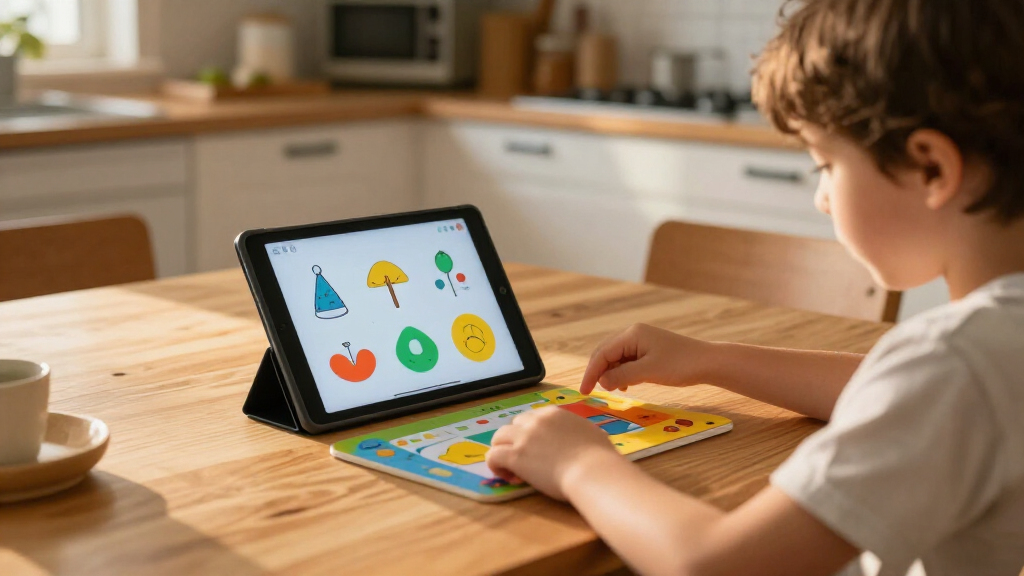
I grouped the 15 products by what they let a child do: run apps and media, use guided learning activities, read and interact with simple educational content, or draw and write on an LCD surface. I compared the practical factors that shape family use, including screen size, listed memory and storage for Android models, child-facing controls, included accessories, portability, and whether a product is designed for one child or a group. I treated a larger screen or higher storage figure as useful only when it supports a clear use case, not as proof of better learning.
The ranking favors products with a distinct learning role, a useful balance of features, and a clear audience. The LeapFrog LeapPad Academy comes first for its dedicated learning focus; Evermyth follows for families seeking a more flexible, larger Android device. The remaining Android tablets suit different screen-size and feature needs, while writing boards and toy-style language devices rank by their narrower purpose rather than being treated as direct substitutes for full tablets. I also account for tradeoffs: product details alone cannot establish app quality, long-term software support, battery life, or the effectiveness of parental controls, so families should check those specifics before buying.
Factors to Consider When Choosing Digital Learning Tablets For Kids
Before choosing among these digital learning tablets for kids, decide what kind of learning or play the device is meant to support. A child practicing letters has different needs from one reading digital books or using educational apps, and the word “tablet” can describe products with very different capabilities. These broader checks can help avoid paying for features your child will not use—or expecting a simple writing board to behave like an Android device.
Match the device type to the activity
Start by naming the activity you want to make easier: handwriting, drawing, reading, language practice, or app-based lessons. An LCD writing tablet can invite repeated mark-making without offering the variety of a touchscreen app library. A toy language device may provide a more focused interaction for a toddler, while a dedicated learning tablet or Android model can support a wider mix of activities. A common mistake is buying by the word “educational” alone; that label does not tell you whether lessons are included, downloadable, or compatible with your child’s age. Check what comes ready to use and what requires an account, internet access, or extra purchases. If several activities matter, favor a device whose software and controls fit your routine, not just its screen size.
Choose screen size for hands, space, and supervision
A bigger display can make pictures, reading, and shared viewing easier, but it may be heavier and less comfortable for a young child to hold. Seven-inch Android tablets favor portability; 10-inch models give more room for reading and drawing with a stylus. Large LCD writing boards, such as the 16- and 20-inch options here, are better suited to a desk or floor activity than a travel bag. Think about where the device will be used most: at a table, in a car, or beside an adult. Do not assume the largest screen is automatically the best learning screen, since grip, reach, and storage matter too. For siblings, a compact device per child can prevent turn-taking disputes, while a larger shared surface may work better for group drawing.
Check parental controls and content access
Parental controls matter most when a tablet can connect to the internet, install apps, or access video and web content. Before buying, check whether controls can manage screen time, app access, purchases, and browsing, and whether setup requires a parent account. A product listing that mentions parental controls does not explain how detailed or easy they are to use. Dedicated learning devices may offer a more contained experience, but the tradeoff can be a narrower selection of activities than a general Android tablet. If your child is young, make the setup and content limits part of the purchase decision rather than a task to postpone. For an LCD writing board, online access is not the main concern; its limited functionality is the tradeoff to understand.
Look beyond memory numbers to software needs
RAM and storage figures help distinguish Android models, but they do not tell the whole story about how smoothly a device will work or how long it will receive software support. Storage is useful when apps, books, or videos need to be kept on the tablet, while expandable storage only helps if the device supports the card type and the content can be stored there. Ask which apps your child needs and whether they are compatible with the tablet’s operating system. A tablet with more listed storage may still be a poor fit if its app access or setup does not match your household. Also check whether the device can be used offline for travel or areas with limited connectivity. For a writing board or toy, app capacity is irrelevant; prioritize the activity it supports instead.
Treat durability and accessories as daily-use features
A protective case can make a tablet easier to hand to a child, but it does not replace checking the device’s size, grip, and screen protection. Look for clear information about included accessories, charging, cleaning, and replacement parts before deciding. Styluses can support drawing or handwriting practice, though they may be easy to misplace if there is no storage spot. LCD writing tablets avoid many app-device maintenance tasks, but their buttons, writing surface, and erase function still shape everyday usability. Multipacks can be handy for siblings or a classroom, yet they take more storage space and may create more pieces to keep track of. Choose the setup your family can maintain, rather than assuming a rugged-looking case makes a device indestructible.
Decide whether guided learning or open-ended use matters more
Some families want a device that channels a child toward a small set of age-focused activities; others prefer a tablet that can grow into reading, creativity, and carefully selected apps. Guided devices may reduce setup decisions, but a child can outgrow their format or want more variety. Open Android tablets offer broader possibilities and call for more adult involvement in choosing apps and managing access. Writing boards keep the activity simple and can encourage drawing without menus, but they cannot provide interactive instruction or save work unless the specific model offers that capability. Think about how much choice your child handles well and how much time you can spend managing content. Paying more for versatility only makes sense when you plan to use that flexibility.
Frequently Asked Questions
Should I choose a LeapFrog learning tablet or an Android tablet?
Choose the LeapFrog LeapPad Academy if you want a device centered on child-focused learning and prefer a more guided experience. An Android model such as Evermyth or one of the 7-inch options makes more sense when you want broader app and media use and are prepared to manage setup and content access. Before choosing, check the available activities, age fit, and internet requirements rather than assuming all educational content is included. The key difference is not simply brand or screen size: it is how much flexibility you want versus how much curation you want built into the experience.
Can an LCD writing tablet replace a kids’ learning tablet?
Not if you expect interactive lessons, reading apps, video, or saved digital work. LCD writing models such as the Bravokids, ORSEN, TECJOE, TQU, and Genialba options are better viewed as tools for drawing, handwriting practice, and quick notes. Their simplicity can suit a child who benefits from open-ended, screen-based mark-making without app menus, but it limits what they teach on their own. If your child needs both drawing practice and app-based lessons, treat the writing board as a companion activity rather than a full replacement.
Is a 7-inch tablet large enough for a child to learn on?
A 7-inch tablet can work well for a child who values portability or has smaller hands, especially for short activities and supervised use. The tradeoff is less room for reading, drawing, or using apps with detailed controls than a 10-inch model such as Evermyth. Screen size alone does not determine learning value, so consider the activities your child will use and how far away they tend to hold the device. If the tablet will mostly sit on a desk for reading or stylus work, a larger screen may feel more comfortable; if it travels often, a smaller one may be easier to manage.
Are multipacks of writing tablets a better choice for siblings?
They can be a practical choice when several children will draw or practice writing at the same time. The TECJOE and TQU four-packs and Genialba multipacks provide multiple boards, which can reduce sharing conflicts and suit group activities. They do not provide the app access or individual learning profiles of separate Android tablets, so the fit depends on the activity. Think about storage, keeping each tablet and stylus together, and whether every child needs a device at once. For one child who wants a larger drawing area, an ORSEN 16- or 20-inch board may suit better than a multipack of smaller boards.
What should I verify before giving a child an Android tablet?
Check the exact parental-control tools, account requirements, app compatibility, and whether the child’s intended activities work offline. Confirm what the device includes, such as a case or stylus, and review the setup steps before handing it over. Product names and listed specifications do not establish how long software updates will continue or how well every app performs. It is also useful to set household rules for screen time, downloads, and shared use before the tablet arrives. If you want a more contained learning experience with less app management, compare a dedicated learning device with the Android options instead.
Conclusion
For the best overall learning focus, I recommend the LeapFrog LeapPad Academy; it is the clearest fit for families seeking a dedicated child-oriented learning device. For best value across shared creative use, the TECJOE four-pack makes sense when several children need writing boards, while the TQU and Genialba multipacks offer similar group-oriented alternatives. The best premium-style flexible pick in this lineup is Evermyth, with its larger screen, stylus, and case for families wanting an Android tablet for varied activities. For beginners and toddlers, the hahaland language toy or LeapFrog Touch and Learn eReader offers a more focused starting point than a general Android tablet. For specific needs, choose ORSEN’s larger boards for a broad drawing surface, a 7-inch Android model for portability, or Bravokids for a single compact writing tablet. Match the device to the activity and supervision your household can support, and the choice becomes much clearer.