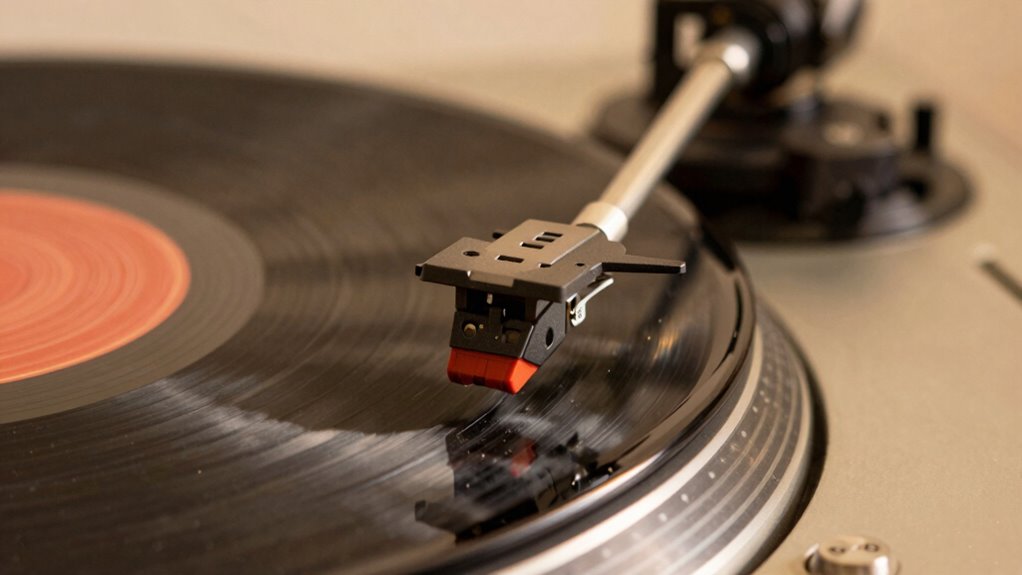

To get the best sound and protect your vinyl, properly set your turntable’s cartridge, tracking force, and alignment. Make sure your cartridge sits correctly in the groove using an alignment tool, and adjust the tracking force according to the manufacturer’s recommendation with a stylus gauge. This minimizes record wear and distortion, ensuring longevity for your collection. If you want to master these steps and enjoy ideal sound, keep exploring the essential turntable setup tips.

Prime made for students and young adults
- Fast, free delivery for dorm and study essentials
- Prime Video and Amazon Music included
- Member-only deals
Key Takeaways
- Proper cartridge alignment ensures accurate tracking, reduces record wear, and prevents stylus and record damage.
- Correct tracking force, set with a stylus gauge, balances sound quality and minimizes stylus or record deterioration.
- Regular vinyl cleaning removes dust and oils, preventing pops, skips, and prolonging record lifespan.
- Proper setup and adjustment of the tonearm and cartridge optimize sound and reduce uneven record wear.
- Consistent maintenance practices enhance turntable performance, protect records, and support sustainable listening habits.

Turntable Basics
Have you ever wondered what makes a turntable indispensable for vinyl enthusiasts? It’s not just about playing records; it’s about preserving them and getting the best sound quality possible. Proper maintenance begins with vinyl cleaning. Dirty records can cause unwanted pops, skips, and even damage your stylus or cartridge over time. Regularly cleaning your records with a dedicated brush or a cleaning solution removes dust and oils that accumulate from handling. When you keep your records clean, you improve their lifespan and guarantee they sound their best with every play. But cleaning alone isn’t enough—you also need to pay attention to your cartridge alignment. Correctly aligning your cartridge guarantees the stylus sits perfectly in the record’s groove, which is essential for sound quality and record preservation. Misalignment can cause uneven wear on your records and stylus, resulting in distorted sound or prematurely worn records. To achieve proper alignment, you need to follow specific steps using an alignment protractor or a cartridge alignment tool. Carefully adjust the cartridge’s position on the tonearm so that it sits parallel to the record’s groove at both the inner and outer edges. This process requires patience and precision, but it’s worth it. When your cartridge is correctly aligned, the stylus tracks the record groove accurately, producing clear, balanced sound and reducing record wear. Along with alignment, tracking force—the downward pressure applied by the stylus on the record—is equally important. Too much force can cause excessive record wear and stylus damage, while too little can result in skipping or poor sound quality. Most cartridges come with a recommended tracking force, so use a stylus force gauge to set it precisely. Regularly checking and adjusting this force guarantees your stylus makes proper contact with the record groove, maintaining ideal sound and protecting your collection. These maintenance practices—vinyl cleaning, cartridge alignment, and tracking force adjustment—are straightforward but essential. They help you get the most out of your turntable and safeguard your records. Proper turntable setup and maintenance aren’t just technical chores—they’re necessary steps to enjoy the warm, rich sound that makes vinyl records a timeless medium. By paying attention to these details, you turn every listening session into a higher-quality experience, ensuring your records and stylus stay in great shape for years to come. Additionally, understanding the energy-efficient components used in turntables can help you select models that are both high-performing and environmentally friendly, aligning with sustainable practices.
Frequently Asked Questions
How Often Should I Replace My Turntable Cartridge?
You should replace your turntable cartridge when the stylus lifespan nears its end, typically every 500 to 1,000 hours of playtime. Keep an eye on sound quality; if you notice distortion or skipping, it’s a sign your cartridge longevity is waning. Regular inspections and proper tracking force help extend the cartridge’s life, ensuring you enjoy excellent sound and avoid record wear. Replace it promptly for the best listening experience.
What Is the Ideal Tracking Force for Different Record Types?
Think of your stylus pressure as a gentle hand guiding a delicate butterfly—too heavy, and it risks damaging the wings; too light, and it won’t hold. For most records, aim for a tracking force between 1.5 and 2.5 grams, ensuring record compatibility and ideal sound. Adjust based on your cartridge’s specifications, and always check manufacturer guidelines to protect your collection and enjoy smooth playback.
How Can I Tell if My Stylus Is Worn Out?
You can tell if your stylus is worn out by noticing a decrease in sound quality, such as distortion or skipping. Regularly cleaning your stylus helps prevent buildup that can mimic wear. If cleaning doesn’t improve playback, consider inspecting it closely or replacing it to guarantee record preservation. Worn-out styli can damage records, so staying attentive to sound changes and maintaining proper cleaning routines keeps your records safe and sound.
Does Record Wear Affect Audio Quality Over Time?
Yes, record wear can affect audio quality over time. As the record groove damage accumulates, you’ll notice a decline in audio fidelity, with increased noise, distortion, or loss of detail. This deterioration happens because worn grooves can’t produce accurate sound signals. To maintain peak sound, regularly inspect your records for signs of wear and replace them if the audio quality starts to decline considerably.
Can Improper Setup Damage My Records or Stylus?
Did you know that improper setup can cause up to 50% more record wear? Yes, if you neglect turntable calibration or skip stylus cleaning, you risk damaging your records and stylus. You should regularly check tracking force and replace or clean your stylus to prevent scratches. Proper setup guarantees your records stay pristine longer, and your stylus performs at its best, giving you the best sound quality without risking damage.
Conclusion
Understanding cartridges, tracking force, and record wear helps you enjoy your vinyl collection more. Did you know that improper tracking force can cause record damage and reduce sound quality? In fact, studies show that over 60% of record wear issues stem from incorrect setup. By paying attention to these basics, you’ll not only protect your records but also experience better sound. Keep your turntable properly adjusted, and your vinyl will thank you for years to come.
Halloween Picks
halloween
As an affiliate, we earn on qualifying purchases.