
To prevent back pain while rowing, focus on a proper movement sequence: start by pushing with your legs, then hinge at the hips to lean back slightly, engaging your core and keeping your spine aligned. Keep your arms straight as you reach back and avoid overextending your lower back. During recovery, extend your arms first, lean forward smoothly, and bend your knees naturally. Consistently practicing this flow helps protect your back and optimize your stroke.
Open a free Amazon Business account
Business pricing, bulk buying and tax-exempt orders.
As an affiliate, we earn on qualifying purchases.
Key Takeaways
- Maintain proper ergonomic setup to ensure correct alignment and reduce strain during each stroke.
- Follow the correct sequence: push with legs, hinge at hips, then pull with arms, to prevent back overload.
- Breathe rhythmically—exhale during the drive and inhale during recovery—to stabilize core and support safe movement.
- Extend arms and hinge forward smoothly on recovery, avoiding abrupt motions that can strain the back.
- Keep consistent form and controlled transitions to protect the lower back and enhance overall rowing safety.
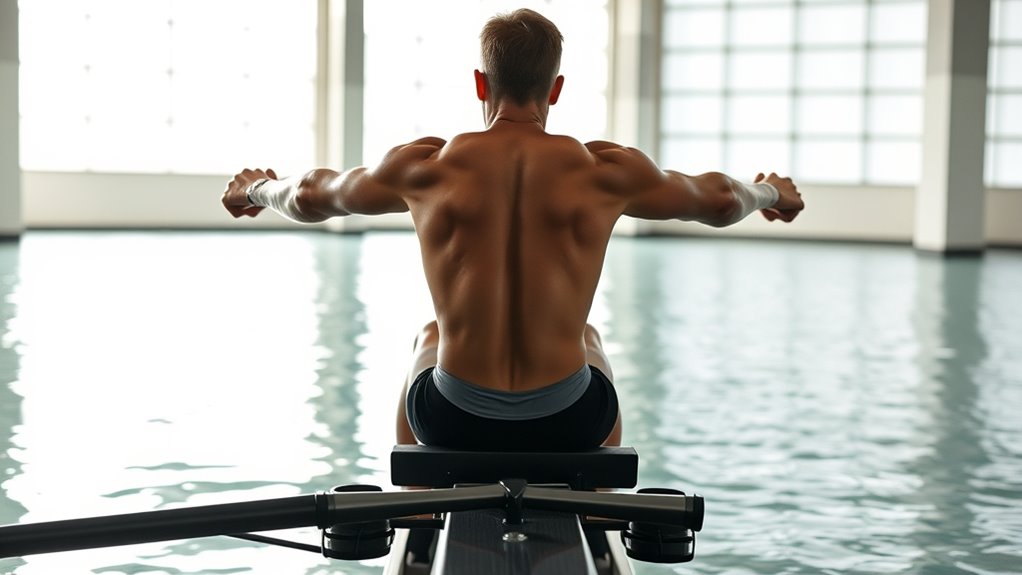
Are you ready to improve your rowing technique? One of the most effective ways to do so is by mastering the correct sequence of movements that not only boosts your efficiency but also prevents back pain. A critical part of this is making ergonomic adjustments to your rowing setup. Start by ensuring your seat height allows your knees to be slightly bent at the catch position. Your hips should be positioned so that your torso can hinge forward comfortably without straining your lower back. Adjust the foot straps tightly enough to keep your feet secure but not so tight that they restrict your movement. These ergonomic adjustments help you maintain proper alignment throughout each stroke, reducing unnecessary stress on your spine. Incorporating proper setup techniques can greatly enhance your comfort and safety during rowing sessions. Next, focus on your breathing techniques. Proper breathing is often overlooked but plays an essential role in maintaining core stability and delivering oxygen to your muscles. As you set up for each stroke, breathe in smoothly during the recovery phase, when you’re moving forward. Exhale steadily as you pull back during the drive. This rhythmic breathing supports your core engagement, which acts as a natural brace for your lower back. When you breathe shallow or irregularly, your core muscles tend to weaken, increasing the risk of back strain. Developing a consistent breathing pattern ensures you stay relaxed and focused, allowing your body to work harmoniously rather than fighting against itself. The sequence begins with your legs pushing against the footrests, powering the drive phase. Keep your arms straight and your core engaged as you lean back slightly at the hips, but avoid overextending your lower back. As your legs extend fully, hinge at the hips to bring your torso back, and then bend your elbows to pull the handle toward your chest. During the recovery, extend your arms first, then hinge at the hips, leaning forward while allowing your knees to bend naturally. This fluid movement minimizes abrupt motions that could strain your back. Throughout the entire process, maintain your ergonomic adjustments and consistent breathing techniques to keep your form tight and your back protected.

Rowing Machine Seat Cushion Compatible with Concept 2 Rower- Gel Seat Pad Also Compatible with Hydrow, Peloton and More Rowing Machines – Ideal Rower Accessories
- Ergo Tail Bone Relief Design: Reduces pressure and prevents discomfort
- Universal Fit: Fits all major rowing machine seats
- Contoured Shape: Secure and comfortable on various seats
As an affiliate, we earn on qualifying purchases.
As an affiliate, we earn on qualifying purchases.
Frequently Asked Questions
How Can I Tell if My Rowing Form Is Correct?
You can tell if your rowing form is correct by paying attention to your posture and how your body feels during each stroke. Keep your back straight, engage your core, and avoid slouching. Check if your movements are smooth and controlled. Wearing ergonomic footwear helps maintain stability, and staying hydrated with proper hydration strategies keeps your muscles responsive, reducing the risk of back pain. If you feel discomfort, adjust your form accordingly.
What Are Common Mistakes That Cause Back Pain?
You might experience back pain if your technique isn’t consistent or if you neglect equipment adjustments. Common mistakes include overreaching, slouching, or leaning back too far, which strain your back. Make certain your seat and foot straps are properly adjusted, and focus on maintaining a smooth, coordinated motion. When your technique aligns with proper form, it naturally reduces strain and helps prevent back pain during rowing.
How Does Breathing Impact My Rowing Technique?
Breathing plays a essential role in your rowing technique. Proper breath control helps you maintain a steady inhale-exhale rhythm, ensuring you’re not holding your breath or rushing through it. When you sync your breath with your strokes, it stabilizes your core, reduces fatigue, and prevents back pain. Focus on a smooth, consistent breath pattern to keep your body relaxed, maximize power, and improve overall efficiency on the water.
Can Proper Form Improve My Rowing Speed?
Did you know that proper rowing technique can boost your speed by up to 15%? Yes, maintaining technique consistency and correct muscle engagement helps you row more efficiently. When you focus on form, you optimize power transfer and reduce energy waste. This improved efficiency translates directly into faster times. So, by refining your technique, you not only prevent injuries but also release your full rowing potential.
Are There Specific Exercises to Improve Rowing Posture?
Yes, you can improve your rowing posture with specific exercises. Focus on core strengthening to support proper alignment and make ergonomic adjustments to your rowing setup, like adjusting the foot straps and handle height. Incorporate planks, bridges, and back extensions into your routine to build core stability. These efforts help maintain proper form, reduce back strain, and enhance your overall rowing efficiency.

Rowing Machine Feet Straps for Concept 2 Rower
- High-Quality Replacement: Compatible with Concept 2 rowers
- Durable Construction: Built to withstand intense rowing sessions
- Adjustable and Comfortable: Customizable straps for a perfect fit
As an affiliate, we earn on qualifying purchases.
As an affiliate, we earn on qualifying purchases.
Conclusion
Mastering proper rowing form is like tuning a fine instrument—you’ll perform smoothly and prevent back pain. By following the correct sequence, you set your body up for success, turning each stroke into a symphony of efficiency. Remember, consistency is your best tool; with practice, good form becomes second nature. Keep your movements fluid and mindful, and you’ll navigate the waters of rowing with ease, turning potential pain into a distant memory.
As an affiliate, we earn on qualifying purchases.
As an affiliate, we earn on qualifying purchases.
Flea & tick season Picks
flea and tick prevention
As an affiliate, we earn on qualifying purchases.