
The Dunning–Kruger effect shows that confidence doesn’t always mean competence. People with limited skills often overestimate their abilities because they lack awareness of their shortcomings. Conversely, skilled individuals might underestimate their true competence, focusing on what they still need to learn. Recognizing this bias can help you assess yourself more honestly. If you want to understand how to spot and address this bias in everyday life, keep exploring these insights.
Key Takeaways
- The Dunning–Kruger effect occurs when low-ability individuals overestimate their skills, while skilled people underestimate theirs.
- Lack of knowledge prevents unskilled people from recognizing their incompetence, inflating their confidence.
- Conversely, skilled individuals focus on gaps and complexities, leading to underestimated self-confidence.
- Self-assessment bias and limited self-awareness cause overconfidence in unskilled individuals and underconfidence in skilled ones.
- Strategies like honest feedback and mindfulness help improve self-awareness and align confidence with actual competence.
What Is the Dunning–Kruger Effect, and How Was It Discovered?

Have you ever wondered why some people overestimate their abilities while others underestimate theirs? That’s where the Dunning–Kruger effect comes in. It’s a cognitive bias where individuals with limited skills or knowledge tend to overrate their competence, while those with more expertise often undervalue themselves. Researchers David Dunning and Justin Kruger discovered this phenomenon through a series of experiments. They found that people with low ability are often unaware of their shortcomings because their self assessment is flawed—they lack the skill to recognize their incompetence. Conversely, highly skilled individuals tend to underestimate their competence, assuming others are equally capable. This discovery highlights how our self assessment can be skewed by cognitive biases, impacting how we perceive our actual abilities. Additionally, understanding this cognitive bias can help us develop better self-awareness and more accurate assessments of our skills. Recognizing this bias emphasizes the importance of metacognition, which involves thinking about our own thinking processes to improve self-evaluation. Recognizing the importance of biodiversity and environmental awareness can also remind us that our perceptions may sometimes be limited or inaccurate without proper understanding.
Why Do Confident but Unskilled People Overestimate Their Skills?
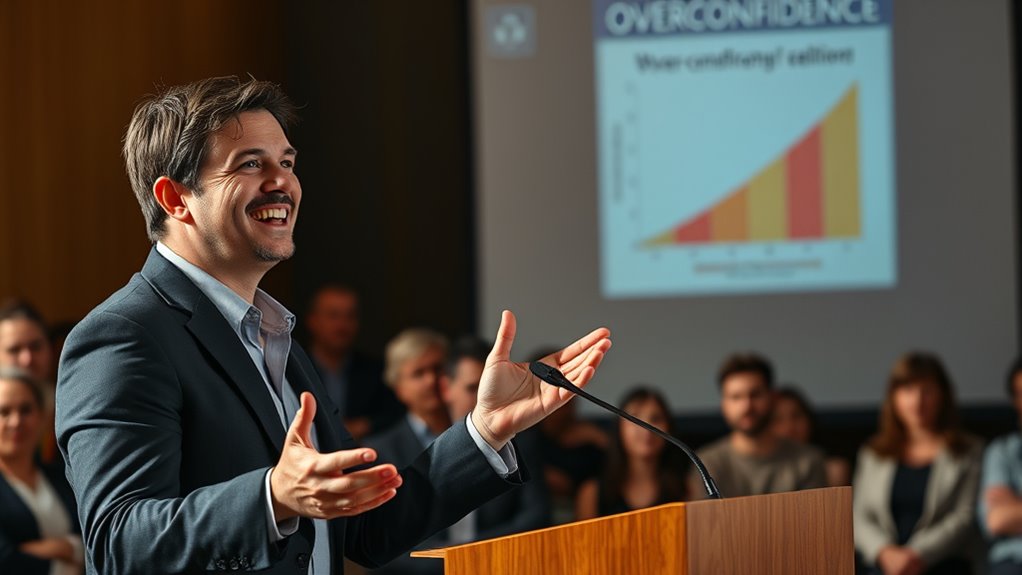
People who are confident but unskilled often overestimate their abilities because their limited knowledge prevents them from recognizing their own shortcomings. This is a classic example of self assessment bias, where you lack the awareness needed to judge your skills accurately. When you’re caught in the overconfidence trap, you believe you’re more competent than you actually are. Without enough knowledge, you miss the signs of your incompetence and assume success comes easily. Your overconfidence blinds you to areas needing improvement, reinforcing false beliefs about your abilities. This misjudgment keeps you from seeking growth or correction. Essentially, your lack of skill impairs your ability to evaluate yourself correctly, leading to inflated confidence despite your actual competence. Recognizing the influence of self assessment bias can help you develop more accurate self-evaluations and foster genuine growth. Additionally, understanding Free Floating confidence can shed light on why some individuals underestimate their skills despite actual competence. Moreover, research indicates that personality traits such as overconfidence are often linked to specific psychological tendencies, which can influence how individuals perceive their abilities.
Why Skilled People Often Underestimate Their Abilities

Why do skilled individuals often underestimate their abilities? It’s because they tend to focus on their gaps rather than their strengths, which hampers humility development. When you’re highly skilled, you’re more aware of the complexities and uncertainties involved, making you doubt your competence. This self-awareness can overshadow your skill recognition, leading you to believe others are more capable or that you haven’t achieved enough. Instead of overestimating, you may undervalue what you’ve accomplished, feeling like you’re still learning. This mindset fosters humility but can also hinder confidence. Recognizing your skills objectively requires effort, and understanding that expertise involves continuous growth helps you appreciate your abilities without dismissing them. Additionally, the phenomenon is influenced by innovative cloud solutions, which emphasize the importance of accurate self-assessment in a rapidly evolving technological landscape. Developing self-awareness can further help individuals accurately gauge their capabilities and foster balanced confidence. Building accurate self-perception is essential for bridging the gap between confidence and competence, especially in dynamic fields. Moreover, cultivating strong problem-solving skills contributes to better self-assessment by enabling individuals to evaluate their performance more effectively. Recognizing the role of electric dirt bikes and related technologies can also inspire confidence in one’s ability to adapt and learn new skills.
How to Spot the Dunning–Kruger Effect in Daily Life and Work

Recognizing the Dunning–Kruger effect in everyday situations can help you better understand how misjudgments of competence happen. One way is to watch for self assessment bias, where people overestimate their skills despite limited knowledge or experience. If someone confidently claims expertise without supporting evidence, they might be experiencing this bias. Additionally, pay attention to social cues—people who dismiss feedback or ignore input from others often lack awareness of their limitations. In work settings, excessive confidence that isn’t backed by results can signal the effect at play. Being aware of cognitive biases can help you better interpret these behaviors and avoid falling into similar traps yourself. Recognizing that overconfidence can stem from such biases enables you to approach situations with a more critical eye. Awareness of confidence and competence discrepancies can also improve your ability to accurately assess others’ skills and expertise. For example, understanding the net worth of public figures like Kate from Breaking Amish or Christian Yelich can provide context for perceived competence and success, highlighting that appearances may not always reflect true expertise or capability. By observing these patterns, you can better identify when individuals might overestimate their abilities, helping you navigate interactions more effectively. Additionally, understanding self-awareness can be a valuable tool in distinguishing genuine skill from inflated perception.
Practical Tips to Reduce Overconfidence and Boost Self-Awareness

To effectively reduce overconfidence and boost self-awareness, start by actively seeking honest feedback from others. This helps you identify blind spots and understand your true abilities. Incorporate self-assessment techniques, such as journaling your daily achievements and setbacks, to track your growth objectively. Practice mindfulness exercises, like focused breathing or meditation, to stay present and recognize when your mind overestimates your competence. Visualize these steps:
- Asking a trusted colleague for constructive critique
- Reflecting daily on your decisions and feelings
- Engaging in mindful pauses during busy moments
- Comparing your self-perceptions with actual outcomes
Additionally, understanding that vetted information ensures you’re basing your self-assessment on reliable data, further enhancing your self-awareness. Incorporating essential oils for self-awareness, like frankincense or clary sage, can also support mental clarity and mindfulness practices.
Frequently Asked Questions
Can the Dunning–Kruger Effect Apply to Group Dynamics?
Yes, the Dunning–Kruger effect can influence group dynamics by fostering groupthink conformity. When members overestimate their knowledge, they may resist critical feedback, leading the group to make poor decisions. You might notice everyone aligning with a false sense of confidence, suppressing doubts or alternative ideas. This collective overconfidence hampers critical thinking, making the group more susceptible to errors and less receptive to constructive criticism.
How Does the Dunning–Kruger Effect Impact Decision-Making in Leadership?
Like a captain blinded by fog, your overconfidence bias can steer decisions into dangerous waters. This effect clouds your judgment, making you underestimate risks and overestimate your abilities. As a leader, you might overlook vital details or ignore warning signs, leading to risky choices. Recognizing this bias helps you stay grounded, evaluate situations more objectively, and avoid poor decisions driven by misplaced confidence.
Is the Dunning–Kruger Effect Permanent or Can It Change Over Time?
The Dunning–Kruger effect isn’t permanent; it can change over time. By developing self-awareness and engaging in skill acquisition, you can recognize your limitations and gain more accurate self-assessment. As you learn and grow, your confidence aligns better with your true abilities, reducing the effect. Consistent effort in self-awareness development and acquiring new skills helps you become more competent and less susceptible to overestimating your expertise.
Are There Specific Personality Traits Linked to the Dunning–Kruger Effect?
Think of personality traits as the gears turning a complex machine—certain traits can amplify cognitive biases like the Dunning–Kruger effect. People with high narcissism or low self-awareness may be more prone to overconfidence, while those with humility tend to recognize their limits. Traits like impulsiveness or low openness can also influence susceptibility. Understanding these traits helps you grasp why some are more affected by this bias than others.
How Can Education Help Mitigate the Dunning–Kruger Effect?
You can mitigate the Dunning–Kruger effect through education by fostering critical thinking skills and encouraging lifelong learning. When you develop critical thinking, you learn to evaluate your knowledge accurately and recognize your limitations. Emphasizing lifelong learning helps you stay open to new information and improve over time. These strategies make you more aware of your competence levels, reducing overconfidence and promoting genuine understanding.
Conclusion
Understanding the Dunning-Kruger Effect helps you recognize overconfidence in yourself and others. Did you know that 85% of drivers believe they’re above average? By staying humble and seeking continuous learning, you can improve your skills and avoid costly mistakes. Keep an eye on your confidence levels, ask for feedback, and stay open to growth. Being aware of this bias empowers you to make smarter decisions and build genuine competence.