
The “Regret Score” question helps you gauge how much a past decision truly affects you emotionally, offering clarity amid confusion. By reflecting on the significance of your regrets, you gain insight into your decision‑making patterns and emotional responses. This process highlights what really matters and reveals recurring themes. If you want to better understand your regrets and improve future choices, exploring this concept more deeply can unblock valuable growth opportunities.

Prime made for students and young adults
- Fast, free delivery for dorm and study essentials
- Prime Video and Amazon Music included
- Member-only deals
Key Takeaways
- The “Regret Score” question prompts reflection on whether past regrets reveal core values or external pressures.
- It helps distinguish between superficial regrets and those indicating meaningful personal insights.
- Asking, “Will this regret influence my future choices positively or negatively?” clarifies the emotional impact.
- This question shifts focus from dwelling on past mistakes to understanding their significance in decision-making.
- It promotes emotional awareness by encouraging evaluation of regrets’ root causes and guiding healthier choices.
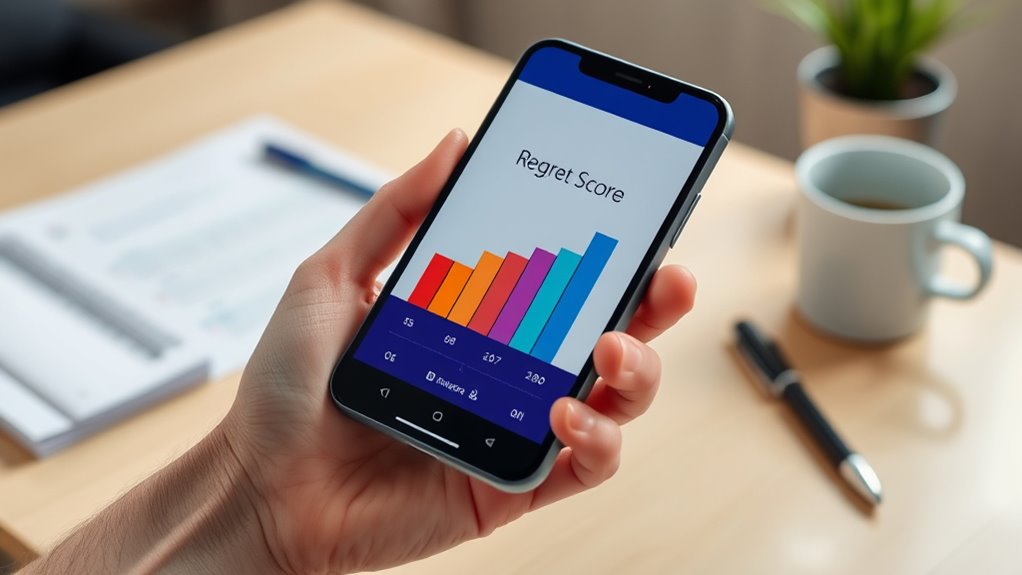
Have you ever wondered how to measure your feelings of missed opportunities or past mistakes? It’s a question that can seem vague and overwhelming, but there’s a simple yet powerful tool that can help: the Regret Score. This score isn’t just about tallying up regrets; it’s about gaining decision clarity and sharpening your emotional awareness. When you understand how regret functions, you can navigate your feelings more effectively and even use them to make better choices moving forward.
The core idea behind the Regret Score is to quantify how significant your regrets are and what they reveal about your decision‑making process. It helps you step back from emotional noise and see your feelings more objectively. Instead of feeling lost in a swirl of guilt or nostalgia, you begin to understand which past choices truly matter to you and why. This clarity allows you to identify patterns—are you consistently regretting similar types of decisions? Are there particular areas of your life where your emotional awareness needs strengthening? By assigning a score, you create a tangible measure of your emotional response, which makes it easier to analyze and adjust your approach to future decisions.
Quantify your regrets to gain clarity and improve your decision-making process.
Decision clarity is essential because it gives you a clearer lens through which to view your past and present. When your regrets are mapped out, you gain insight into the factors that influenced your choices—whether they were external pressures, impulsive reactions, or a lack of information. Recognizing these influences helps you develop a more deliberate decision-making process. It’s about shifting from reactive to reflective thinking. The Regret Score acts as a mirror, revealing not only what you regret but also highlighting the decision‑making patterns that led you there. This increased decision clarity empowers you to weigh options more consciously, reducing knee‑jerk choices rooted in emotional upheaval.
At the same time, emotional awareness plays a fundamental role in how you interpret your regrets. The score isn’t meant to punish or judge but to bring awareness to your emotional landscape. When you understand why certain decisions evoke stronger regrets, you learn more about your values, fears, and desires. This awareness becomes a guide, helping you to align your future actions with what truly matters to you. Recognizing patterns in your regrets can also help you identify decision-making biases that may be holding you back. As you track your Regret Score over time, you’ll notice shifts—perhaps fewer regrets in areas where you’ve gained more insight or more nuanced feelings that lead to healthier choices. Ultimately, the Regret Score provides a clear, actionable way to process your past, strengthen your emotional awareness, and develop decision clarity that guides you toward more fulfilling outcomes.
Frequently Asked Questions
How Is the Regret Score Calculated Exactly?
You calculate the regret score by applying decision-making frameworks that weigh emotional factors. First, identify potential outcomes and assign emotional weights to each based on how much you’d regret or regret less. Then, multiply each outcome’s likelihood by its emotional weight. Summing these products gives you the regret score, helping you objectively compare choices by considering both probabilities and emotional impact, guiding you toward more confident decisions.
Can the Regret Score Be Applied to Personal Decisions?
Yes, you can apply the regret score to personal decisions, enhancing your decision-making frameworks and emotional intelligence. By evaluating how you might feel about potential choices, you can better understand your fears, desires, and values. This approach helps you weigh options more objectively, make mindful decisions, and minimize future regret. Using the regret score in personal choices encourages self-awareness, clarity, and confidence, ultimately guiding you toward more satisfying outcomes.
What Are Common Misconceptions About the Regret Score?
You might think the regret score is a perfect tool for decision-making, but misconceptions often arise from psychological biases like hindsight bias or overconfidence. People believe it predicts future happiness or regret accurately, yet decision-making myths suggest it oversimplifies complex choices. Remember, the regret score isn’t foolproof; it’s just a helpful guide. Be aware of biases that can distort your perception and avoid overrelying on it for every decision.
How Often Should I Reassess My Regret Score?
You should reassess your regret score regularly, especially when your circumstances or priorities change, to improve your risk assessment and decision timing. Typically, reviewing it monthly or after significant events helps you stay aligned with your goals. By doing so, you keep a clear perspective on your choices, ensuring you’re making informed decisions that minimize future regrets. Consistent reassessment helps you adapt and refine your decision-making process effectively.
Does the Regret Score Consider Emotional Factors?
Think of your regret score as a mirror reflecting both your thoughts and feelings. It does consider emotional impact by capturing psychological factors that influence your regrets. You might notice that heightened emotions, like sadness or excitement, sway your score, revealing how emotional states shape your reflections. This way, your regret score doesn’t just measure actions but also highlights the emotional landscape behind your decisions, giving you a fuller picture.
Conclusion
Remember, sometimes the best way to make a decision is to ask yourself, “Will I regret this later?” The Regret Score Question cuts through the noise and helps you focus on what truly matters. Trust your instincts and don’t overthink. After all, as the saying goes, “Better to have tried and failed than never to have tried at all.” Use this simple question to navigate choices confidently and live without unnecessary regret.
Halloween Picks
halloween
As an affiliate, we earn on qualifying purchases.