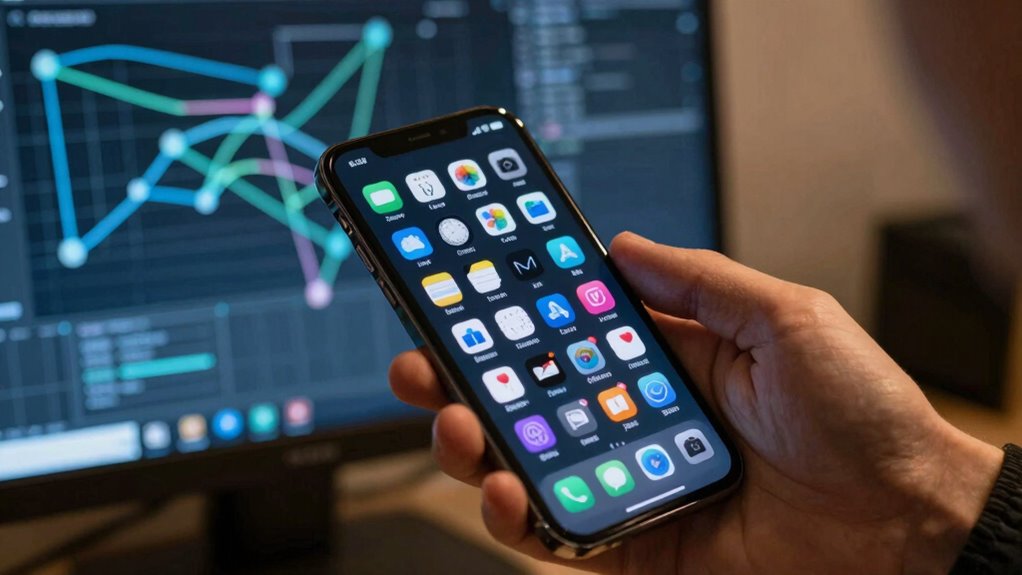

Every app you use shares data across complex networks involving third parties like advertisers and analytics firms. This process uses standardized protocols, making data flow seamless but also widespread, increasing your privacy risks. Shared data can often be re-identified even after anonymization, and security flaws can expose your info to breaches. Layered, interconnected patterns hide where your data travels, making it hard to track. If you keep exploring, you’ll uncover how these hidden flows impact your privacy every day.
Listen free for 30 days with Audible
Thousands of audiobooks and originals — cancel anytime.
As an affiliate, we earn on qualifying purchases.
Key Takeaways
- Data moves through complex networks, often shared with third parties like advertisers and analytics firms via standardized protocols.
- Anonymized data can be re-identified by combining it with other datasets, revealing user identities.
- App data sharing involves layered protocols that enable interoperability but may introduce security vulnerabilities.
- Collected data is aggregated into detailed profiles used for targeted advertising and commercial purposes.
- Evolving re-identification techniques and interconnected data flows challenge user privacy and anonymization efforts.

Have you ever wondered how apps share your data seamlessly across different platforms and services? It’s a question many people overlook, but understanding the underlying patterns can reveal a lot about how your information travels behind the scenes. When you use various apps—whether for social media, shopping, or fitness tracking—your data doesn’t just stay within that app. Instead, it often moves through complex networks, often shared with third parties like advertisers, analytics firms, or even other service providers. This data sharing is driven by a pattern that prioritizes efficiency and personalization but also raises significant privacy concerns.
One of the key techniques that makes this possible is data anonymization. App developers and data handlers often strip personally identifiable information before sharing data, making it seem safer and less invasive. However, even anonymized data can sometimes be re-identified when combined with other datasets, which fuels privacy concerns. As a user, you might think that your data is protected simply because your name or contact details aren’t included, but subtle patterns and unique traits in your behavior or preferences can still reveal your identity. This ongoing tension between data utility and privacy is central to understanding the hidden data-sharing pattern in apps.
Anonymized data can still be re-identified, raising ongoing privacy concerns despite efforts to protect user information.
Behind the scenes, app developers often use standardized data-sharing protocols, enabling different services to communicate efficiently. These protocols allow your usage data—like location, search history, or device info—to be shared in a way that maintains functionality and improves user experience while attempting to safeguard your privacy. Despite these intentions, the layered nature of data sharing means your information can pass through multiple entities, each with different privacy policies and security measures. This complexity makes tracking how your data flows from one platform to another difficult, and it increases the risk of misuse or breaches. Additionally, data anonymization techniques are not always foolproof, as clever re-identification methods can sometimes be de-anonymize supposedly safe datasets.
Furthermore, many apps employ data aggregation—collecting and combining data points from numerous users to create detailed profiles. These profiles are then often sold or used for targeted advertising. While this pattern boosts revenue for companies, it also amplifies privacy concerns, especially when users aren’t fully aware of how much they’re sharing. The standardized data-sharing protocols facilitate this complex exchange, but they also introduce potential vulnerabilities if not properly secured. Although data anonymization helps, it isn’t foolproof, and the more data shared, the higher the chances of unintended exposure. This layered and interconnected data-sharing pattern can sometimes obscure the origins and destinations of your information, making it harder for users to fully understand or control their data footprint. Moreover, ongoing advancements in re-identification techniques continue to challenge the efficacy of anonymization methods, emphasizing the need for stronger security measures. Ultimately, this pattern of data sharing in apps reflects a balancing act: offering personalized, efficient experiences while *orchestrating* the risks associated with privacy concerns and the limits of anonymization.
privacy screen protector for smartphones
As an affiliate, we earn on qualifying purchases.
As an affiliate, we earn on qualifying purchases.
Frequently Asked Questions
How Can I Identify Data-Sharing in My Favorite Apps?
You can identify data-sharing in your favorite apps by checking their privacy settings and permissions, looking for prompts about user consent before data collection. Pay attention to how they handle data anonymization—if your data is anonymized, your identity stays protected. Also, review privacy policies to see if they disclose data-sharing practices. Being proactive about understanding these aspects helps you control what information you share and how it’s used.
What Are the Privacy Risks of App Data Sharing?
Ever wonder what your data might be exposed to? Sharing data without proper privacy measures risks identity theft, targeted ads, or even misuse by third parties. Without strong data encryption, your information can be vulnerable to hacking. Additionally, if you haven’t given clear user consent, your privacy is compromised. Always check app permissions and guarantee they prioritize data encryption and transparent user consent to protect your personal information.
Are There Tools to Monitor App Data Exchanges?
Yes, you can monitor app data exchanges with tools that track permission prompts and data encryption. These tools alert you when apps request access to sensitive info, helping you understand data sharing. They often analyze data flows, showing where encryption is used for security. By using such monitoring tools, you gain better control over your data, ensuring apps don’t share information without your knowledge or consent.
How Do App Developers Decide What Data to Share?
App developers decide what data to share by prioritizing user consent and implementing data anonymization techniques. They assess the necessity of each data type, ensuring only essential information is shared, and clearly inform users about data usage. Developers aim to protect privacy while meeting app functionality, balancing transparency and security to foster trust. Ultimately, user consent and data anonymization guide their decisions on sharing data responsibly.
Can Data-Sharing Patterns Change Over App Updates?
Yes, data-sharing patterns can change over app updates, like a river shifting its course. Developers might adopt new methods like data anonymization or request fresh user consent, altering how data flows. These changes reflect evolving privacy standards and user expectations. As you update your apps, you might notice new permissions or privacy features, indicating a shift in data-sharing practices designed to protect your information better and respect your control.
As an affiliate, we earn on qualifying purchases.
Conclusion
By understanding the data-sharing patterns in your everyday apps, you become more aware of what you share, what you expose, and what you protect. Recognize the patterns that reveal your habits, your preferences, your privacy. Be mindful of the data you give, the data you receive, and the data you unknowingly share. Stay vigilant, stay informed, and take control—because awareness, action, and caution are your best defenses in this digital world.
As an affiliate, we earn on qualifying purchases.
privacy-focused browser extension
As an affiliate, we earn on qualifying purchases.
As an affiliate, we earn on qualifying purchases.
NFL season / tailgating Picks
team gear
As an affiliate, we earn on qualifying purchases.