
Silent extensions can trap you by renewing subscriptions without clear notices or explicit approval, often hiding renewal dates in fine print or emails. These tricks make it easy to overlook ongoing charges, risking unexpected bills and privacy breaches if your personal info is shared. To avoid this, stay vigilant about renewal notices and monitor your bank statements. If you want to know how to spot and prevent these sneaky tactics, keep exploring for helpful tips.
Key Takeaways
- Silent extensions continue subscriptions without explicit notice, often hiding renewal dates in vague emails or fine print.
- Auto-renewals can cause unexpected charges by renewing subscriptions without user approval or awareness.
- Companies may obscure renewal notices or delay alerts to trap consumers into ongoing payments.
- Recognizing renewal tactics, such as monitoring bank statements and email alerts, helps detect silent auto-renewals early.
- Managing account settings and setting renewal reminders can prevent silent extensions from causing unwanted charges.
What Are Auto-Renewals and Silent Extensions?
Auto-renewals are a process where your subscription automatically renews at the end of each billing cycle without requiring your manual approval. This convenience can lead to subscription fatigue, where you forget or overlook upcoming renewals, causing unexpected charges. Companies often prioritize renewal transparency poorly, making it hard for you to track or understand renewal dates. Silent extensions are a common form of auto-renewal where your subscription continues without explicit notice, increasing the risk of accidental payments. While auto-renewals save time, they can also trap you into paying for services you no longer want or need. Being aware of how these processes work helps you stay in control and avoid surprises or unwanted charges. Understanding cookies can help you better manage your online subscriptions and privacy settings to prevent unintended renewals. Additionally, understanding how contract terms are structured can empower you to recognize and dispute unwanted automatic renewals before they occur, especially since some companies may use cookie categories to track your renewal preferences and behaviors. Recognizing the importance of website functionality can also help you identify when cookies are being used to facilitate renewal processes. Knowing how renewal notifications operate can further assist you in staying informed about upcoming charges and avoiding surprise payments.
How Do Silent Auto-Renewals Trick Consumers?
Silent auto-renewals often hide renewal notices, so you might not notice your subscription is renewing. Automatic billing traps make it easy to forget you’re being charged without explicit confirmation. Understanding these tactics helps you spot and avoid being tricked into ongoing payments. Additionally, many subscription services rely on renewal notices that are intentionally concealed or delayed to prevent consumers from noticing the recurring charges. Some services even use subscription management strategies that make it difficult to cancel or review renewal dates, further entrenching consumers in continuous payments. These tactics are part of a broader trend where protective styling strategies are employed to keep customers enrolled without clear communication. Being aware of regulatory verification processes can help consumers identify legitimate offers and avoid scams that exploit these auto-renewal tactics.
Hidden Renewal Notices
Have you ever overlooked a renewal notice and found yourself charged for another subscription month? Hidden renewal notices are a common trick that companies use to keep you unaware of upcoming charges. These renewal notifications and billing alerts often arrive via email or app notifications, but they can be buried in your inbox or hidden among other messages. Sometimes, they’re written in small font or placed at the bottom of lengthy terms and conditions, making them easy to miss. This lack of clear, upfront communication allows companies to silently extend your subscription without your active consent. To avoid surprises, always check your email inbox and app alerts carefully, and review the renewal details before clicking “confirm” or “subscribe” again. Transparency in earning potential is also important; understanding how companies communicate renewal policies can help you stay informed and avoid unintended charges. Additionally, being aware of subscription management options can empower consumers to control their renewals more effectively, especially since some companies rely on silent auto-renewals to retain customers without explicit consent. Recognizing these renewal tactics can help you spot and prevent unwanted charges before they happen, especially when you stay vigilant about renewal notices and billing alerts.
Automatic Billing Traps
Many companies rely on automatic billing traps to silently renew your subscriptions without clear notice, making it easy for charges to go unnoticed. These tactics contribute to subscription fatigue, where you feel overwhelmed by ongoing payments. By hiding renewal dates or using vague billing descriptions, they reduce billing transparency, so you’re less aware of upcoming charges. This often leads to surprise expenses, especially if you forget to cancel or review your subscriptions regularly. Silent auto-renewals exploit your busy schedule, making it difficult to track what you’re paying for. Without clear communication, you might continue paying for services you no longer use or want. Recognizing these tactics helps you stay vigilant, protect your finances, and maintain control over your subscriptions.
Signs Your Subscription Has Silent Auto-Renewals
You might not notice your subscription renewing if the renewal date is hidden or unclear. Unexplained billing charges can also be a red flag that auto-renewals are happening silently. Staying alert to these signs helps you catch auto-renewals before they catch you off guard. Being aware of everyday safety can help you recognize signs of potential issues like unauthorized charges, such as understanding the importance of subscription management and reviewing your billing statements regularly.
Hidden Renewal Dates
Hidden renewal dates can be tricky to spot, especially when companies don’t clearly communicate them. Without transparency, it’s easy to overlook when your subscription automatically renews, reducing your renewal awareness. Some providers hide renewal dates deep within terms or fine print, making it hard to track. To avoid surprises, check the subscription details regularly and look for clear, upfront information about renewal periods. Good subscription transparency should include explicit renewal dates and renewal policies, helping you stay aware of upcoming charges. If renewal dates are vague or buried, it’s a sign that the company isn’t prioritizing renewal awareness. Keeping an eye on your subscription’s renewal schedule can protect you from unintentional auto-renewals and unexpected charges. Understanding the importance of User Privacy and Cookies can also help you recognize potential pitfalls in automatic renewals.
Unnoticed Billing Charges
Silent auto-renewals often go unnoticed because billing charges can appear unexpectedly on your bank statement or credit card without prior warning. This sneaky process contributes to subscription fatigue, making it harder to track active services. Without clear renewal reminders, you might not realize you’re still paying for a subscription you no longer use or need. Staying vigilant about tech clutter can help you identify and cancel unwanted auto-renewals before they drain your budget.
The Risks of Silent Auto-Renewals for Your Finances and Privacy
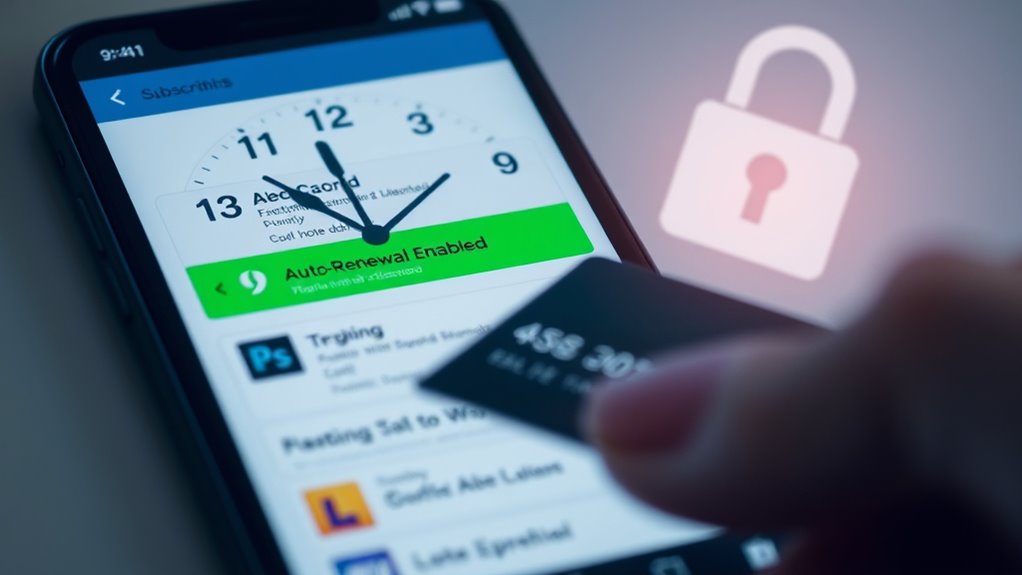
Auto-renewals can pose significant risks to your finances and privacy, especially when they occur without explicit consent or clear notice. Without proper subscription transparency, you might find yourself billed repeatedly for services you no longer need or want. Hidden renewal disclosures make it easy to overlook upcoming charges, leading to unexpected expenses that strain your budget. Silent auto-renewals can also compromise your privacy if personal data is shared or sold without your knowledge. Falling victim to these practices means losing control over your financial commitments and personal information. To protect yourself, stay vigilant about renewal notices, review subscription terms carefully, and demand clear renewal disclosures from companies. Being proactive helps you avoid unnecessary charges and safeguard your financial and personal privacy. Understanding electrical concepts can also help you recognize potential risks associated with digital security and data sharing. Additionally, understanding subscription management practices is crucial for maintaining control over your digital commitments.
Your Legal Rights and Protections Against Silent Auto-Renewals
You have the right to be aware of automatic renewal notices so you can stay informed about upcoming charges. It’s important to recognize these notices and understand how to exercise your cancellation rights if you no longer want the service. Knowing your legal protections helps you avoid unwanted auto-renewals and manage your subscriptions effectively. Being familiar with clear and trustworthy information can empower you to make better decisions about your online and everyday activities.
Recognizing Automatic Renewal Notices
Many service providers are required to send renewal notices before charging you for another term, giving you a chance to review and cancel if desired. Paying attention to these billing notices helps you recognize upcoming subscription renewal dates. These notices often appear via email, text, or your account dashboard, and clearly state the renewal date and amount due. Look for specific language indicating an automatic renewal, such as “Your subscription will renew automatically,” or “This is a renewal notice.” Some providers include a reminder about how to cancel if you don’t want the renewal to proceed. Recognizing these notices early allows you to make informed decisions and avoid unexpected charges. Staying alert to renewal notices is your first line of defense against silent auto-renewals catching you off guard.
Exercising Your Cancellation Rights
Have you ever been caught off guard by a surprise renewal charge? If so, you’re not alone. Many fall victim to subscription scams that exploit unclear renewal policies to trap consumers. The key to exercising your cancellation rights is knowing your rights under consumer protection laws. First, review the terms of your subscription, especially the renewal policies, to understand how and when you can cancel. Most companies are required to notify you before a renewal, giving you a chance to opt out. If a company refuses to honor your cancellation request or continues charging without your consent, you can dispute the charge with your bank or credit card issuer. Staying informed and proactive helps protect you from silent auto-renewals and subscription scams.
How to Detect Silent Auto-Renewals on Your Accounts
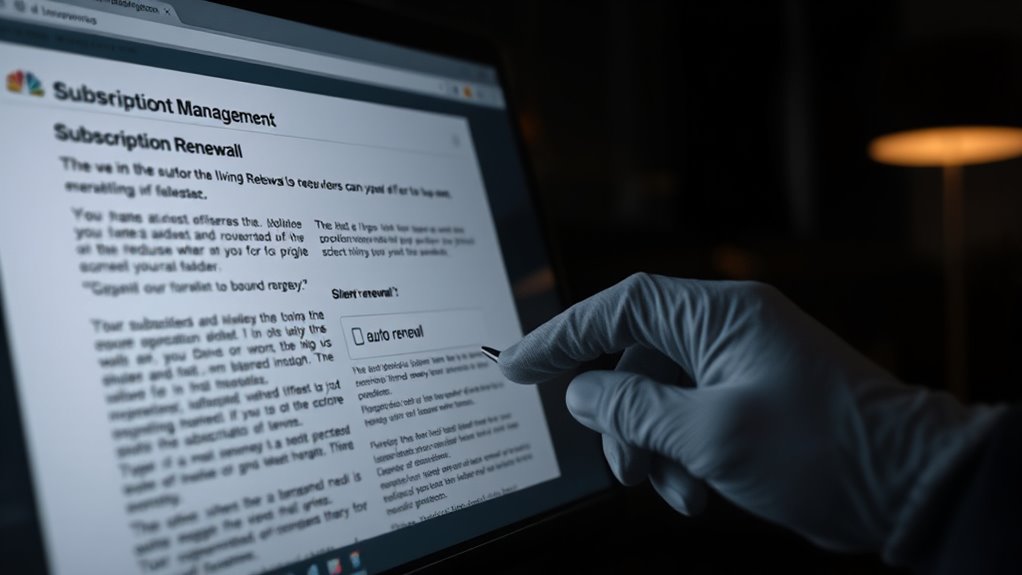
Silent auto-renewals often go unnoticed because they happen automatically, without clear notifications or immediate prompts. To detect them, regularly review your account settings and billing history. Check for any subscription upgrades or changes that may have occurred without your knowledge. Many services send renewal notifications, but if you’ve missed them or they go to spam, you might not realize your subscription is continuing. Keep an eye on your email inbox and bank statements for recurring charges. Some platforms also offer a dedicated section for active subscriptions—review it periodically. Being proactive helps you spot silent auto-renewals early, giving you the opportunity to cancel or manage your subscriptions before unwanted charges accrue.
How to Stop or Cancel Silent Auto-Renewals
To stop or cancel silent auto-renewals, start by reviewing your account settings and subscription details on the service providers’ websites or apps. Look for options to disable auto-renewal or turn off renewal notifications, so you’re not caught off guard by renewal charges. Subscription fatigue can make it easy to overlook renewal dates, so setting reminders or checking your subscriptions regularly helps prevent unwanted charges. Some providers send renewal notifications; if you receive these, act promptly to cancel before the renewal date. Keep in mind that many companies make it difficult to cancel, so be persistent. Regularly monitoring your subscriptions ensures you stay in control and avoid paying for services you no longer want or need.
Tips to Prevent Unwanted Auto-Renewals and Hidden Charges
Preventing unwanted auto-renewals and hidden charges starts with staying vigilant about your subscriptions. Effective subscription management helps you track renewal dates and avoid surprises. Set up renewal reminders on your phone or calendar a few days before each billing cycle to review upcoming charges. Regularly review your subscriptions to identify any that you no longer use or need, and cancel them if necessary. Always read the terms and conditions, especially for auto-renewal clauses, so you understand when charges will recur. Using tools or apps that monitor your subscriptions can simplify this process. By actively managing your subscriptions and setting timely renewal reminders, you stay in control and prevent charges from sneaking in unexpectedly.
Managing Auto-Renewals on Popular Platforms
Managing auto-renewals on popular platforms is a key step in maintaining control over your subscriptions. To avoid subscription fraud and renewal deception, regularly review your account settings. Enable notifications for upcoming charges, so you’re aware before renewal. Check platform-specific options to cancel or pause subscriptions easily. Some services hide renewal details, so stay vigilant. Use a dedicated payment method to monitor charges closely. Keep track of renewal dates and verify charges against your subscription list. Consider using third-party tools to monitor multiple platforms simultaneously.
| Platform | How to Manage Auto-Renewals |
|---|---|
| Streaming Apps | Check settings and cancel before renewal |
| App Stores | Review subscriptions in account settings |
| Cloud Services | Disable auto-renew to prevent renewal deception |
| News Platforms | Turn off auto-renew in account preferences |
| Software Providers | Cancel or modify renewal plans |
What to Do If You’re Trapped in a Silent Auto-Renewal Trap

If you find yourself unexpectedly charged after a subscription quietly renewed, you’re likely caught in a silent auto-renewal trap. The first step is to review your bank statement and locate the charge. Next, increase your subscription awareness by checking the renewal date and terms in your account settings. Contact customer service to request a cancellation and a refund if appropriate. To prevent future surprises, enable renewal transparency alerts—many platforms offer notifications before renewal. It’s also wise to read the fine print on subscription agreements and keep records of your cancellations. Staying proactive helps you regain control over your subscriptions and avoid being trapped by hidden renewals. Remember, understanding renewal terms is key to managing auto-renewals effectively.
Frequently Asked Questions
How Common Are Silent Auto-Renewal Scams Across Different Industries?
Silent auto-renewal scams are quite common across various industries, especially in subscription traps and billing fraud. You often don’t realize you’re enrolled until you see unexpected charges on your credit card. Companies in streaming, software, and even health services sometimes use these sneaky tactics. To protect yourself, always read the fine print and monitor your billing statements closely, so you don’t fall victim to these deceptive auto-renewal practices.
What Legal Cases Have Challenged Silent Auto-Renewal Practices?
You should know that several legal cases challenge silent auto-renewal practices under contract law, especially when there’s a breach of disclosure. Courts have ruled against companies that fail to clearly inform consumers about renewal terms, deeming it deceptive. These cases aim to protect your rights, ensuring companies can’t secretly extend contracts without your explicit consent. If you face such issues, legal precedents support challenging these silent auto-renewal practices.
Are There Technological Tools to Automatically Detect Silent Renewals?
You might be surprised to learn that renewal detection tools and subscription monitoring apps exist to help you spot silent renewals. These technological tools automatically scan your email and billing statements, alerting you before renewal dates. They act like a coincidence, catching sneaky auto-renewals before they surprise you financially. By using these tools, you regain control, avoiding unexpected charges and ensuring you’re aware of all your active subscriptions.
How Can Consumers Dispute Charges From Silent Auto-Renewals?
If you’re charged from a silent auto-renewal, start by reviewing the company’s dispute procedures and refund policies. Contact customer service promptly, clearly explain the issue, and provide any supporting documentation. Be persistent if needed, and consider filing a complaint with consumer protection agencies if you don’t get a resolution. Staying informed about your subscription terms helps you dispute charges effectively and recover any wrongful fees.
Do Insurance Policies Also Utilize Silent Auto-Renewal Clauses?
Insurance policies often use silent auto-renewal clauses, quietly extending your coverage without your direct approval. You should carefully review the policy language and look for renewal notices, which are your lifeline to staying informed. Just like a ship needs a steady hand at the wheel, staying proactive guarantees you won’t be caught off guard by unexpected charges or coverage lapses, keeping your financial boat afloat.
Conclusion
Don’t let deceptive details derail your digital dollars. Stay savvy by spotting sneaky silent auto-renewals, securing your subscriptions, and staying in control. Regularly review your renewals, revoke unwanted renewals swiftly, and remember—you’re entitled to transparency and protection. Shield your finances from surprise charges and silent snares by staying vigilant, vigilant, vigilant. By understanding your rights and taking proactive steps, you can prevent pitfalls, preserve your privacy, and keep your subscriptions simple and secure.