
Understanding the difference between refunds, returns, and warranties helps you make smarter choices. A refund gives you your money back after returning a product, while a return involves physically sending it back within a set timeframe. A warranty, on the other hand, guarantees repairs or replacements if the product malfunctions during its coverage period. Knowing these distinctions assures you can act quickly and confidently when issues arise, and there’s more to explore to protect your interests effectively.
Key Takeaways
- Refunds involve getting money back after returning a product within a specified period.
- Returns are physical shipments of items back to the seller, usually within a set timeframe.
- Warranties guarantee repairs or replacements for product defects during the warranty period.
- Refunds and returns focus on customer satisfaction, while warranties cover product quality issues.
- Understanding the timing, conditions, and scope of each ensures proper handling and maximum benefit.
What Are Refunds, Returns, and Warranties?
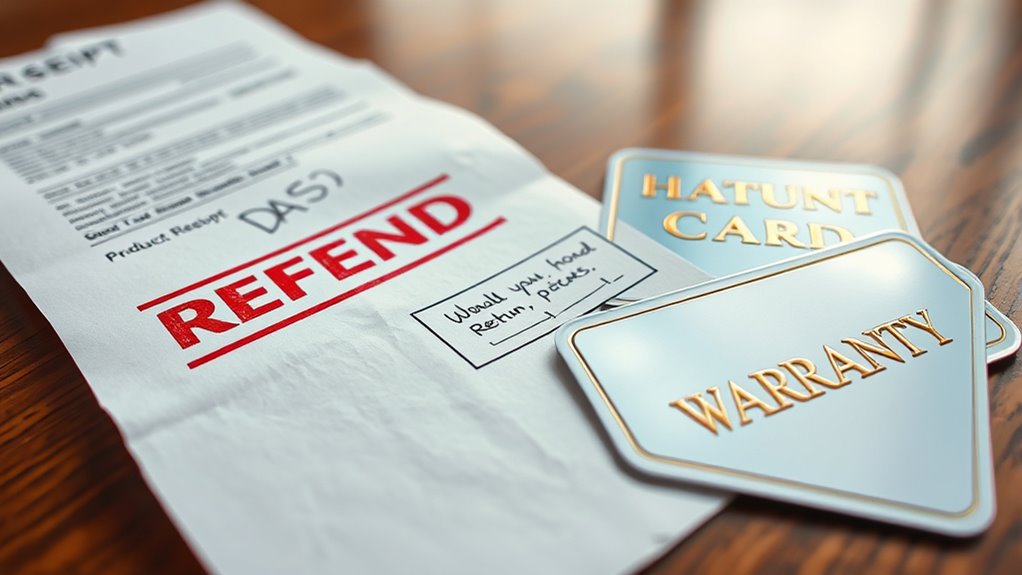
Have you ever wondered what exactly distinguishes a refund, a return, and a warranty? These terms are essential to understanding how businesses build trust and boost customer satisfaction. A refund involves giving your money back after returning a product, often influenced by pricing strategies that encourage repeat business. Returns allow you to send back items within a certain timeframe, ensuring customers feel confident shopping. Warranties, on the other hand, offer repairs or replacements if a product malfunctions, emphasizing quality assurance. Each plays a role in shaping customer experience and loyalty. By understanding these differences, you can better navigate your options and make smarter decisions. Companies use these tools strategically to keep prices competitive while maintaining high levels of customer satisfaction. Additionally, clear policies regarding product warranties help consumers understand what coverage they can expect, further fostering trust. Knowing the terms of service related to refunds and returns can also help you avoid misunderstandings and ensure a smoother resolution process. Recognizing how different customer service policies are designed to protect both the consumer and the business can enhance your confidence when making purchases. Moreover, understanding the distinction between refunds and returns can influence your decision-making during shopping.
How Do Refunds, Returns, and Warranties Differ?
Understanding how refunds, returns, and warranties differ helps you navigate your options more effectively. Refunds typically involve getting your money back after returning a product, while returns focus on sending the item back. Warranties, on the other hand, promise repairs or replacements if the product is defective. Product labeling often clarifies these policies, making it easier to determine your rights. Customer service plays a key role in guiding you through each process. Here’s a quick comparison:
| Aspect | Refund | Return | Warranty |
|---|---|---|---|
| Focus | Money-back guarantee | Sending product back | Repair or replacement |
| Timing | Usually within a set period | Usually within return window | During warranty coverage |
| Clarification | Product labeling helps clarify | Customer service explains options | Customer service manages repairs |
Additionally, understanding the European cloud solutions available can influence your choices for tech products and services.
Being aware of consumer protection laws related to refunds and warranties can further empower your decisions.
When Should You Request a Refund or Return?
You should request a refund or return as soon as you notice a purchase issue, like damage or incorrect items. Always review the store’s return policies to understand the time limits and conditions. Acting within the designated timeframe guarantees your request is valid and easier to process. Additionally, understanding warranty coverage can help you determine if repairs or replacements are appropriate instead of a return. Being aware of survival gear options is also useful if the product is related to preparedness or emergency situations. Recognizing the differences between refunds, returns, and warranties ensures you choose the most suitable resolution for your situation. Knowing your rights and options can prevent unnecessary stress if issues arise with your purchase. Being informed about privacy policies can also help you manage your personal information during the return process.
Identify Purchase Issues
Recognizing when to request a refund or return is essential to resolving purchase issues effectively. If the product doesn’t meet your expectations, is damaged, or differs from its description, it’s time to act. Consider factors like pricing strategies that influence discounts or promotions, which might affect your decision. Additionally, if you notice repeated issues, requesting a refund can safeguard your customer loyalty and prevent future problems. Use this table to evaluate your situation:
| Issue Type | When to Request a Refund or Return |
|---|---|
| Defective or Damaged | Immediately, to ensure protection under warranty |
| Not as Described | When product doesn’t match the listing or photos |
| Poor Quality or Service | If repeated issues lead to dissatisfaction |
Check Return Policies
Before requesting a refund or return, it’s important to review the seller’s return policies. These policies often outline specific conditions, timeframes, and procedures, which can vary based on pricing strategies and the desire to maintain customer satisfaction. Knowing the details helps you determine if you’re eligible for a return and how to proceed efficiently. Some sellers offer flexible return windows or free returns to boost customer satisfaction, while others may have stricter rules. By understanding these policies upfront, you avoid surprises and ensure your request aligns with the seller’s guidelines. This proactive approach helps protect your rights and makes the process smoother, ultimately saving you time and potential frustration. Additionally, being aware of Rhythm Failure can sometimes influence the emotional context of your purchase decisions.
Timeframe for Requests
Timing is vital when requesting a refund or return, as most sellers set specific deadlines to do so. Typically, you must initiate your request within a certain period after purchase—often 30 days—so it’s essential to act promptly. Make sure your product registration is complete, as some companies require it to process returns or refunds. If you miss the deadline, your chances of a successful request diminish. Don’t hesitate to contact customer support early if you’re unsure about the timeframe or how to proceed. They can clarify deadlines and guide you through the process. Being aware of these time limits helps you avoid losing your right to a refund or return, ensuring your rights as a consumer are protected.
What Does a Product Warranty Cover, and When Does It Apply?

A product warranty outlines what repairs or replacements are covered and when it applies. You should understand its scope, limits, and the specific conditions that might exclude certain issues. Knowing the warranty’s duration and any exclusions helps you determine if your claim is valid. Additionally, aquatic exercise benefits can sometimes be included as part of warranty coverage if related equipment malfunctions. Being familiar with natural pools and their maintenance requirements can also help you identify coverage for issues stemming from eco-friendly filtration systems. Understanding the role of backup power systems in maintaining essential functions can further clarify warranty considerations. Recognizing the importance of eco-friendly filtration systems in some equipment can assist in understanding potential warranty coverage for environmentally conscious features. Moreover, a thorough understanding of testing methodologies helps ensure that products meet quality standards before reaching consumers.
Coverage Scope and Limits
Product warranties typically cover defects in materials or workmanship that occur within a specified period. However, their scope is limited to issues caused by manufacturing or design flaws, not damage from misuse or accidents. You should understand that warranties don’t extend to normal wear and tear or cosmetic imperfections. When a defect falls under the warranty, the manufacturer assumes legal obligations to repair or replace the product, addressing product liability concerns. It’s essential to review the warranty’s terms to know what is covered and what isn’t. Some warranties have specific limits, such as coverage only for certain parts or conditions. Knowing these limits helps you avoid false expectations and ensures that you’re aware of when the warranty applies and when it doesn’t. Additionally, understanding the coverage scope can help you determine if your issue qualifies for a warranty claim. For example, some warranties specify coverage limits that restrict the duration or extent of protection, which can impact your expectations. Being aware of warranty exclusions can prevent misunderstandings about coverage and potential costs. Furthermore, manufacturers often provide detailed instructions on warranty registration, which is crucial for ensuring your claim is recognized.
Duration of Warranty
The duration of a warranty determines how long you’re protected after purchasing an item. It specifies the period during which the manufacturer or seller guarantees the product’s functionality and repairs. Warranty duration varies widely—some last a year, while others offer extended coverage of several years. Extended coverage provides added peace of mind, especially for high-value or complex products. When purchasing, always check the warranty duration to understand how long your protection lasts. Keep in mind, once this period expires, you’re responsible for repairs or replacements. If you want ongoing coverage beyond the standard warranty, you might consider purchasing an extended warranty. Knowing the Warranty duration helps you plan for potential repairs and ensures you’re aware of when your protection begins and ends. Additionally, understanding how warranty coverage differs from other protections like refunds or returns can help you make informed purchasing decisions.
Conditions and Exclusions
Understanding what a warranty covers and when it applies is essential to making the most of your protection. Typically, warranties exclude damages caused by misuse, accidents, or unauthorized repairs. Seller policies may specify specific conditions, such as requiring product registration within a certain period after purchase. Failing to register your product or ignoring these exclusions can limit your coverage. Warranties usually cover manufacturing defects and faulty parts but won’t cover normal wear and tear or cosmetic damages. Be sure to carefully read the warranty terms, including any conditions and exclusions, to know exactly what’s covered. Knowing these details helps you avoid surprises and ensures you can rely on your warranty when needed. Always keep proof of purchase and follow seller policies to maximize your benefits.
How Do Warranties Protect You Over the Product’s Life?

Have you ever wondered how warranties keep you protected long after you’ve made a purchase? Warranties cover various issues throughout the product lifecycle, ensuring that if something goes wrong, you’re not left to handle the costs alone. They typically specify a period during which repairs or replacements are free, helping you avoid unexpected expenses. This protection boosts your confidence in the product’s durability and reliability. By addressing defects or malfunctions early on, warranties help maintain your satisfaction over time. They act as a safeguard, giving you peace of mind that your investment is protected as long as the warranty is valid. Ultimately, warranties reinforce your trust in the brand and contribute to a positive customer experience.
What Factors Should You Consider Before Making a Claim?

Before filing a warranty claim, it’s important to assess several key factors to guarantee you’re making the right decision. Consider the product’s pricing strategies, as higher-priced items may warrant more scrutiny before a claim. Evaluate whether the warranty coverage aligns with the issue you’re experiencing—some warranties are limited and exclude certain damages. Customer service quality is vital; responsive and helpful support can streamline the process and improve your experience. Also, review the terms and conditions to understand claim deadlines and required documentation. Knowing these factors helps you determine if pursuing a warranty claim is worthwhile or if alternative options, like refunds or returns, might better suit your situation. Being informed ensures you maximize your protections efficiently.
How to File a Refund, Return, or Warranty Claim : Step by Step

Filing a refund, return, or warranty claim involves a series of clear steps to guarantee your issue gets resolved efficiently. First, review the seller’s or manufacturer’s policies, especially regarding product repair and service agreements. Gather all necessary documentation, such as receipts, warranties, and photos of the product’s defect. Contact customer service via phone, email, or online portal, clearly explaining your issue and referencing your documentation. Follow their instructions carefully, which may include filling out forms or shipping the product back. Keep records of all correspondence and shipping details. Once your claim is submitted and accepted, the company will process your refund, arrange for product repair, or honor your warranty. Staying organized speeds up the process and ensures your rights are protected.
Why Understanding These Terms Can Save You Time and Money

Understanding the differences between a refund, return, and warranty can save you significant time and money when dealing with faulty or unsatisfactory products. Knowing which option applies helps you choose the quickest solution and ensures better product repair or replacement. It also boosts customer satisfaction, as you avoid unnecessary delays or misunderstandings. Use this table to clarify your options:
| Term | Best Use Case | Key Benefit |
|---|---|---|
| Refund | Unsatisfactory product or change of mind | Quick cash return |
| Return | Faulty or defective product | Proper product repair or replacement |
| Warranty | Product defect or malfunction | Long-term customer satisfaction |
Being familiar with these terms empowers you to navigate disputes efficiently, saving you time and money.
Frequently Asked Questions
Can a Product Have Both a Return Policy and a Warranty Simultaneously?
Yes, your product can have both a return policy and a warranty simultaneously. These policies address different issues; a return policy handles product overlap concerns or dissatisfaction, while a warranty covers defects or malfunctions. They coexist to give you all-encompassing protection, ensuring you can return or repair the product as needed. Always check the specific policies to understand how they work together and what conditions apply.
Are Refunds Always Issued Back to the Original Payment Method?
Refunds are typically issued back to your original payment method, making the refund process straightforward. However, some stores might offer store credit or gift cards instead, especially during sales or promotions. It’s important to check their policies because, unlike returns, which involve physically returning the product, refunds directly impact your payment method. Always clarify with the retailer to guarantee the refund goes where you expect, avoiding surprises.
Do Warranties Cover Accidental Damage or Misuse?
Warranties usually don’t cover accidental damage or misuse because of product liability and warranty exclusions. If you accidentally damage the product or misuse it, the warranty likely won’t cover repairs or replacements. Always check the warranty details to understand what’s included and what’s excluded, so you’re aware of any limitations. Keep in mind that proper use helps guarantee your product remains protected under warranty coverage.
How Long Does a Typical Warranty Period Last?
A typical warranty lasts about one to three years, depending on the product. You’ll find that warranty duration varies widely, with electronics often offering two-year coverage, while appliances might last five years or more. The typical coverage usually includes defects in materials or workmanship, but accidental damage or misuse isn’t covered. Always check the warranty terms, so you know exactly what’s included and for how long you’re protected.
Who Is Responsible for Shipping Costs During a Warranty Claim?
Imagine a promise wrapped in a guarantee—your warranty responsibility kicks in, but who bears the shipping costs? Usually, during a warranty claim, the manufacturer or seller covers the shipping costs, making it their responsibility. However, this can vary. Always check your warranty details to know who’s responsible for shipping costs during a warranty claim. Don’t assume—clarify your warranty responsibility before sending anything back.
Conclusion
By mastering the meanings of refunds, returns, and warranties, you’ll navigate your consumer rights with confidence. Clarify your claims, compare coverage, and conquer confusion to save time and money. Don’t delay or doubt—dive into details, decide diligently, and defend yourself fiercely. Remember, understanding these terms transforms transactions into triumphs, turning your purchasing power into a protected, powerful tool. Equip yourself with knowledge, and turn every buy into a breeze!