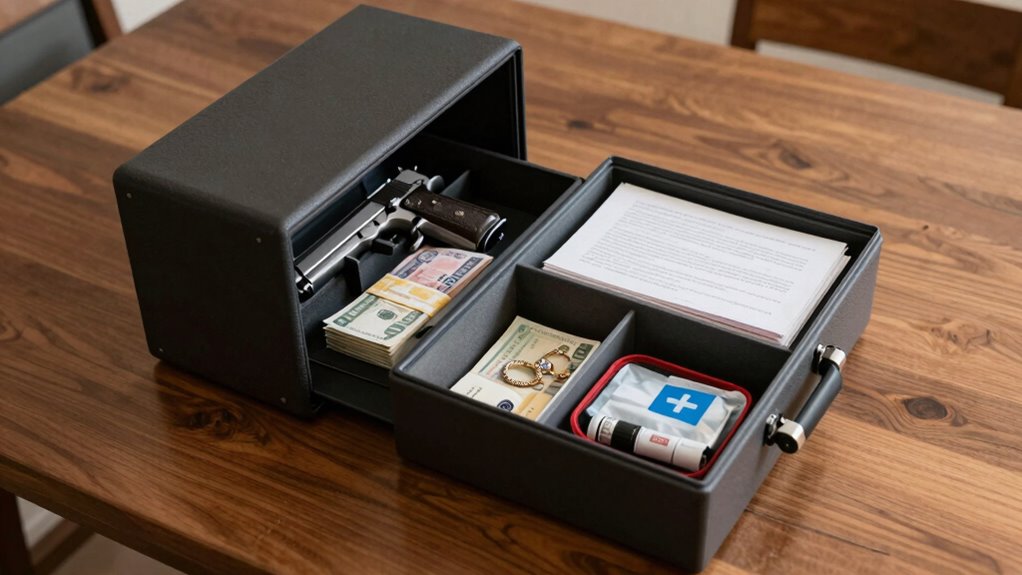

A practical home safe should hold essential documents like birth certificates, wills, and passports, along with valuable jewelry and cash. Keep your backup digital copies of important files on a secure, fireproof medium. It’s also wise to store spare keys, small electronics, and insurance papers. To guarantee protection, consider fire-resistant materials and secure access with digital locks. Continue exploring to discover more items that can help keep your valuables safe and easily accessible during emergencies.
Key Takeaways
- Store important documents like passports, birth certificates, and wills in a fireproof safe.
- Keep valuable jewelry, cash, and collectible items secure in a reinforced safe.
- Place digital copies of essential documents and photos on secure cloud storage or external drives.
- Protect small, high-value items such as heirlooms and rare valuables inside a fire-resistant container.
- Ensure the safe is hidden and accessible only to trusted family members for quick retrieval.

Have you ever wondered if your home is truly safe for you and your family? Ensuring safety isn’t just about locking doors and windows; it involves thoughtful planning and the right materials. One vital aspect is the use of fireproof materials. These materials, like fire-resistant drywall, treated insulation, and fireproof safes, can considerably slow the spread of flames and give you precious extra time to evacuate. Installing fireproof safes for important documents, jewelry, or cash keeps them protected even if a fire breaks out. It’s also wise to reinforce areas prone to fires, such as the kitchen, with fire-resistant barriers. Think of fireproof materials as your home’s first line of defense against potentially devastating fires, making a real difference in protecting your loved ones and possessions.
Fireproof materials like drywall and safes protect your home and loved ones from devastating fires.
Another essential element in home safety is securing access points with modern technology. Digital lock systems have gained popularity for their added security and convenience. Unlike traditional locks, digital systems eliminate the need for keys, which can get lost or copied. You can set personalized PIN codes or use fingerprint access, making it harder for intruders to gain entry. These systems can also be programmed to lock or unlock at specific times, giving you control over who enters and when. With remote access capabilities, you can monitor and manage your locks from anywhere, adding an extra layer of security when you’re away. Upgrading to digital lock systems can act as a deterrent for burglars and provide peace of mind, knowing that your home’s entry points are well protected.
Safety isn’t just about physical barriers; it’s also about being prepared. Keep a well-stocked fire extinguisher on each level of your home, especially in the kitchen and garage. Regularly check that they’re in working order, and make sure everyone in your family knows how to use them. Additionally, install smoke detectors and carbon monoxide alarms in key areas, testing them monthly and replacing batteries as needed. These simple steps could save lives by alerting you early to danger. Furthermore, understanding how home projectors work and their role in creating a safe and comfortable environment can contribute to overall home safety and enjoyment.
Finally, consider creating a home emergency plan. Make sure everyone understands escape routes, safe meeting spots, and how to turn off utilities if necessary. Practice drills periodically so that everyone knows what to do in case of fire or other emergencies. Combining these safety measures—fireproof materials, digital lock systems, and emergency preparedness—creates a thorough safety net for your home. By actively implementing these strategies, you’re not just protecting your house; you’re safeguarding your family’s future.
Frequently Asked Questions
How Often Should I Update My Home Safe Inventory?
You should update your home safe inventory at least once a year to guarantee accuracy. Regular safety updates help you keep track of new valuables, replace outdated documentation, and adjust for changes in your belongings. By maintaining an up-to-date home inventory, you enhance your safety measures and ensure quick access during emergencies or insurance claims. Set a reminder annually to review and revise your safe’s contents for maximum security and peace of mind.
What Is the Best Location for a Home Safe?
You should place your home safe in a discreet, secure spot, avoiding obvious safe locations. Consider safe placement options like hidden locations behind false walls, inside closets, or under staircases. The key is to choose hidden locations that blend with your home’s design, making it harder for intruders to find. Guarantee the spot offers easy access for you but remains concealed from others for maximum security.
Are Fireproof Safes Worth the Extra Cost?
Is it worth the extra cost? Absolutely—fireproof safes offer essential fireproof benefits that protect your valuables from flames and heat. Think of it as an insurance policy for your most treasured documents and heirlooms. Conduct a thorough cost analysis; while they cost more upfront, their durability and peace of mind can save you thousands later. Investing in a fireproof safe ensures your belongings stay safe, no matter what fires may come.
How Do I Secure My Safe From Theft?
To secure your safe from theft, you should use biometric security to restrict access to authorized users only. Also, hide your safe in a discreet location, like behind furniture or inside a closet, to make it harder for thieves to find. Always anchor your safe securely to the floor or wall, and consider installing a security system for added protection. These steps help keep your valuables safe from intruders.
Can I Install a Safe Myself or Need Professional Help?
You can often handle DIY installation of a safe, but consider a scenario where a homeowner struggles with mounting it securely. If you’re comfortable with basic tools and follow instructions carefully, DIY installation works well. However, for larger safes or complex setups, professional assistance guarantees proper anchoring and security. Relying on experts minimizes risks and gives you peace of mind, especially when protecting valuable or sensitive items.
Conclusion
Having a home safe is like planting a sturdy tree—you hope you’ll never need to use its shelter, but when trouble strikes, it’s there. Imagine losing irreplaceable family photos or crucial documents; a safe keeps those moments alive. According to security experts, nearly 30% of homeowners regret not safeguarding valuables sooner. Don’t wait until it’s too late—invest in your peace of mind now, and turn your home into a fortress where memories and essentials are always protected.