To prevent mold, guarantee proper ventilation by regularly opening windows and using exhaust fans in kitchens and bathrooms. Keep indoor humidity levels between 30% and 50% with dehumidifiers or hygrometers, especially in damp areas. Dry surfaces thoroughly after water exposure and clean regular surfaces with mold-inhibiting solutions. Address leaks and water issues promptly to prevent moisture buildup. For more tips on keeping your home mold-free, keep exploring effective strategies.
Key Takeaways
- Ensure proper air circulation by opening windows and using exhaust fans to disperse moisture.
- Maintain indoor humidity levels between 30% and 50% with hygrometers and dehumidifiers.
- Regularly clean surfaces with mold-inhibiting solutions and keep them dry to prevent mold growth.
- Fix leaks promptly and address water intrusion immediately to eliminate mold-friendly conditions.
- Promote continuous airflow and proper ventilation in high-moisture areas to inhibit mold spores.
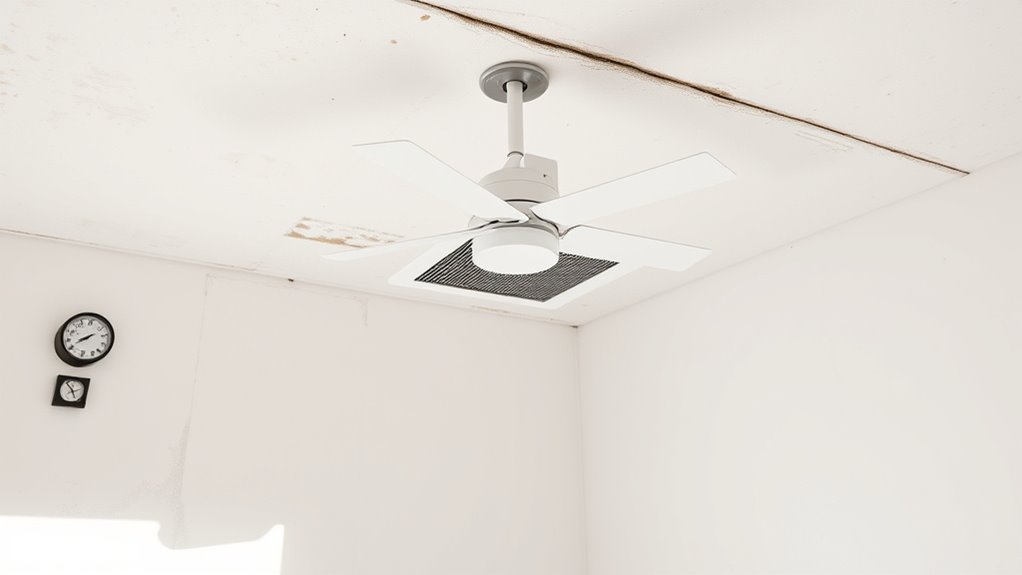
Mold can quickly become a problem in your home if you don’t take proactive steps to prevent it. One of the most effective ways to do this is by improving air circulation throughout your living spaces. When air moves freely, it helps disperse excess moisture and prevents it from settling in hidden corners or on surfaces. Regularly opening windows, using exhaust fans in the kitchen and bathroom, and ensuring vents aren’t blocked all foster better airflow. This constant movement of air discourages mold spores from settling and growing, which is essential for maintaining a healthy environment.
Along with proper air circulation, moisture control is essential in mold prevention. Mold thrives in damp environments, so keeping humidity levels in check is critical. Use a hygrometer to monitor indoor humidity, aiming for a range between 30% and 50%. If humidity rises above this, consider using a dehumidifier, especially in areas prone to excess moisture like basements, laundry rooms, or bathrooms. After showering or cooking, run exhaust fans or open windows to quickly remove excess moisture. Wiping down surfaces that tend to retain water, such as shower walls or kitchen counters, also helps reduce moisture buildup. When dealing with leaks or water intrusion, address the issue immediately to prevent water from lingering and creating ideal conditions for mold growth. Additionally, proper ventilation helps maintain a balanced humidity level and reduces stagnant air, further inhibiting mold development.
Surfaces inside your home can also harbor mold if not properly maintained. Regular cleaning with mold-inhibiting solutions, especially in bathrooms and kitchens, keeps mold spores at bay. Pay close attention to grout lines, around sinks, and behind appliances where moisture can accumulate unnoticed. Fixing leaks promptly and ensuring proper drainage around your home reduces water infiltration that could lead to mold issues. Additionally, keeping textiles like clothes, curtains, and upholstery dry and clean prevents mold spores from taking hold on fabrics.
Ultimately, mold prevention relies on a combination of good practices. Prioritize air circulation to keep fresh air flowing and moisture moving out. Control humidity levels using dehumidifiers or ventilation systems, especially in high-risk areas. Maintain surfaces by cleaning regularly and addressing water problems immediately. By staying vigilant and proactive, you create an environment where mold cannot easily take hold, safeguarding your home and your health.
Frequently Asked Questions
How Quickly Can Mold Develop After Water Damage?
Mold can start developing within 24 to 48 hours after water damage if conditions are right. The timing of mold growth depends on factors like humidity, temperature, and surface materials. You might notice mold quickly if you don’t dry the area thoroughly. To prevent mold growth, act fast—dry and ventilate the affected space immediately, and clean any surfaces to inhibit mold from taking hold.
Are Certain Building Materials More Resistant to Mold?
Certain building materials are more resistant to mold due to their durability and mold-resistant surfaces. You’ll find that materials like concrete, brick, and treated wood naturally resist mold growth better than porous options like drywall or untreated wood. Using mold-resistant surfaces and durable materials can markedly reduce mold risk, especially in high-moisture areas. So, choosing these options helps protect your space and makes mold prevention easier for you.
Does Indoor Plant Placement Affect Mold Growth?
Indoor plant placement can influence mold growth, much like casting shadows that encourage mildew to thrive. When you place plants in high-humidity areas and overwater them, indoor humidity rises, creating a perfect environment for mold. To prevent this, keep plants away from damp spots, water them appropriately, and guarantee good ventilation. This way, you control moisture levels, making your space less inviting for mold to settle and grow.
Can Mold Spores Be Completely Eliminated From a Home?
No, mold spores can’t be completely eliminated from your home, but you can reduce their presence markedly. Focus on mold resistance by improving ventilation and controlling humidity levels. Regularly clean surfaces to remove spores, and consider using air purifiers with HEPA filters for spores removal. While total elimination isn’t realistic, consistent maintenance minimizes mold growth, creating a healthier environment.
What Are the Health Risks Associated With Hidden Mold?
Hidden mold poses serious health risks, especially since airborne spores can trigger allergy symptoms in about 10-20% of the population. You might not see it, but these spores can cause respiratory issues, asthma flare-ups, and sinus problems. If mold remains hidden, you could unknowingly expose yourself daily, risking chronic health problems. Regular inspections and proper ventilation are essential to prevent airborne spores from affecting your health.
Conclusion
To keep mold at bay, make sure you’re regularly ventilating your space, controlling humidity levels, and cleaning surfaces thoroughly—just like a modern-day Marie Kondo. Don’t let your home become a haunted mansion, where moisture and darkness invite mold to settle in. Stay vigilant, and treat your living space like a trusty DeLorean, constantly moving forward to prevent future mold mishaps. Keep these tips in mind, and your home will stay fresh and mold-free—no flux capacitor needed!