When choosing a robot vacuum, you’ll notice different navigation approaches: random movement covers areas unpredictably, while mapping creates a virtual layout for systematic cleaning. Obstacle avoidance uses sensors to detect and navigate around furniture and hazards, making cleaning more efficient. Combining these methods offers maximum flexibility and thorough coverage. Understanding how each impacts cleaning performance helps you pick the best for your home. Keep exploring to discover how these strategies can work together to optimize your vacuum’s performance.

Get school and study supplies delivered free — and shop member deals
- Fast, free delivery on millions of items
- Access to Prime Big Deal Days deals on October 6–7
- Prime Video, Amazon Music and more included
Key Takeaways
- Random navigation uses unpredictable movement patterns, while mapping creates a virtual layout for planned cleaning routes.
- Mapping navigation builds detailed environmental maps, enabling route optimization and efficient coverage.
- Obstacle avoidance sensors detect and navigate around obstacles in real-time, enhancing cleaning performance.
- Random navigation is simpler but less thorough; mapping and obstacle avoidance provide precise, thorough cleaning.
- Combining mapping with obstacle detection results in smarter, more adaptable vacuum navigation strategies.
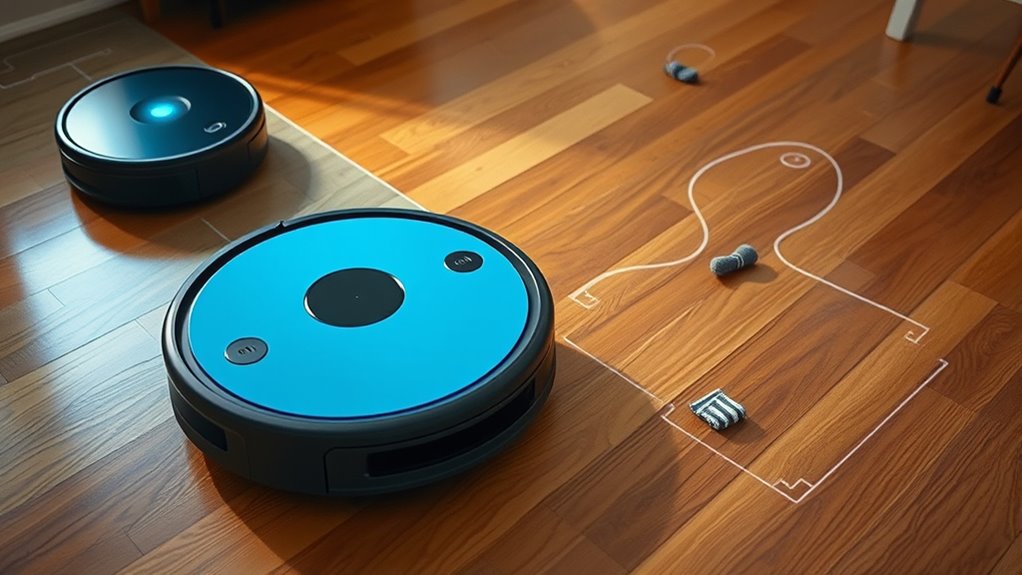
Have you ever wondered how robot vacuums efficiently clean your home without getting lost or missing spots? The secret lies in advanced navigation systems that combine sensor technologies with user customization options. These innovations allow your vacuum to adapt to your unique living space, ensuring thorough cleaning without you having to micromanage it. Sensor technologies are at the core of this process. They include infrared sensors, ultrasonic sensors, and lidar, all working together to detect obstacles, map the environment, and avoid collisions. Infrared sensors help the vacuum sense nearby objects, while ultrasonic sensors measure distances to prevent bumping into furniture. Lidar, on the other hand, creates detailed maps of your home’s layout, enabling the vacuum to plan efficient cleaning routes. This combination of sensors allows the robot to recognize walls, furniture, and even small objects, ensuring nothing gets overlooked. Additionally, some models incorporate navigation algorithms that optimize route planning based on sensor data for even greater efficiency.
User customization enhances this process even further. Many modern robot vacuums let you set cleaning schedules, designate no-go zones, or specify particular areas to focus on. With these features, you can tailor the cleaning process to fit your lifestyle and the unique needs of your home. For example, if you have delicate decorations or pet zones, you can instruct the vacuum to avoid those areas during specific times. Some models even let you create virtual boundaries through smartphone apps, giving you precise control over where your vacuum cleans. This level of user customization ensures the robot isn’t just blindly wandering around but is actively working in the areas that matter most to you.
In terms of navigation strategies, these sensor technologies and customization options work hand-in-hand. Random navigation relies on the vacuum moving in unpredictable patterns, which can be less efficient but easier to implement. Mapping navigation, however, uses sensors to build a virtual map of your home, allowing the vacuum to plan systematic, efficient routes. Obstacle avoidance features, powered by sensors, help the robot detect and navigate around unexpected hurdles, preventing it from getting stuck or causing damage. Thanks to these combined technologies, your robot vacuum can clean more thoroughly and efficiently, saving you time and effort.
Ultimately, the integration of sensor technologies with user customization options offers a smarter, more adaptable cleaning experience. You get a device that not only understands your home’s layout but also aligns with your specific cleaning priorities, making your life easier and your home cleaner.
robot vacuum with mapping and obstacle avoidance
As an affiliate, we earn on qualifying purchases.
As an affiliate, we earn on qualifying purchases.
Frequently Asked Questions
How Do Robot Vacuums Handle Dynamic Obstacles Like Pets?
You’ll find that most robot vacuums handle dynamic obstacles like pets through advanced obstacle detection. They sense pet behavior, such as movement or sudden changes, and quickly adapt their path. Some models even pause or reroute when they detect a pet nearby, preventing collisions. This smart obstacle detection ensures your vacuum navigates smoothly around pets, keeping everyone safe and your floors clean without constant supervision.
Can Mapping Features Improve Cleaning Efficiency Over Time?
Mapping features can definitely improve your robot vacuum’s cleaning efficiency over time. As the mapping accuracy gets better, your vacuum plans more precise routes, reducing missed spots and cleaning gaps. This leads to consistent cleaning patterns, so your floors stay cleaner longer. With improved mapping, your vacuum adapts to layout changes, maintains thorough coverage, and saves you time—making your cleaning routine more reliable and effective.
Are Obstacle Avoidance Sensors Affected by Floor Type?
Obstacle avoidance sensors act like vigilant eyes, but their accuracy can waver with floor variability. When you switch from smooth tiles to shaggy carpets, the sensors might struggle to interpret the terrain, like trying to read a faded map. This fluctuation in sensor accuracy affects how well your robot detects obstacles, meaning uneven floors can cloud its judgment, making navigation less precise and potentially leaving some spots uncleaned.
How Does Battery Life Impact Navigation Performance?
Battery life directly impacts your robot vacuum’s navigation performance. As the battery drains, it may slow down or pause to conserve power, affecting cleaning efficiency. Frequent charging cycles can wear out the battery, reducing overall run time and causing potential navigation issues. To maintain peak navigation, make sure your vacuum charges regularly and avoid letting the battery deplete completely, which helps preserve its performance and prolongs effective cleaning sessions.
Do Advanced Navigation Systems Increase Overall Robot Vacuum Cost?
You might notice that advanced navigation systems do increase the overall cost of robot vacuums, and it’s no coincidence. This cost increase stems from feature complexity, as these systems incorporate sensors, cameras, and smarter algorithms. While they boost cleaning efficiency, they also make the device pricier. If you want better navigation, be prepared for a higher price tag, but you’ll gain more precise cleaning and fewer missed spots.
best robot vacuum for pet hair and detailed navigation
As an affiliate, we earn on qualifying purchases.
As an affiliate, we earn on qualifying purchases.
Conclusion
When choosing a robot vacuum, understanding navigation methods helps you pick the right one. Random navigation covers 70% of cleaning areas but takes longer, while mapping tech boosts efficiency by 50%. Obstacle avoidance ensures thorough cleaning without getting stuck. So, if you want quick, effective cleaning, a mapping model with obstacle sensors is your best bet. Remember, investing in smarter navigation can save you time—just like the 85% of users who report cleaner floors with advanced tech.
smart robot vacuum with virtual no-go zones
As an affiliate, we earn on qualifying purchases.
As an affiliate, we earn on qualifying purchases.
robot vacuum with lidar and customizable cleaning schedules
As an affiliate, we earn on qualifying purchases.
As an affiliate, we earn on qualifying purchases.
Halloween Picks
halloween
As an affiliate, we earn on qualifying purchases.