
TL;DR

Get school and study supplies delivered free — and shop member deals
- Fast, free delivery on millions of items
- Access to Prime Big Deal Days deals on October 6–7
- Prime Video, Amazon Music and more included
A solar storm is predicted to produce northern lights visible in several northern US states ahead of Independence Day. Authorities advise viewers to be alert for auroras overnight. The event is confirmed but the exact locations and intensity remain uncertain.
A solar storm is forecast to produce visible northern lights across parts of the northern United States before the upcoming Fourth of July holiday, according to space weather agencies. This phenomenon, typically seen in higher latitudes, could be visible in states such as Montana, North Dakota, Minnesota, and parts of northern Michigan.
The National Oceanic and Atmospheric Administration (NOAA) has issued a geomagnetic storm watch due to increased solar activity. The storm is linked to a coronal mass ejection (CME) from the sun that is expected to reach Earth in the next 24 to 48 hours, potentially causing auroras to be visible at lower latitudes than usual.
Experts from NOAA’s Space Weather Prediction Center have confirmed that the solar storm could produce geomagnetic activity strong enough to light up the night sky with auroras, especially in northern states. Authorities and amateur skywatchers are encouraged to monitor local conditions and be alert for clear, dark skies during the nights ahead.
Potential Impact of the Solar Storm on US Skywatchers
This event matters because it offers a rare opportunity for residents in certain US states to witness the northern lights without traveling to traditionally high-latitude regions like Alaska or Canada. The visibility of auroras can also serve as an indicator of space weather activity, which can impact satellite communications, GPS signals, and power grids.
While the auroras are generally harmless, the increased geomagnetic activity caused by the solar storm underscores the importance of monitoring space weather forecasts, especially for industries and infrastructure sensitive to geomagnetic disturbances.
As an affiliate, we earn on qualifying purchases.
Recent Solar Activity and Expected Geomagnetic Effects
Solar activity has been increasing over the past week, with NOAA reporting a series of solar flares and a significant coronal mass ejection (CME) that originated from the sun’s active regions. The CME is now traveling toward Earth at high speed, with scientists predicting it could trigger geomagnetic storms in the coming days.
Historically, such solar storms have caused auroras to appear at lower latitudes, sometimes as far south as the northern US states, especially during peak solar activity cycles. This upcoming event is part of the ongoing solar cycle, which peaks approximately every 11 years.
“We are monitoring a significant solar storm that could produce visible auroras in parts of the northern United States over the next few nights. It’s an exciting opportunity for skywatchers.”
— Dr. Laura Smith, NOAA Space Weather Prediction Center
As an affiliate, we earn on qualifying purchases.
Uncertainties About Aurora Visibility and Intensity
While NOAA has issued a geomagnetic storm watch, the exact intensity and geographic reach of the auroras remain uncertain. Factors such as local weather conditions, cloud cover, and light pollution could affect visibility. The strength of the geomagnetic storm may also vary, influencing how spectacular the auroras will appear.
Scientists caution that forecasts are subject to change as the CME approaches, and the actual impact could be less or more intense than currently predicted.
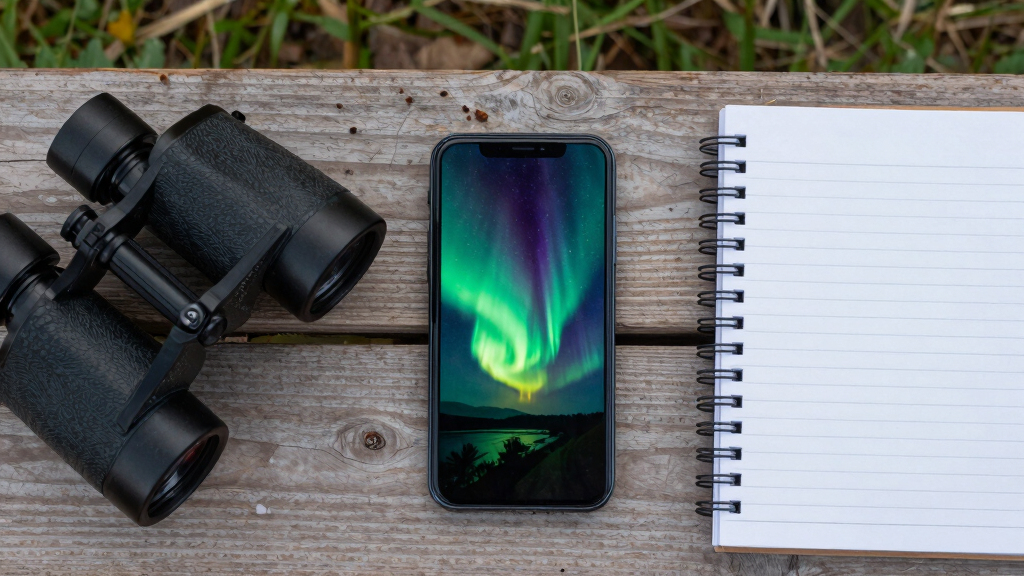
northern lights viewing binoculars
As an affiliate, we earn on qualifying purchases.
As an affiliate, we earn on qualifying purchases.
Monitoring and Preparedness for Aurora Displays
Authorities and astronomers will continue to monitor the solar storm’s progress over the next 48 hours. Updates on the storm’s strength and the best viewing times will be issued by NOAA and local weather agencies. Skywatchers are advised to find dark, clear skies during the nights ahead for the best chance to see the auroras.
Experts recommend checking local weather forecasts and space weather alerts before heading out to view the northern lights. The event could extend into multiple nights, offering repeated opportunities for viewing.
As an affiliate, we earn on qualifying purchases.
Key Questions
When will the northern lights be visible in the US?
Predicted to be visible in northern states such as Montana, North Dakota, Minnesota, and Michigan over the next few nights, particularly during clear, dark skies.
How strong will the auroras be?
The strength depends on the geomagnetic storm’s intensity, which is currently forecasted to be moderate to strong, but exact impact remains uncertain until the CME arrives.
Can anyone see the northern lights from these states?
Visibility depends on weather conditions, light pollution, and geographic location. Clear, dark skies increase the chances of seeing auroras in the predicted areas.
Will this affect technology or power grids?
While auroras are generally harmless, geomagnetic storms can temporarily impact satellite signals, GPS, and power grids. Authorities advise monitoring space weather updates for any alerts.
Source: google-trends
Fall Picks
fall essentials
As an affiliate, we earn on qualifying purchases.