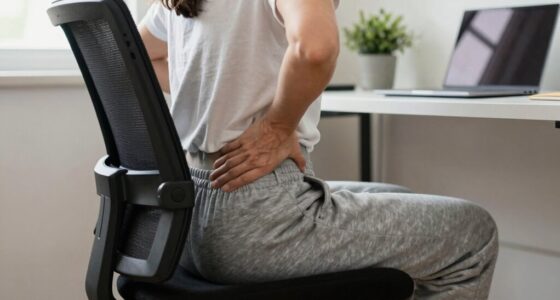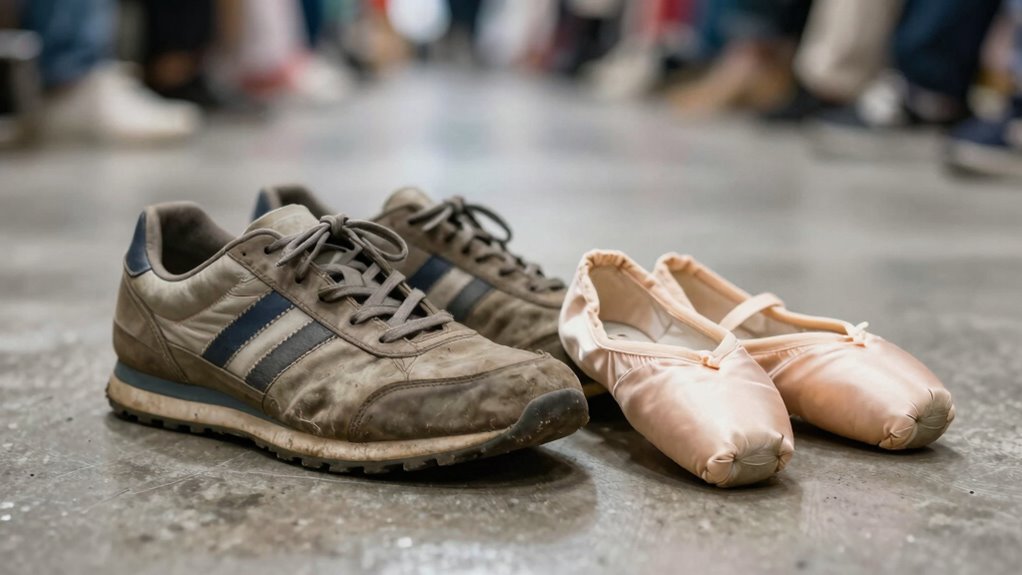
Standing for long hours can feel terrible mainly because of the footwear you wear. Many overlook how support, cushioning, and fit impact comfort and pain levels. Choosing shoes without proper arch support or shock absorption strains your feet, ankles, and legs, making standing exhausting. Modern footwear technology offers options that improve support and reduce fatigue. If you want to discover how to make standing more comfortable, keep exploring what footwear factors you might be missing.
Key Takeaways
- Poor footwear lacks proper arch support, leading to increased foot fatigue and discomfort during prolonged standing.
- Unsupported shoes cause uneven weight distribution, straining feet, ankles, and legs, making standing feel worse.
- Shoes without shock absorption amplify joint impact, increasing pain and fatigue over time.
- Ill-fitting footwear can aggravate foot issues, reducing comfort and causing long-term problems.
- Modern orthopedic support features in shoes help alleviate pressure and improve comfort during extended standing periods.
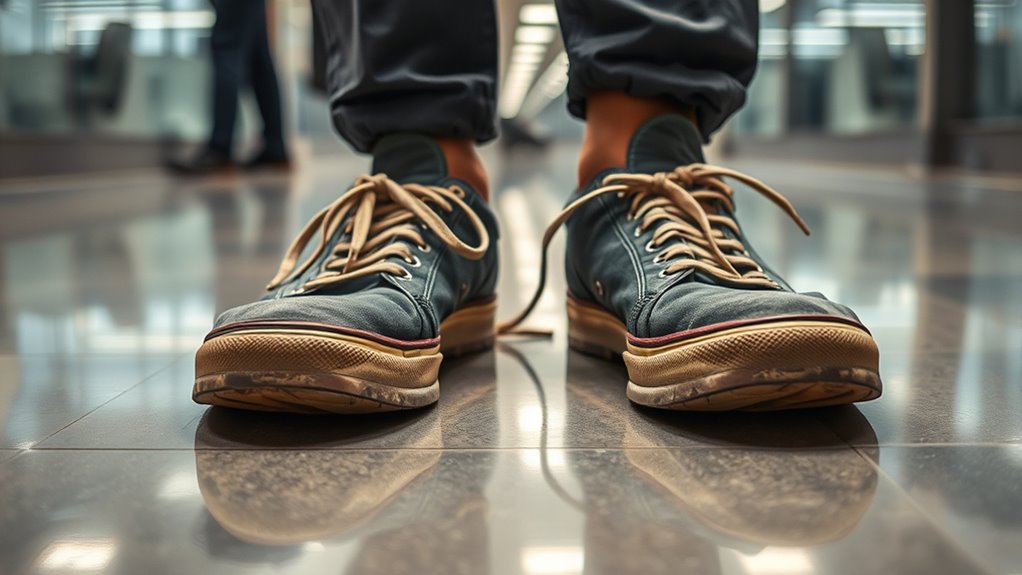
Standing for extended periods can take a serious toll on your feet and overall comfort, but choosing the right footwear makes a significant difference. The kind of shoes you wear directly impacts how your feet feel after hours on your feet, especially if you’re on your feet daily. Many people overlook the importance of orthopedic support when selecting footwear, yet it’s a vital factor in reducing fatigue and preventing pain. Shoes designed with orthopedic support provide better arch alignment, cushioning, and stability, which can help distribute your body weight more evenly and lessen the strain on your feet, ankles, and legs. When your footwear incorporates this support, standing becomes less painful and more manageable, even during long shifts or busy days.
Proper orthopedic support reduces fatigue and pain during long hours on your feet.
Footwear innovation has come a long way, especially with advancements tailored to meet the needs of people who stand for hours. Modern shoe technology now includes features like gel insoles, memory foam padding, and specially designed arch supports that adapt to your foot’s unique shape. These innovations aim to improve comfort, reduce pressure points, and enhance overall foot health. For instance, some shoes now incorporate shock-absorbing soles that minimize the impact on your joints with each step or stand. This kind of footwear innovation not only helps you feel better during the day but also prevents long-term issues like plantar fasciitis, bunions, or other foot ailments.
You might not realize it, but the right footwear can transform your daily experience. If you’re used to wearing unsupportive shoes or old sneakers, switching to footwear with orthopedic support can instantly make a difference. Look for shoes that offer proper arch support, heel cushioning, and a supportive midsole. These features help your feet maintain their natural alignment, reducing fatigue and pain. It’s also wise to choose shoes that fit well—improperly fitted shoes can negate even the best orthopedic features. Remember, investing in quality footwear isn’t just about comfort; it’s about protecting your feet and overall well-being over time. Additionally, considering proper footwear design can further enhance support and comfort for prolonged standing.
In the end, the right footwear isn’t just a luxury; it’s a necessity for anyone who spends hours on their feet. Thanks to ongoing footwear innovation, you now have access to shoes that provide excellent orthopedic support without sacrificing style or practicality. When you prioritize supportive, well-designed shoes, you’ll notice less discomfort, improved posture, and a more comfortable experience, no matter how long you’re standing.
Frequently Asked Questions
How Do Different Shoe Materials Affect Foot Comfort During Standing?
Different shoe materials markedly impact your foot comfort during standing. Soft, cushioned materials like memory foam offer better foot arch support, reducing fatigue. Flexible soles made from rubber or leather allow natural foot movement, preventing stiffness and discomfort. Stiffer materials, such as plastic or hard leather, limit flexibility and can cause pain. Choosing shoes with supportive arches and flexible soles helps you stay comfortable longer, reducing strain during extended periods of standing.
Can Orthotic Insoles Improve Standing Comfort Significantly?
Yes, orthotic insoles can greatly improve your standing comfort. They provide essential arch support and incorporate advanced cushioning technology, which helps distribute pressure evenly and reduce fatigue. By customizing your foot’s alignment, insoles can minimize pain and soreness, allowing you to stand longer without discomfort. Investing in quality orthotics ensures better support, improved posture, and a more comfortable, pain-free standing experience throughout your day.
What Role Does Shoe Heel Height Play in Foot Fatigue?
Higher heel heights often increase foot fatigue because they shift your weight forward, putting extra pressure on the ball of your foot. This misalignment strains your muscles and tendons, making standing uncomfortable over time. On the other hand, lower or moderate heels help distribute your weight more evenly, reducing fatigue. Choosing shoes with the right heel height can make a significant difference in how your feet feel during long periods of standing.
Are There Specific Footwear Brands Known for Better Standing Support?
You’ll find brands like Brooks, Skechers, and Clarks excel in footwear with better standing support. They prioritize foot arch support and feature slip-resistant soles, reducing fatigue and improving stability during long hours on your feet. Opt for shoes that fit well and have cushioned insoles. These brands often design for comfort, helping you stay on your feet longer without discomfort or risking slips.
How Often Should I Replace My Shoes for Optimal Standing Comfort?
Your shoes are your foundation—so don’t let them become a ticking time bomb! You should replace your shoes every 300 to 500 miles or roughly every 6 to 12 months, depending on your shoe lifespan and how often you stand. Sticking to a regular replacement schedule keeps your feet comfortable, supports your posture, and prevents pain. Keep an eye on wear and tear, and don’t wait too long!
Conclusion
Ultimately, your footwear shapes your comfort, influences your posture, and impacts your well-being. Choosing supportive shoes supports your feet, supports your body, and supports your health. Ignoring this factor ignores the foundation of your stance, the root of your endurance, and the key to feeling better. So, pay attention to what you wear, prioritize quality over style, and remember: your feet carry you through life—give them the support they deserve.