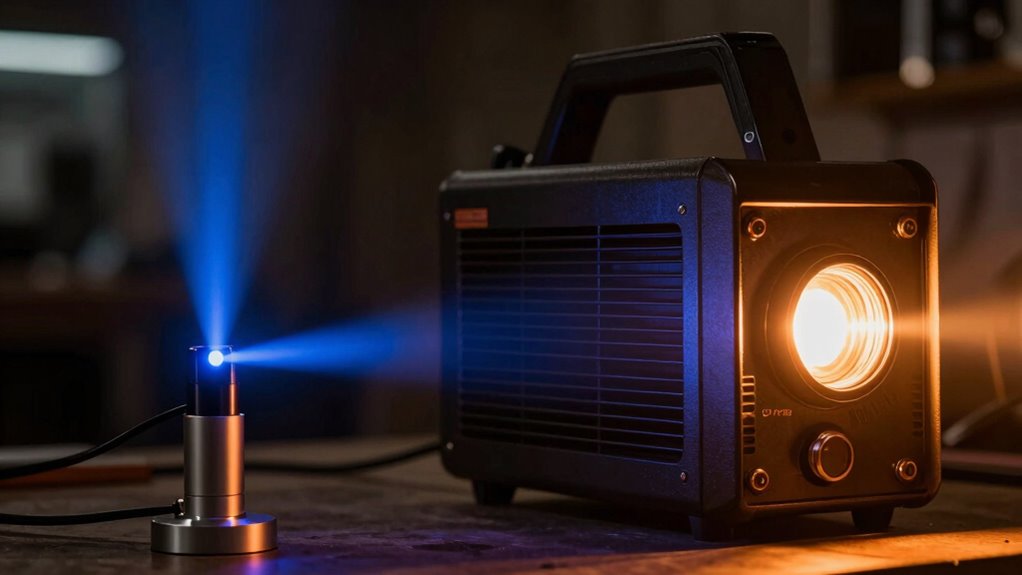

Diode and CO2 lasers differ mainly in size, power, and precision. Diode lasers are compact, energy-efficient, and ideal for delicate, minimally invasive procedures, with lower costs and easier maintenance. CO2 lasers are larger, more powerful, and excel at extensive tissue work and deep penetration, making them suitable for surgeries requiring precision and depth. Understanding these differences can help you choose the right laser for your needs—discover more to find the best fit.

Prime made for students and young adults
- Fast, free delivery for dorm and study essentials
- Prime Video and Amazon Music included
- Member-only deals
Key Takeaways
- Diode lasers are compact, energy-efficient, and cost-effective, ideal for portable and delicate procedures.
- CO2 lasers are larger, more powerful, and suited for extensive tissue work and deep penetration.
- Both lasers offer high precision, but diode lasers excel in minimizing thermal damage.
- CO2 lasers typically require higher initial investment and maintenance costs than diode lasers.
- The choice depends on procedural scope, with diode lasers for versatility and CO2 lasers for deep tissue applications.
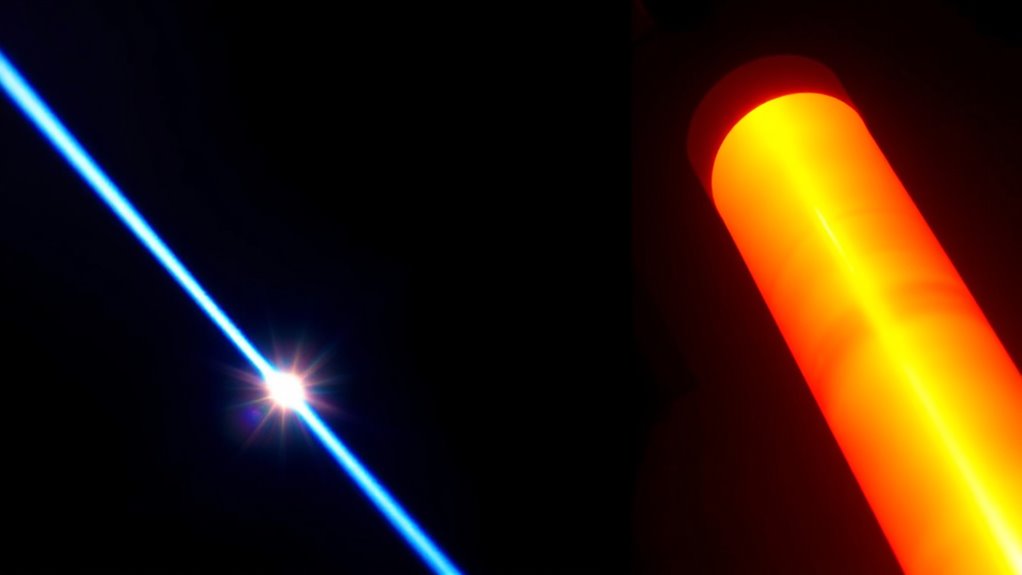
When choosing between diode and CO2 lasers, understanding their differences can help you make an informed decision for your specific needs. Both types of lasers have unique advantages that can impact your work, especially when it comes to laser precision and cost efficiency. As you evaluate these options, consider how each laser’s characteristics align with your goals, budget, and the types of procedures or tasks you plan to perform.
Diode lasers are compact and energy-efficient, making them a popular choice for many practitioners. They excel in delivering high laser precision, allowing you to perform delicate procedures with minimal thermal damage to surrounding tissues. This precision is essential in medical or cosmetic applications where accuracy directly affects outcomes. Additionally, diode lasers tend to be more cost-efficient both in terms of initial investment and ongoing operation. Their lower purchase price, combined with reduced maintenance costs and energy consumption, means you can achieve quality results without breaking the bank. If you’re seeking a versatile device that offers steady performance and cost savings, diode lasers are an excellent option.
Diode lasers offer high precision, energy efficiency, and cost savings for delicate medical and cosmetic procedures.
On the other hand, CO2 lasers are larger and typically more powerful, which makes them ideal for cutting, ablation, and tissue removal tasks. They provide a high level of laser precision, especially for procedures that require deep penetration or significant tissue interaction. While CO2 lasers may come with a higher initial investment and maintenance costs, their power and efficiency can translate into faster procedures and potentially better outcomes for certain applications. If your work involves extensive tissue work or requires deep laser penetration, a CO2 laser might be the better choice despite the higher costs. The fact that they are highly effective for precise cutting and ablation means you can often complete tasks more efficiently, which could offset the initial investment over time.
Ultimately, your decision hinges on balancing laser precision with cost efficiency. If you prioritize affordability, smaller size, and versatility, diode lasers are likely the best fit. They allow you to perform precise, minimally invasive procedures at a lower overall cost. Conversely, if your focus is on more extensive tissue work that demands higher power and deep laser interaction, investing in a CO2 laser could be worthwhile, even with higher upfront costs. Both laser types offer distinct advantages, so understanding your specific operational needs will help you choose the device that best aligns with your practice and budget. Moreover, considering European cloud innovation and sustainable solutions might influence the procurement process, ensuring your equipment aligns with modern energy-efficient standards and secure cloud management.
portable diode laser for cosmetic procedures
As an affiliate, we earn on qualifying purchases.
As an affiliate, we earn on qualifying purchases.
Frequently Asked Questions
How Do Diode and CO2 Lasers Compare in Maintenance Requirements?
You’ll find diode lasers require less frequent maintenance because their component durability is higher, leading to fewer parts to replace or service. Typically, diode lasers need maintenance every 1,000 to 2,000 hours of operation. In contrast, CO2 lasers might need more regular upkeep, around every 500 to 1,000 hours. Your choice depends on your workload and desired downtime, but overall, diode lasers tend to be easier to maintain.
Which Laser Type Is More Energy-Efficient for Large-Scale Operations?
Think of energy efficiency like a well-tuned engine—diode lasers often run smoother on less fuel. For large-scale operations, diode lasers generally consume less energy, making them more cost-efficient over time. They deliver lower energy consumption per unit of work, reducing operational costs. So, if you’re aiming for efficiency and savings, diode lasers are usually the smarter choice, helping you maximize productivity without draining your budget.
Are There Specific Safety Concerns Unique to Diode or CO2 Lasers?
You should be aware that diode and CO2 lasers each have unique safety concerns. For diode lasers, eye safety is critical because their laser beams can cause immediate eye damage if not properly safeguarded. CO2 lasers pose fire hazards due to their high heat output, so you must ensure proper fire prevention measures. Always wear appropriate eye protection and follow safety protocols to minimize risks with either laser type.
How Do Cost and Lifespan Differ Between Diode and CO2 Laser Systems?
You’ll find that diode lasers generally have a lower initial cost compared to CO2 laser systems, making them more budget-friendly upfront. However, their lifespan differences come into play—diode lasers usually last around 10,000 to 20,000 hours, while CO2 lasers can last up to 40,000 hours or more with proper maintenance. This cost comparison highlights that although diode lasers are cheaper initially, CO2 lasers offer longer-term durability.
Can Diode Lasers Replace CO2 Lasers for All Industrial Applications?
Diode lasers can’t replace CO2 lasers for all industrial applications because of differences in material compatibility and beam quality. While diode lasers are more cost-effective and portable, they struggle with cutting thicker or more reflective materials that CO2 lasers handle efficiently. If your work demands high beam quality and versatility across diverse materials, a CO2 laser remains the better choice.
As an affiliate, we earn on qualifying purchases.
Conclusion
Choosing between diode and CO2 lasers depends on your needs. While some might think CO2 lasers are always better for precision, diode lasers offer portability and lower costs without sacrificing quality. Imagine completing your projects efficiently, whether you’re a hobbyist or a professional, without breaking the bank or sacrificing performance. Don’t let misconceptions hold you back—both lasers have their strengths. Pick the one that fits your goals, and you’ll achieve great results every time.
medical laser for tissue ablation
As an affiliate, we earn on qualifying purchases.
As an affiliate, we earn on qualifying purchases.
laser surgery equipment for clinics
As an affiliate, we earn on qualifying purchases.
As an affiliate, we earn on qualifying purchases.
Halloween Picks
halloween
As an affiliate, we earn on qualifying purchases.