
TL;DR
Educational science kits give children hands-on ways to explore subjects such as biology, physics, engineering, and coding. Choose by a child’s interests and practical skills, check safety and missing materials, and look for activities that invite predictions and repeat experiments. A kit can spark curiosity, but conversation and follow-up matter as much as the box.
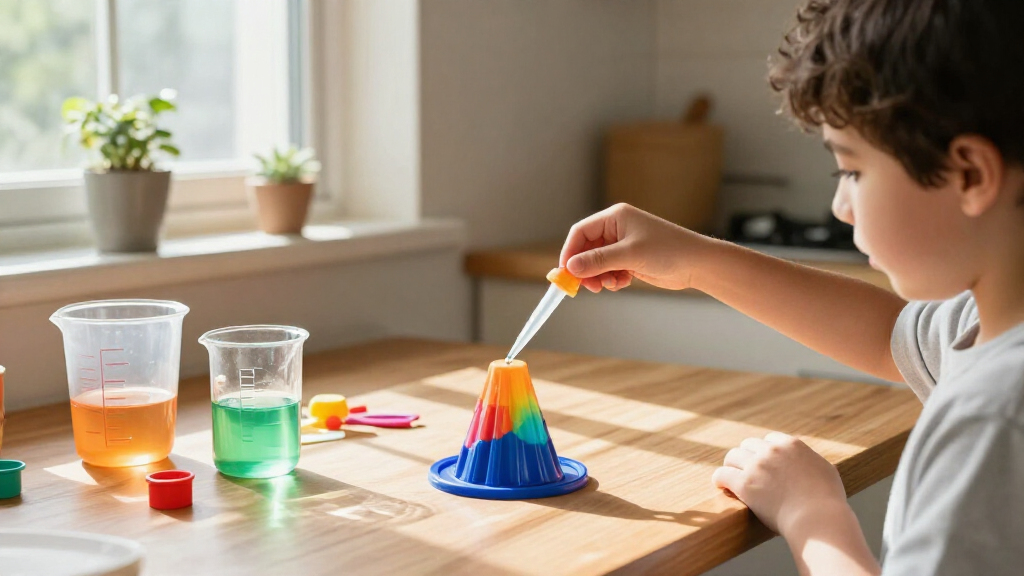
A box of crystals can turn a quiet kitchen counter into a tiny laboratory, complete with cloudy jars, bright colors, and a child checking every hour to see what changed. That sense of discovery is the promise of educational science kits for kids: they put materials and experiments within reach, so big ideas feel like something you can see and touch.

Prime made for students and young adults
- Fast, free delivery for dorm and study essentials
- Prime Video and Amazon Music included
- Member-only deals
The box itself does not do all the teaching. A child learns more when they get to guess what will happen, notice the result, and explain it in their own words. You’ll find practical ways to choose a kit by interest, age, safety, and repeat use, plus simple ways to make the experience more rewarding without turning it into a lesson at the kitchen table.
Think of a kit as a starting point. A paper bridge that sags under a coin can lead to a better design; a circuit that fails can prompt a careful check of each connection. Those small moments help children explore ideas through experiments and discover more questions they can make into the next project.
Choose a subject your child already enjoys, then check what the activities actually ask them to do.
Use the age label as a guide; also weigh reading, dexterity, patience, and supervision needs.
Review warnings, included materials, required supplies, and cleanup directions before starting.
Prefer activities that let a child predict, change one factor, compare results, or try again.
Ask what surprised your child and what they would test next; a short conversation can extend the experiment.
What Makes a Science Kit Feel Like Real Discovery?
Educational science kits for kids make a subject easier to grasp by giving children something to handle, change, or observe. A circuit kit, for example, can turn the invisible flow of electricity into a bulb that glows when wires connect. That flash of light gives a child a visible result to think about.
The strongest activities leave room for more than following directions. A child might predict whether a paper bridge will hold one coin or ten, test it, then fold a second bridge with a different shape. Each try becomes a small investigation: make a prediction, test it, notice what happened, and explain the result.
Clear instructions still matter. A child who has to hunt through a messy bag for a missing piece can lose interest before the experiment starts. Look for labeled materials, diagrams that match the steps, and short explanations of why an activity works.
For example, a growing-crystal project may show a child that crystals form as a solution cools, while also giving them a reason to record daily changes. The crystal is fun to hold up to the light. The observation is what makes the fun teach something.
Popular right now

Dyson Airstrait Styling Brush

Roborock Q7 M5+ Robot Vacuum and Mop with Self-Emptying Dock

KitchenAid Artisan 5-Quart Tilt-Head Stand Mixer with Flex Edge Beater
As an affiliate, we earn on qualifying purchases.
Match the Kit to What Your Child Already Loves
The best kit for a child usually starts with a subject they already want to talk about. A child who brings home snail shells may enjoy a biology or nature kit; one who builds cardboard towers might gravitate toward engineering. Interest gives the first activity a better chance of getting started.
Use the theme as a clue, then inspect the actual activities. A space-themed box might focus on paper rockets and observation, or it might involve coding a small rover. Those projects ask for different skills, even if both have planets on the cover.
Try this quick check before you buy:
- Notice the child’s habits: Do they collect, build, draw, sort, or ask how things work?
- Check the project style: Does the kit offer short activities, one longer build, or a mix?
- Look for choices: Can the child change a design, test a different material, or repeat an experiment?
- Consider your routine: Will a 10-minute activity suit a busy evening better than a project that needs several days?
Imagine a child who loves insects but gets restless during long instructions. A kit with a magnifier, simple specimen cards, and brief outdoor observations may suit them better than a large model that takes hours to assemble. A good match makes it easier to give children structured ways to explore without asking them to enjoy a project that does not fit.
Use Age Labels as a Starting Point, Not a Rule
A kit’s age range is a rough guide, because children develop different skills at different times. Reading a page of directions, twisting a tiny screw, and waiting patiently for a result are separate challenges. A child may find one easy and another frustrating.
Check whether the instructions use words your child can follow or diagrams they can read at a glance. Look at small pieces, tweezers, snaps, wires, and any steps that need steady hands. For instance, an eight-year-old may be ready to build a simple circuit but still need an adult to read the first few steps aloud.
Think about attention and project length too. If your child enjoys quick wins, an activity that produces a result in 15 minutes can be a better fit than a multi-day experiment. Another child may love checking a seedling each morning and drawing its progress in a notebook.
An adult can help without taking over. Set out the materials, read a confusing instruction, or ask, “What do you think will happen if we use less water?” Then let the child do as much as they safely can. Support should match the task: the goal is for a child to feel capable, not to watch a grown-up complete the project.
Check Safety and Supplies Before the First Experiment
Read the warnings and materials list before starting, because a kit may need adult supervision or supplies from home. Check for small parts, chemicals, heat sources, sharp tools, batteries, and any protective gear listed in the instructions. The age printed on the box does not tell you every step that needs your attention.
Then check what the box leaves out. A project might require water, a household ingredient, a flashlight, or batteries that are easy to forget until the moment the child wants to begin. If a kit needs goggles or a particular tool, confirm that you have the right item rather than improvising.
Picture a baking-soda experiment that calls for a tray, warm water, and a spoon. Gathering those supplies first means the child can focus on the fizzing mixture instead of waiting while you search through cupboards. For a kit involving heat or tools, prepare the work area and decide which steps the child can do with you nearby.
Safety instructions are part of using the kit well. Keep small components away from children who might put them in their mouths, follow disposal directions, and supervise activities that call for it. Preparation keeps the focus on curiosity and makes it easier to stop safely if something goes wrong.
Look for Projects That Invite a Second Try
Repeatable projects give children more chances to ask and test their own questions. One activity might show a clear result once, while another lets a child change one part and compare what happens. That second attempt can be where the idea starts to stick.
A bridge-building set is a good example. If a design collapses under a stack of coins, a child can change the beam shape, use another material, or adjust the supports. Their next bridge may hold more weight, and the difference gives them something concrete to discuss.
Check whether the kit uses up its materials in one go or includes reusable parts. Batteries, ingredients, refills, and replacement pieces can affect the real cost. A durable building system may support several afternoons of different designs; a single-use crystal activity can still be a treat if the child loves watching one slow result form.
Some kits now add coding, robotics, electronics, or app-based instructions, while others keep projects screen-free. These are broad market trends, and individual product features can change, so read the current contents rather than relying on a theme or an old review. A subscription may bring fresh activities, but count the usable projects and delivery cost before deciding whether it fits your family.
Turn a Finished Project Into a Better Question
A short conversation after an experiment helps children connect the result to the idea. You do not need to deliver a speech or find the perfect scientific term. Ask what they expected, what surprised them, and what they would change next time.
Suppose your child makes a paper airplane that veers left. Rather than fixing it for them, ask what might happen if they fold one wing slightly differently. They can test the new version, watch its path across the room, and compare it with the first flight.
A small notebook can make those comparisons visible. Your child might draw the airplane, mark where it landed, and write one sentence about the next change. For a plant-growing project, they could sketch the green shoots beside a note about how often they watered them. Simple records turn one result into a trail of evidence.
Keep expectations realistic. A kit can prompt curiosity, help children practice observation, and introduce a concept; it cannot promise mastery or replace other learning. A free activity at home can work just as well when you help a child notice what changed. Whether you bought a box or found materials in a cupboard, leave room for the child to make choices and ask their own questions.
Frequently Asked Questions
What age is a science kit suitable for?
Start with the maker’s age label, then check the child’s reading, dexterity, patience, and experience with similar tasks. A younger child may enjoy a simple observation activity with an adult, while an older child may be ready to follow a longer set of diagrams on their own.
Are science kits safe for young children?
Safety depends on the specific activity. Read age warnings and instructions, keep small parts away from children who might swallow them, and supervise experiments involving chemicals, heat, tools, or electricity when the instructions call for it.
What makes a kit educational?
A useful kit explains the idea behind an activity and gives a child a chance to observe, predict, compare, or change something. A set of steps can be fun, but asking what happened and why helps connect the activity to learning.
Do science kits include everything you need?
Not always. Check the contents list for items such as batteries, water, household ingredients, tools, and protective gear. Gathering missing supplies before you start can prevent a child from getting stuck halfway through the setup.
Are kits better than free experiments at home?
Kits often provide prepared materials and clear instructions, while home activities can cost less and leave more room for improvisation. Either can be worthwhile when a child can make a prediction, notice what changes, and talk through the result with you.
Conclusion
Choose the kit that fits your child’s curiosity and the way they like to work, then check its safety needs and supplies before opening the box. During the activity, let them predict, test, and explain at their own pace. That is how a pile of wires, paper, or seeds becomes a reason to ask one more question.
The project may end with a crooked bridge or a cloudy jar. If your child is already reaching for another material to test, the experiment has done its job.