
To evaluate products without getting fooled by reviews, focus on those with specific details and balanced pros and cons, and look for patterns across multiple sources. Check expert opinions for technical insights and compare them with user feedback. Be cautious of overly positive or negative comments and consider the credibility of review sites. Cross-referencing various platforms helps you see the full picture. Keep these tips in mind, and you’ll be better equipped to make confident choices.
Key Takeaways
- Seek detailed reviews with specific usage information to assess real product performance.
- Cross-reference multiple sources and platforms for diverse, balanced perspectives.
- Prioritize recent reviews to ensure feedback reflects current product versions and updates.
- Be cautious of overly positive or negative reviews lacking details, which may be biased or fake.
- Consider expert opinions for technical insights and a broader understanding of product quality.
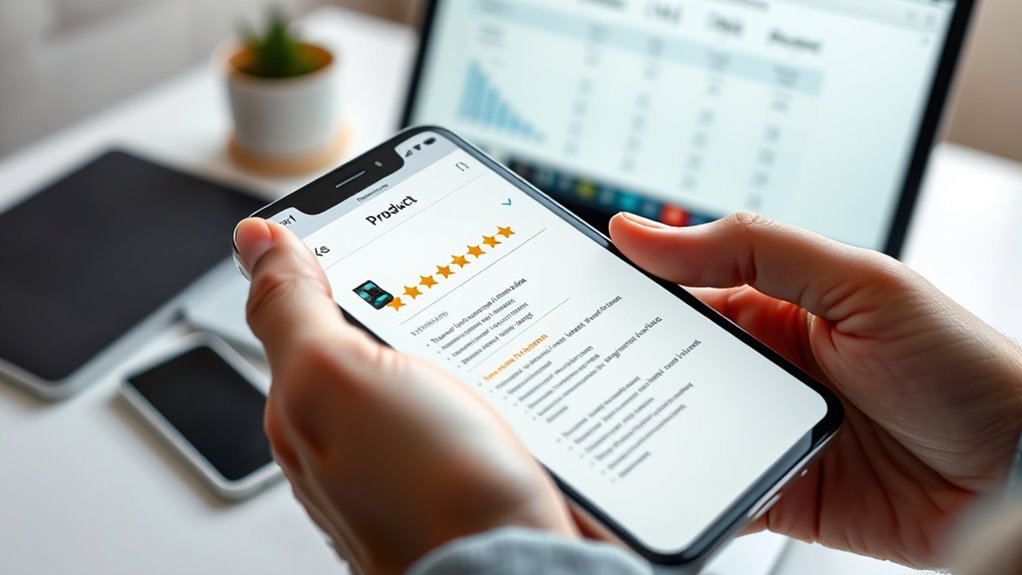
Have you ever wondered how to determine whether a product is truly worth your money? In today’s world, it’s easy to get swept up in flashy advertisements and glowing reviews. But not all reviews are created equal, and some might be biased or overly optimistic. That’s why it’s vital to learn how to evaluate products beyond surface-level opinions. When starting your assessment, pay close attention to customer reviews. These firsthand accounts can reveal real experiences, highlighting both strengths and flaws that manufacturers or paid reviews might overlook. Look for patterns in the feedback—if multiple customers mention the same issue or praise, it’s a strong indicator of the product’s true performance. Be cautious of overly positive reviews that sound generic or lack specifics; these could be fake or incentivized. Instead, focus on reviews that provide detailed descriptions, explaining how the product was used and what the user liked or disliked. This approach helps you gauge whether the item will meet your needs.
Pay attention to detailed reviews and common feedback patterns to assess a product’s true value.
Alongside customer reviews, consider expert opinions. Professionals or industry insiders usually have a deeper understanding of the product category and can offer valuable insights that casual users might miss. Their evaluations tend to be more objective, backed by knowledge, tests, or comparisons. When experts review a product, they often assess its quality, durability, and value relative to competitors. Reading expert opinions helps you see beyond individual experiences and understand how the product performs in a broader context. Combining customer reviews with expert insights gives you a well-rounded view—raw user experiences show how the product performs in everyday life, while expert opinions provide technical analysis and credibility. Additionally, understanding the role of transparent information in reviews can help you better interpret the credibility of the sources you consult.
It’s also wise to check multiple sources before forming an opinion. Don’t rely solely on one review or one expert’s take. Cross-referencing reviews from different platforms and professional assessments helps you avoid misinformation and biases. Be skeptical of reviews that seem overly positive or negative without supporting details. Look for balanced reviews that mention both pros and cons. Additionally, pay attention to the date of reviews and opinions; products often improve or change over time, so recent feedback is more relevant.
In essence, making informed decisions involves critical thinking. Analyze customer reviews for common themes, weigh expert opinions for technical credibility, and consider the reputation of the sources. By doing so, you can avoid falling for fake reviews or misleading marketing tricks. Instead, you’ll make smarter choices, ensuring your money is spent on products that truly meet your expectations.
Frequently Asked Questions
How Can I Identify Fake Reviews Effectively?
To identify fake reviews effectively, look for signs of review manipulation and focus on authentic feedback. Check for overly positive or generic comments lacking details, and examine reviewer profiles for suspicious activity or multiple reviews across unrelated products. Trust reviews with specific points, verified purchase badges, and consistent language. Avoid those that seem overly promotional, as they’re often fake. This way, you can better distinguish genuine feedback from manipulated reviews.
Are Expert Opinions More Reliable Than User Reviews?
Did you know 70% of consumers trust expert opinions more than user feedback? Expert consensus is generally more reliable because professionals analyze products thoroughly, considering factors users might overlook. While user reviews offer real-world experiences, they can be biased or fake. Relying on expert opinions helps you make more informed decisions, especially when reviews seem overly positive or suspicious. So, for better product evaluation, prioritize expert insights over solely user feedback.
What Signs Indicate Biased or Sponsored Reviews?
You can spot biased or sponsored reviews by looking for signs like overly positive language, lack of detailed criticism, or generic comments. Be cautious if the review seems to push sponsored content or if the reviewer mentions incentives, which might influence their opinion. Trust reviews that include balanced pros and cons, and check if multiple reviewers express similar experiences. Recognizing these signs helps you avoid biased opinions influenced by reviewer incentives.
How Do Product Ratings Differ Across Platforms?
Imagine walking through a marketplace where each stall whispers a different tale. Product ratings differ across platforms because of varying review policies and user bases. Some platforms highlight detailed feedback, while others favor quick stars. These rating discrepancies can be like comparing different maps—each offering unique routes. To navigate wisely, understand each platform’s review policies, recognize potential biases, and cross-reference ratings to get a clearer picture of a product’s true worth.
Can Return Policies Influence Product Evaluation?
Yes, return policies can considerably influence your product evaluation. A flexible return policy shows the seller’s confidence and commitment to customer satisfaction, making you more comfortable purchasing. It also reduces risk if the product doesn’t meet expectations. When reviewing options, consider the return policy’s duration and conditions, as they directly impact your confidence in the purchase and your overall satisfaction with the product.
Conclusion
By balancing biases and browsing wisely, you’ll better beat misleading reviews and make meaningful, mindful purchases. Remember to scrutinize, sift, and scrutinize again, avoiding blindly believing every boast. With careful consideration, you’ll confidently compare, contrast, and conclude, turning complex choices into clear, confident decisions. So stay skeptical, stay savvy, and steer clear of scams—successfully select superb products without succumbing to sneaky scams. Your smart shopping starts with a sharp, skeptical eye!