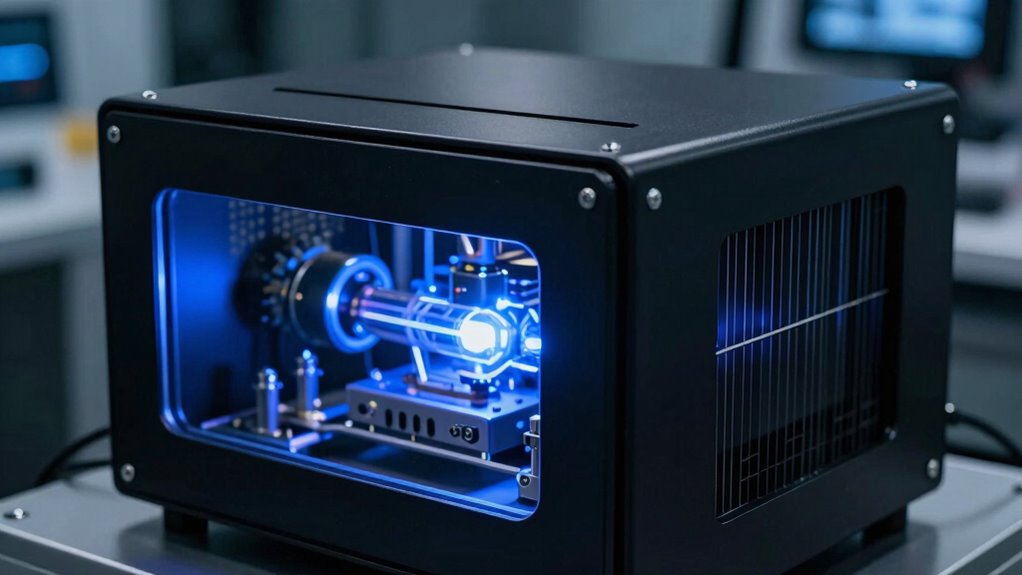

You’ll find that proper containment is more critical than laser power because it directly prevents accidental exposure and injuries. Even a low-power laser can cause harm if stray beams escape or reflections aren’t controlled. Well-designed enclosures with safety features like interlocks, warning indicators, and sturdy barriers effectively contain laser radiation. By focusing on proper containment, you ensure safety during operation and maintenance. Keep exploring to discover how to design enclosures that meet all safety standards and protect everyone around you.
Listen free for 30 days with Audible
Thousands of audiobooks and originals — cancel anytime.
As an affiliate, we earn on qualifying purchases.
Key Takeaways
- Proper containment prevents stray laser beams and reflections, reducing the risk of accidental exposure regardless of laser power.
- Enclosure design ensures safety by containing high-power laser energy, minimizing injury and equipment damage.
- Safety features like interlocks and warning indicators maintain protection during all operational phases.
- Effective containment is essential for safe maintenance and prevents unintended laser exposure when the system is open.
- Prioritizing containment over power emphasizes controlled, safe laser use, preventing accidents even with high-powered lasers.
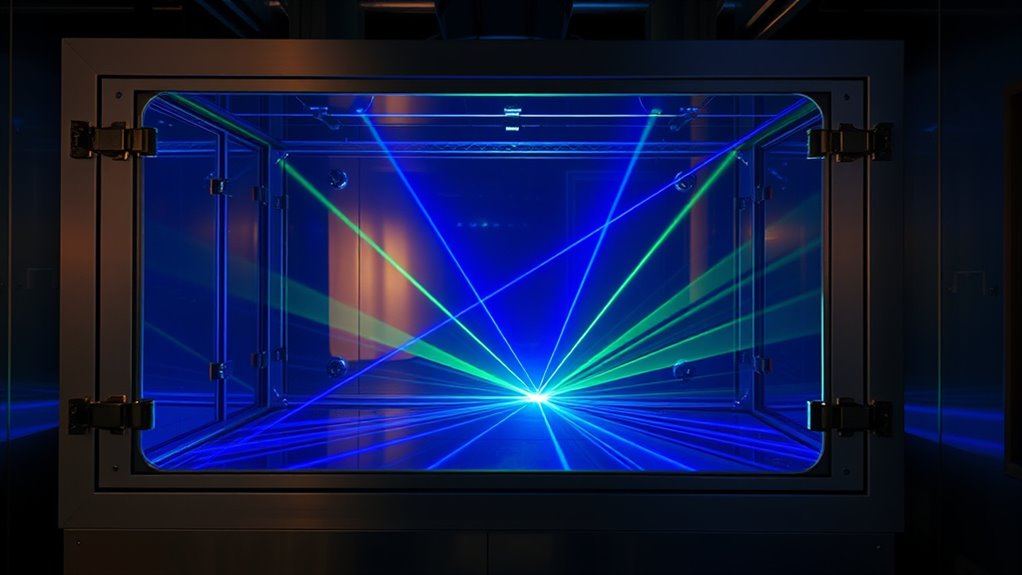
Have you ever wondered how to safely operate powerful laser systems? It all begins with understanding that safety isn’t just about turning on the equipment; it’s about implementing strict safety protocols and designing effective enclosures. When working with high-powered lasers, the importance of enclosure design cannot be overstated. A well-designed enclosure acts as the first line of defense, containing laser radiation and preventing accidental exposure. It’s not enough for the laser to be powerful—what truly matters is how effectively you contain that power to protect yourself, others, and the environment.
Safety protocols serve as the foundation of any laser operation. These protocols include wearing appropriate eye and skin protection, establishing clear operational procedures, and training all personnel thoroughly. But even with these measures in place, a robust enclosure is essential. It should be constructed with materials that absorb or reflect laser radiation, such as specialized glass or metal coatings, to guarantee that any stray beams or reflections are contained. Proper enclosure design also involves incorporating interlocks, emergency shutoff switches, and warning indicators. These features make it impossible to accidentally operate the laser or open the enclosure while the laser is active, reducing the risk of injury.
The design process should consider the specific wavelength and power of your laser system. High-powered lasers require thicker, more durable barriers, while lower-power systems might need less extensive containment. Ventilation is another vital aspect—laser enclosures must have proper exhaust systems to handle any fumes or heat generated during operation. This not only preserves the integrity of the enclosure but also maintains safe working conditions. You should also keep accessibility in mind; the enclosure should allow for easy maintenance and adjustments without compromising safety. Incorporating safety features into enclosure design is crucial to ensure ongoing protection during operation.
When you prioritize safety protocols and invest in thoughtful enclosure design, you create a safe environment that minimizes risks associated with laser use. It’s tempting to focus solely on laser power, but the reality is that containment matters more. Power without proper containment can lead to accidents that could have been prevented. Consequently, it’s not just about having a powerful laser—it’s about controlling and containing that power effectively. By doing so, you protect yourself and others, ensuring that your work with lasers remains safe, efficient, and productive. Remember, the true power lies not only in the laser itself but in how well you manage and contain it through proper safety measures and enclosure design.
As an affiliate, we earn on qualifying purchases.
Frequently Asked Questions
How Do Laser Enclosures Impact Overall Safety Standards?
Laser enclosures greatly enhance safety standards by reducing risks and preventing hazards. You can rely on them for effective risk mitigation, as they contain laser beams and debris, minimizing accidental exposure. This containment ensures that you’re protected from harmful radiation and other dangers, making your work environment safer. By focusing on hazard prevention through proper enclosure use, you create a safer workspace and meet essential safety compliance requirements.
What Materials Are Most Effective for Laser Enclosure Construction?
You might think fancy metals or plastics are enough, but the most effective laser enclosure materials combine unmatched durability with superior insulation. Think of high-grade stainless steel or reinforced ceramics—these resist wear and contain heat, shielding you from harmful reflections. Their durability ensures longevity, while superior insulation properties keep the laser’s energy contained. Ironically, the strongest-looking materials often provide the best safety, proving strength and insulation are your best allies.
Can Laser Enclosures Be Customized for Different Laser Types?
Yes, you can customize laser enclosures for different laser types. You’ll find options to tailor enclosure aesthetics to match your workspace, making certain they look professional and fit your style. Additionally, cost customization allows you to select features that suit your budget, making it easier to adapt enclosures for specific laser models. This flexibility ensures you get a safe, efficient, and visually appealing setup tailored to your unique needs.
What Maintenance Is Required to Ensure Enclosure Safety?
You might think maintenance is a hassle, but neglecting it risks safety. Regularly check ventilation requirements to guarantee proper airflow and prevent hazardous buildup. Follow cleaning protocols diligently to remove dust and debris that could impair enclosure integrity. Inspect seals, filters, and safety interlocks regularly, and replace worn components promptly. Staying vigilant keeps your enclosure safe, proving that even in laser safety, a little routine effort beats a costly accident every time.
Are Laser Enclosures Compliant With International Safety Regulations?
Yes, your laser enclosure should be compliant with international safety regulations. You need to guarantee it has proper laser certification, confirming it meets safety standards, and install clear safety signage to warn users of potential hazards. Regularly review compliance documentation and conduct safety audits. Staying updated with regional regulations guarantees your enclosure remains compliant, keeps operators safe, and minimizes legal risks.
As an affiliate, we earn on qualifying purchases.
Conclusion
Remember, the true strength of a laser enclosure isn’t just in its power, but in its ability to contain. Like a fortress guarding precious secrets, it protects both you and those around you. Without proper containment, even the most powerful laser becomes a reckless fire, risking harm and chaos. So, prioritize containment—it’s the silent guardian that transforms dangerous energy into safe innovation. After all, what’s a laser without control?
laser beam containment enclosure
As an affiliate, we earn on qualifying purchases.
As an affiliate, we earn on qualifying purchases.
As an affiliate, we earn on qualifying purchases.
Flea & tick season Picks
flea and tick prevention
As an affiliate, we earn on qualifying purchases.