
TL;DR
Open a free Amazon Business account
Business pricing, bulk buying and tax-exempt orders.
Create a free accountAs an affiliate, we earn on qualifying purchases.
China has successfully performed its first-ever rocket landing during an orbital launch, a historic achievement in spaceflight. The event demonstrates advances in reusable rocket technology and could influence future space missions.
China has successfully conducted its first-ever rocket landing during an orbital launch, a historic milestone that demonstrates significant progress in reusable space technology. This achievement marks a major step in China’s space program and has implications for the future of space exploration and cost reduction.
According to Chinese space officials, the mission involved launching a Long March rocket, which then executed a controlled landing after deploying its payload into orbit. The feat was confirmed through official state media and video footage shared by authorities. This marks the first time China has successfully landed a rocket during an orbital mission, a capability previously demonstrated mainly by private companies like SpaceX. The rocket’s landing occurred on a designated platform in the Yellow Sea, showcasing advancements in reusability technology that could reduce launch costs and improve mission sustainability. Experts say this achievement positions China among the leading nations in space reusability, alongside the United States and some private firms. The event was celebrated as a major breakthrough in China’s space development efforts, with officials emphasizing its importance for future deep space missions and satellite deployments.Implications for China’s Space Program and Global Space Industry
This milestone signifies China’s rapid progress in space technology, positioning it as a major competitor in the field of reusable rocket systems. The successful landing enhances China’s capabilities for cost-effective, sustainable space missions and could accelerate plans for lunar and deep space exploration. It also demonstrates China’s technological maturity, potentially influencing international partnerships and commercial opportunities in space. The achievement may prompt other nations and companies to prioritize reusability, shaping the future landscape of space launch economics and innovation.
As an affiliate, we earn on qualifying purchases.
Background on China’s Space Launch and Reusability Efforts
China’s space program has expanded rapidly over the past decade, with significant investments in satellite deployment, lunar exploration, and space station development. Prior to this event, China had launched multiple orbital missions using traditional expendable rockets. While private companies like SpaceX have pioneered reusable rocket technology, China has mainly relied on traditional methods. The recent success marks a shift toward integrating reusability into its national space strategy, aligning with global trends in reducing launch costs and increasing mission sustainability. The milestone follows several years of testing and development aimed at making rockets capable of controlled landings, similar to the achievements of SpaceX’s Falcon 9 series.
“This is a historic moment for China’s space industry. Our team has achieved a breakthrough in rocket reusability, which will greatly enhance our future space missions.”
— Li Ming, Chinese space agency spokesperson
rocket landing pad for model rockets
As an affiliate, we earn on qualifying purchases.
As an affiliate, we earn on qualifying purchases.
Details Still Unclear About Rocket Reusability and Future Plans
While the landing was confirmed, specifics about the rocket’s reusability cycle, number of possible reuses, and the technical details of the landing system remain undisclosed. It is also unclear whether this capability will be integrated into regular missions or remain a demonstration. Further information on the long-term operational plans and whether this success will lead to commercial reusability in China is still developing.
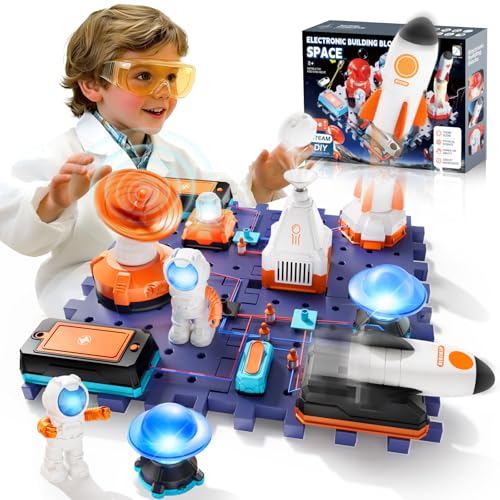
VATOS Space Science Circuit Kits for Kids – 31PCS Electronics Exploration STEM Kit with 100+ Projects, Rocket Launcher & Light Up Astronaut | Educational Learning Toy Gift for Boys Girls Ages 6+
- Number of Projects: Over 100 space-themed circuits
- Educational Focus: Hands-on electrical science learning
- Kit Contents: 31-piece safe circuit set
As an affiliate, we earn on qualifying purchases.
As an affiliate, we earn on qualifying purchases.
Next Steps Include Repeated Tests and Broader Deployment
China is expected to conduct additional tests to validate the rocket’s reusability and reliability. The government and industry officials will likely analyze data from this first landing to improve systems and plan for routine use. Future missions may include more complex payloads and longer-term reuse cycles, with potential announcements of commercial launch services utilizing this technology within the next year.
As an affiliate, we earn on qualifying purchases.
Key Questions
What type of rocket was used for this landing?
The mission involved a Long March rocket, China’s primary launch vehicle, which successfully executed a controlled landing after deploying its payload into orbit.
Why is rocket reusability important?
Reusability reduces launch costs, increases mission frequency, and promotes sustainable space exploration by allowing rockets to be recovered and reused multiple times.
How does this achievement compare to other countries?
While the United States, through SpaceX, has demonstrated multiple reusable rocket landings, this is China’s first successful landing during an orbital mission, marking a significant advancement in its space capabilities.
When will China start using this technology routinely?
It is not yet clear when China will deploy this reusability technology in regular missions, but further tests are expected over the coming months to establish operational routines.
What are the potential implications for international space cooperation?
This development could position China as a more competitive player in the global space industry, potentially leading to increased collaboration or competition in satellite launches and exploration missions.
Source: google-trends
Summer Picks
summer essentials
As an affiliate, we earn on qualifying purchases.