Room correction tools can improve your sound by fixing issues like boomy bass and harsh highs, making your music clearer and more balanced. However, they can’t fix fundamental problems such as poor room design, reflections, or bad speaker placement. For best results, proper setup and acoustic treatments are essential first. If you want to learn more about maximizing your sound and the limits of room correction, keep exploring how physical adjustments make a difference.
Key Takeaways
- Room correction tools primarily adjust frequency response to fix tonal imbalances and reduce harshness or boomy bass.
- They cannot fully resolve fundamental acoustic issues like reflections, standing waves, or poor room design.
- Proper speaker placement and acoustic treatments are essential for optimal sound before applying correction software.
- Room correction cannot compensate for severely misplaced speakers or unaddressed room modes.
- Overall, correction tools enhance sound quality but are limited without a solid physical setup.
Have you ever noticed how your favorite music or movie sounds off when played in your room? It’s frustrating when the sound doesn’t match what you expect, and that’s often because of how your space interacts with your audio gear. Room correction tools can help, but they aren’t magic. They can fix certain issues, but they can’t transform a poorly designed room into a perfect listening environment. To get the most out of room correction, you first need to understand the importance of speaker placement and acoustic treatments. These factors set the foundation for good sound; without them, even the best correction software can struggle to make a noticeable difference.
Proper speaker placement and acoustic treatments are essential for effective room correction.
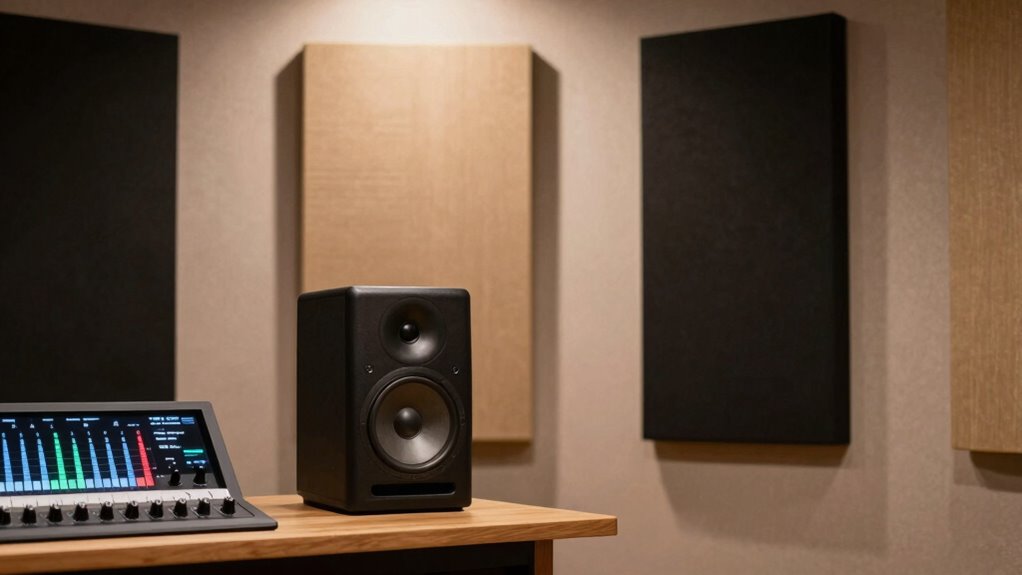
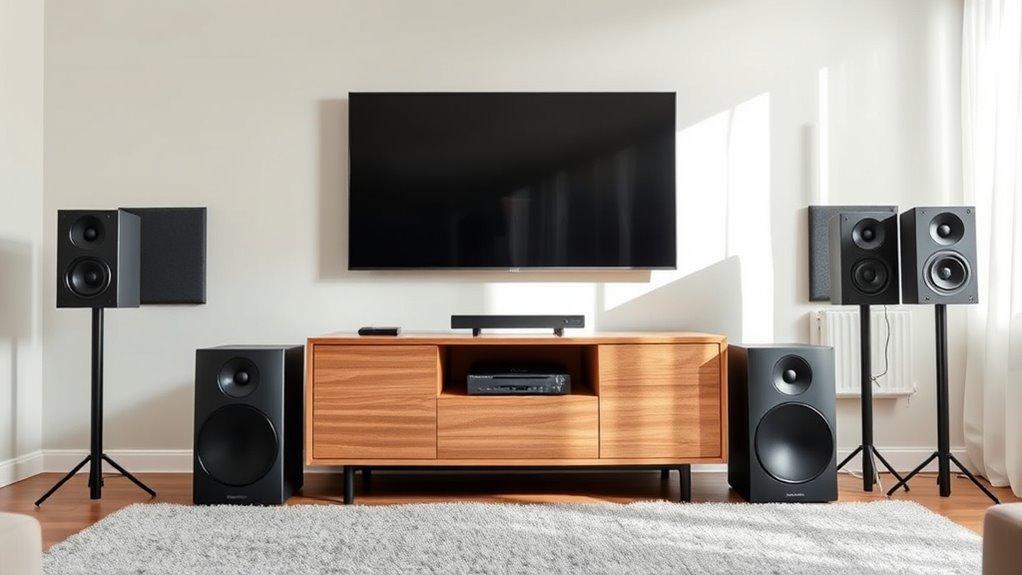
Speaker placement is critical. If your speakers are too close to walls or placed unevenly, they’ll cause reflections, bass boom, or dead spots that distort the sound. Properly positioning your speakers—aimed at your listening position and away from reflective surfaces—can drastically improve clarity and imaging. Even small adjustments in placement can reduce room modes and standing waves that cause certain frequencies to overpower others. Once your speakers are correctly placed, acoustic treatments come into play. These include bass traps, diffusers, and absorptive panels that tame reflections, control reverberations, and smooth out frequency response. Proper acoustic treatments help your room sound more balanced and less echoey, creating a more accurate listening environment.
Room correction systems analyze the sound in your space and make adjustments to your audio signal—often via equalization—to compensate for room-induced anomalies. They can reduce boomy bass, tame harsh highs, and improve overall tonal balance. But they don’t fix everything. If your speakers are poorly placed or your room has severe acoustic issues, correction software can only do so much. It’s like trying to fix a crooked picture with a filter—sometimes you need to straighten the frame first. Acoustic treatments and proper speaker placement are the physical steps that set the stage for effective correction. Without them, the software might struggle to make meaningful improvements because it’s fighting against fundamental problems. Understanding acoustic treatment can make a significant difference in how effectively room correction works.
In the end, room correction can enhance your listening experience, but it’s not a substitute for good room design. Paying attention to speaker placement and adding acoustic treatments will give you a solid foundation. When you combine these with room correction tools, you’ll notice clearer sound, tighter bass, and a more natural, immersive experience. Remember, the goal isn’t just to add a fancy equalizer but to create a space where your audio equipment performs at its best—because a well-placed speaker and a treated room make correction much more effective.

Focusound 52 Pack Acoustic Foam Panels 1" x 12" x 12" Sound Proof Foam Panles Soundproofing Noise Cancelling Wedge Panels for Home Office Recoding Studio with 300PCS Double-Side Adhesive
Soundproofing – Acoustic foam panels triangular grooves structure for better noise absorption, helps to reduce and absorb unwanted…
As an affiliate, we earn on qualifying purchases.
As an affiliate, we earn on qualifying purchases.
Frequently Asked Questions
Can Room Correction Improve Sound Quality in Outdoor Spaces?
Room correction isn’t very effective outdoors because outdoor acoustics are affected by open space and environmental noise, which it can’t control. While it can help optimize sound in enclosed areas, in outdoor spaces, background noise and reflections from nearby objects make it difficult to achieve noticeable improvements. You’ll find that managing environmental noise and choosing suitable speaker placement are more effective strategies for improving outdoor sound quality.
Does Room Correction Work Equally Well With All Speaker Types?
Room correction works better with some speaker types than others, especially when you consider speaker placement and room acoustics. For example, powered speakers with built-in correction systems often adapt more easily, while traditional passive speakers may need more careful placement and manual adjustments. It’s important to optimize speaker placement and address room acoustics first, as these factors influence how well the correction software can improve sound quality.
How Often Should I Recalibrate My Room Correction Settings?
You should recalibrate your room correction settings every 6 to 12 months, depending on how often your environment changes. Regular adjustment intervals help maintain ideal sound quality, especially if you move your speakers or rearrange furniture. Keep an eye on calibration frequency, and don’t hesitate to recalibrate sooner if you notice a decline in sound clarity or if you add new audio equipment. Consistent updates ensure your system performs at its best.
Can Room Correction Eliminate All Acoustic Imperfections?
Room correction can’t eliminate all acoustic anomalies, but it notably improves your listening experience. It targets issues like irregularities in frequency response, reducing peaks and dips caused by room reflections or speaker placement. However, it can’t fix fundamental acoustic flaws, such as poor room shape or materials. For ideal sound, combine room correction with proper room treatment and speaker positioning, understanding its limits in addressing all acoustic imperfections.
Is Professional Installation Necessary for Effective Room Correction?
You don’t necessarily need professional installation for effective room correction; a DIY setup can work well if you’re comfortable with the process. Many systems offer user-friendly calibration tools that guide you through measurements and adjustments. However, professional installation can guarantee ideal placement and calibration, especially in complex spaces. If you’re confident in your skills and equipment, DIY might suffice, but for the best results, professional help is worth considering.

QGU 2 pack Bass Traps,24" X 12" Wooden Acoustic Panels,Better than Bass Trap Studio Foam,Corner Block Finish,Acoustic Treatment Panels for Studio, Listening Room or Theater
【WOODEN DESIGN】This sound absorbing panel is 24×12 inches, made of a solid wood frame, The surface is covered…
As an affiliate, we earn on qualifying purchases.
As an affiliate, we earn on qualifying purchases.
Conclusion
Think of room correction as a skilled gardener tending to a wild, unruly yard. It can trim back the overgrowth and shape the landscape, making your sound clearer and more balanced. But just like a gardener can’t turn a backyard into a pristine golf course, room correction has its limits. It’s a helpful tool, but it can’t fix every flaw or replace good room design. Embrace it as part of your audio toolkit, not the whole garden.

PERLESMITH Universal Speaker Stands for Surround Sound -Height Adjustable Extend 33.3”to 45.1”, Floor Speaker Stand for Satellite & Studio & Bookshelf Speakers up to 11LBS,1 Pair Black, PSSS2
Wide Compatibility: The PERLESMITH speaker stands feature an adjustable width of 4.5" to 9", making it compatible with…
As an affiliate, we earn on qualifying purchases.
As an affiliate, we earn on qualifying purchases.
Focusound 52 Pack Acoustic Foam Panels 1" x 12" x 12" Sound Proof Foam Panles Soundproofing Noise Cancelling Wedge Panels for Home Office Recoding Studio with 300PCS Double-Side Adhesive
Soundproofing – Acoustic foam panels triangular grooves structure for better noise absorption, helps to reduce and absorb unwanted…
As an affiliate, we earn on qualifying purchases.
As an affiliate, we earn on qualifying purchases.