
To create a simple emergency budget in 30 minutes, start by gathering your recent bank statements and bills. Then, quickly categorize your expenses into essentials like rent, utilities, and groceries, and non-essentials like dining out and entertainment. Subtract your essential costs from your income to find your surplus, and set aside 3-6 months of essentials in a dedicated emergency fund. Keep refining your plan to stay prepared—continue on to discover how to make it even more effective.
Key Takeaways
- Gather all financial documents to understand current income and expenses quickly.
- Categorize expenses into essentials and non-essentials for immediate trimming.
- Calculate your total income and subtract essential costs to identify surplus or deficit.
- Set up automatic transfers to a dedicated emergency fund for consistent savings.
- Regularly review and adjust your budget to stay aligned with your savings goals.

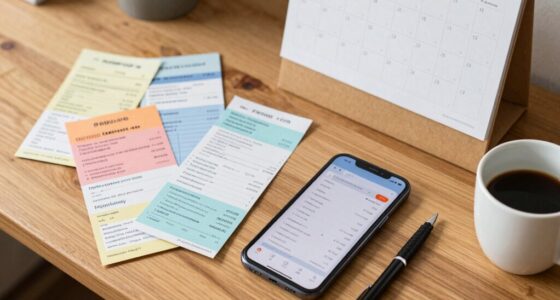
Ever wonder how you can create an emergency budget in just 30 minutes? It’s easier than you think when you focus on a straightforward approach to financial planning. The key is to act quickly, prioritize your needs, and use simple savings strategies to set up a plan that can help you weather unexpected expenses. The first step is to gather your financial information—bank statements, recent bills, and income details. Having everything in front of you makes it easier to see where your money is going and where you can make adjustments.
Create an emergency budget in 30 minutes by gathering financial info and focusing on essential expenses.
Next, take a moment to categorize your expenses into essential and non-essential. Essential costs include rent or mortgage, utilities, groceries, insurance, and transportation. Non-essential expenses might be dining out, entertainment, or subscriptions. The goal is to identify areas where you can trim costs immediately. By cutting back on non-essential spending, you free up more money to build your emergency fund and strengthen your financial footing. This step is *vital* in your financial planning because it helps you prioritize what matters most when times get tough.
Once you’ve sorted your expenses, determine your monthly income after taxes. Subtract your essential expenses from this figure to see what’s left. If there’s a surplus, decide to allocate a portion of it directly into a dedicated emergency fund. If your income isn’t covering your essentials, look for ways to reduce costs or increase income temporarily. Remember, the goal isn’t perfection but creating a practical plan you can start implementing right away.
Incorporate simple savings strategies to boost your emergency fund quickly. Consider setting up automatic transfers to a separate savings account specifically for emergencies. Even small, consistent deposits add up over time. If you have irregular income, aim for a flexible plan that allows you to save when money flows in. The idea is to build a cushion—ideally enough to cover three to six months of essential expenses. This safety net is what turns your emergency budget from a temporary fix into a long-term financial strategy.
Finally, review your plan and make sure it’s realistic. Adjust your spending habits accordingly, and commit to sticking with your savings strategy. Remember, in just half an hour, you’ve created a solid foundation for handling unforeseen financial challenges. With a clear plan in place, you can face emergencies with confidence, knowing you’ve set aside the resources to manage them effectively. Recognizing the importance of Free Floating can help you develop flexible financial solutions that adapt to your changing circumstances.
Frequently Asked Questions
What Tools or Apps Can Help Create This Budget Quickly?
You can use budgeting apps like Mint, YNAB, or EveryDollar to quickly create your emergency budget. These apps offer user-friendly interfaces and real-time tracking, making it easy to set spending limits and prioritize essentials. Additionally, financial calculators available online can help you estimate expenses and savings quickly. With these tools, you’ll build a simple, effective emergency budget in just 30 minutes, giving you peace of mind during uncertain times.
How Often Should I Review and Update My Emergency Budget?
Think of your emergency budget as a living map guiding you through stormy seas. You should review and update it at least every three to six months, or whenever your financial situation changes. This keeps your financial planning flexible, allowing you to adapt to life’s surprises. Regular check-ins make certain your budget remains a sturdy vessel, helping you stay afloat when unexpected expenses threaten your peace of mind.
What Expenses Should I Prioritize in a Limited Budget?
You should prioritize essential expenses like housing, utilities, groceries, and healthcare in a limited budget. Focus on building your emergency savings first, so you’re prepared for unexpected costs. Cut non-essential spending, like entertainment or dining out, to free up funds for your priority expenses. Keeping your emergency savings topped up guarantees you’re protected during tough times, making your limited budget work harder for you.
How Can I Build an Emergency Fund Alongside This Budget?
Kickstarting your emergency fund is a smart move—think of it as planting seeds for peace of mind. To do this, set aside a small portion of your income regularly, even if it’s just a few dollars. Use budget tracking to monitor your progress and make adjustments when needed. Prioritize building emergency savings alongside your budget, and over time, you’ll grow a safety net that can catch you in tough times.
What Common Mistakes Should I Avoid When Creating a Quick Budget?
When creating a quick budget, avoid common financial pitfalls like underestimating expenses or overlooking irregular costs. Don’t forget to include emergency savings, as neglecting this leads to budget oversights. Stay realistic about your income and spending, and resist the urge to cut too many essentials. By being mindful, you prevent oversights and keep your budget balanced, ensuring you’re prepared for unexpected expenses without risking financial stability.
Conclusion
By now, you’ve crafted a clear map through financial chaos, like steering your boat away from rocky shores into calmer waters. In just half an hour, you’ve built a safety net you can trust, ready to catch you if storms hit unexpectedly. Keep this budget close—your secret weapon, a lighthouse guiding you back to stability whenever waves of uncertainty crash in. Remember, with a solid plan, you’re always prepared to face whatever lies ahead.