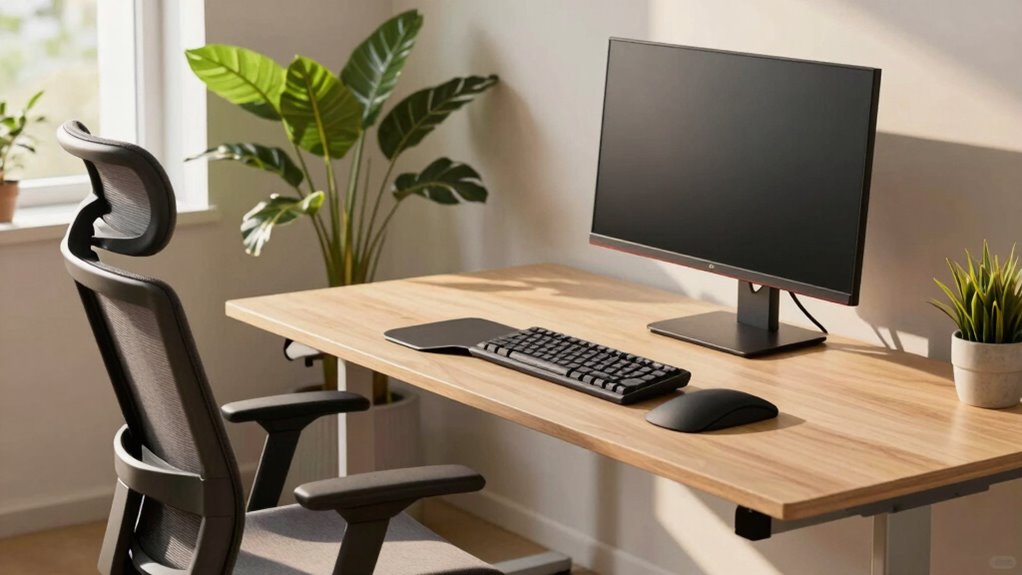

Many believe that ergonomic furniture, like fancy chairs or adjustable desks, automatically prevents injuries, but that’s a myth that wastes money. Proper posture, active habits, and correct setup matter more than expensive equipment alone. Relying solely on ergonomic gadgets won’t protect your long-term health. Instead, focus on daily habits, awareness, and adjustments tailored to your needs. Want practical steps to avoid these pitfalls? Keep going to learn what truly makes a difference.
Key Takeaways
- Believing ergonomic furniture alone prevents injuries ignores proper usage and posture habits.
- Relying solely on adjustable desks without correct setup or active posture correction wastes money.
- Assuming ergonomic equipment guarantees good posture overlooks the importance of awareness and movement.
- Investing in fancy chairs or gadgets without proper ergonomic principles offers limited health benefits.
- Long-term health depends on consistent habits like posture awareness, breaks, and workspace adjustments, not just equipment.

Have you ever believed that ergonomic furniture alone can prevent all work-related injuries? It’s a common misconception. Many think that simply investing in a fancy chair or a set of adjustable desks will keep them safe and comfortable at work. While ergonomic furniture plays a role, it isn’t a magic fix. What truly matters is how you use that furniture, especially when it comes to posture correction. Sitting for hours can wreak havoc on your body if you’re not mindful of your posture, regardless of how adjustable or supportive your equipment is. The focus should be on maintaining proper alignment and avoiding slouching or leaning forward, which are common habits that lead to strain and discomfort. Adjustable desks are a great tool in this regard because they allow you to switch between sitting and standing positions throughout the day. However, simply standing all day isn’t the answer either. Without proper posture correction, you risk developing new problems, like back pain or joint strain. The key is to set your adjustable desk at the right height so your elbows are at a 90-degree angle, your monitor is at eye level, and your feet are flat on the ground. These small adjustments can make a significant difference in reducing muscle fatigue and preventing repetitive strain injuries.
Additionally, understanding ergonomic principles can help you create a truly supportive workspace tailored to your needs. Many people fall into the trap of thinking that ergonomic furniture will automatically solve their discomfort, but the truth is, it’s only part of the solution. You need to be proactive about how you position yourself throughout the day. Take regular breaks, stretch, and pay attention to how your body feels. Proper posture correction doesn’t happen by chance; it requires awareness and effort. An adjustable desk gives you the flexibility to find the most comfortable and healthy working position, but you must use it correctly. Don’t just set it once and forget about it—adjust it to suit your tasks and your body’s needs. Remember, ergonomics isn’t about fancy gadgets; it’s about creating a workspace that encourages good habits and reduces strain. When you prioritize posture correction and make thoughtful use of adjustable desks, you’re investing in your long-term health, rather than wasting money on products that promise more than they deliver. Ultimately, it’s your daily habits and awareness that will truly protect you from injury and discomfort in the long run.
Frequently Asked Questions
Do Ergonomic Chairs Prevent All Back Pain?
Ergonomic chairs with lumbar support and cushion padding can help reduce back pain, but they don’t prevent it entirely. You need to maintain good posture, take regular breaks, and adjust your chair properly. A chair alone won’t solve all issues; staying active and mindful of your body position make a big difference. Remember, ergonomic features support your health, but your habits play a vital role too.
Is the Latest Ergonomic Desk Always the Best Choice?
You might think the latest ergonomic desk is the ultimate upgrade, but don’t fall for the sleek aesthetics or flashy ergonomic branding. While new desks can offer comfort, the real benefit depends on your posture and work habits. The best choice isn’t always the newest model; it’s one that suits your space, promotes movement, and supports good ergonomics. Don’t chase trends—prioritize function over form to truly improve your workspace.
Can Standing Desks Eliminate Health Risks of Sitting?
Standing desks can help reduce health risks of sitting, but they aren’t a complete solution. You might experience less muscle fatigue and improve posture correction by alternating between sitting and standing. However, standing all day can lead to discomfort if your desk isn’t adjusted properly. To truly benefit, focus on proper ergonomics, take breaks, and move around regularly, rather than relying solely on a standing desk.
Are Expensive Ergonomic Accessories Worth the Investment?
Think of ergonomic myths as siren songs tempting you to overspend. Expensive ergonomic accessories aren’t always worth the investment if they don’t address your actual needs. Focus on proper posture, regular movement, and workspace adjustments first. Quality accessories can help, but they’re no magic fix. Instead, prioritize what truly matters: comfort, functionality, and your health. A balanced approach saves money and keeps you safer.
How Often Should I Adjust My Workspace Ergonomics?
You should adjust your workspace ergonomics at least once a week to maintain ergonomic consistency. Regular adjustments ensure your chair, monitor, and keyboard stay aligned with your body’s needs as you change posture throughout the day. Listen to your body’s signals; if you experience discomfort or fatigue, make immediate adjustments. Staying proactive with ergonomic tweaks helps prevent strain and promotes long-term comfort, making your workspace more effective and healthier.
Conclusion
So, next time you splurge on the latest ergonomic gadget, remember—most myths are just that, myths. You might be wasting money on fancy chairs or keyboards that promise perfection, but comfort and productivity often come down to simple habits. Ironically, the real secret to ergonomic success isn’t in costly gear, but in mindful movement and posture. Sometimes, the best investment is just paying attention—who knew that’s free?