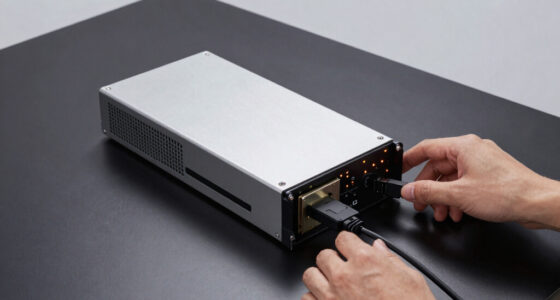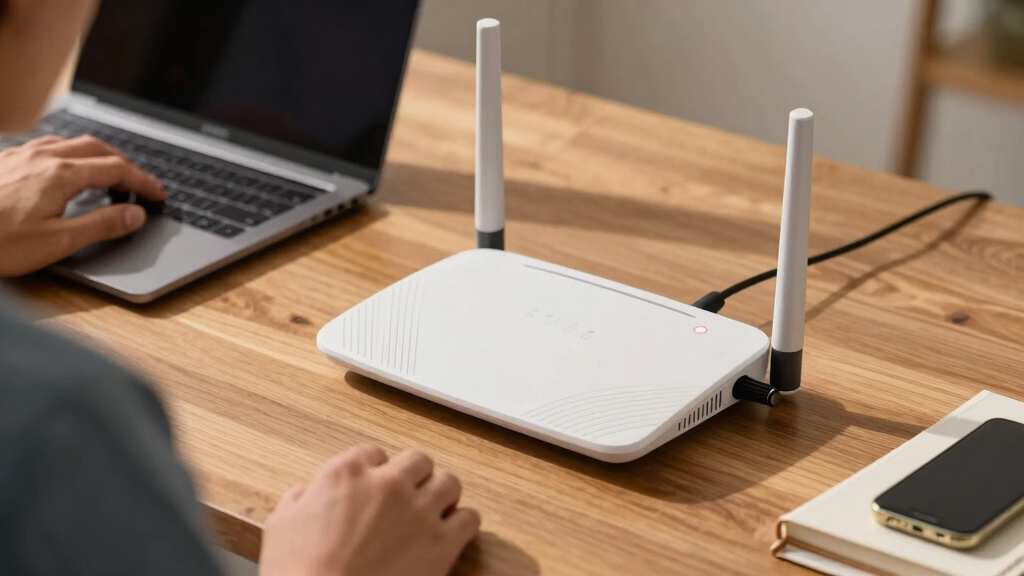

If you’re searching for the best WiFi 7 router for many devices, you’re looking for a solution that combines high-speed performance with reliable connectivity across numerous gadgets. The NETGEAR Nighthawk RS700S stands out as the top overall choice, thanks to its impressive coverage and support for up to 200 devices. The TP-Link Archer BE12000 offers a compelling mix of speed and affordability, making it ideal for large households. Meanwhile, the NETGEAR Orbi 770 Mesh System excels for those prioritizing expansive coverage with mesh technology. Keep reading for a detailed breakdown of these options and what makes each suitable for different needs.

Prime made for students and young adults
- Fast, free delivery for dorm and study essentials
- Prime Video and Amazon Music included
- Member-only deals
Key Takeaways
- Robust device support requires high-capacity hardware, which often comes with a higher price tag.
- Mesh systems like the NETGEAR Orbi 770 provide better coverage for very large homes with many connected devices.
- Performance varies significantly between tri-band and quad-band models, impacting speed and network stability.
- Price and build quality tend to correlate; premium routers generally offer longer-lasting performance.
- Compatibility with existing internet infrastructure is crucial; some models include advanced ports and features for future-proofing.
| TP-Link Dual-Band WiFi 7 Router, Archer BE260 |  | Best Value for Many Devices | WiFi Bands: Dual-band (2.4 GHz and 5 GHz) | Max Speed: 4324 Mbps on 5GHz, 688 Mbps on 2.4GHz | Ports: 1x 2.5 Gbps WAN, 1x 2.5 Gbps LAN, 3x 1 Gbps LAN | VIEW LATEST PRICE | See Our Full Breakdown |
| NETGEAR Nighthawk RS300 Tri-Band WiFi 7 Router (Certified Refurbished) |  | Best for High-Speed Multi-Device Connections | Wireless Speed: Up to 9.3 Gbps | Coverage: Up to 2,500 sq. ft. | Bands: Tri-band | VIEW LATEST PRICE | See Our Full Breakdown |
| NETGEAR Nighthawk Tri-Band WiFi 7 Router (RS700S) – Up to 19Gbps, 10Gbps Port, Covers 3,500 sq. ft., Supports 200 Devices (Renewed) |  | Best for Large Homes with Heavy Usage | WiFi Speed: up to 19Gbps | Coverage: Up to 3,500 sq. ft. | Devices Supported: Up to 200 | VIEW LATEST PRICE | See Our Full Breakdown |
| NETGEAR Orbi 770 Series WiFi 7 Mesh System, 3 Pack |  | Best for Whole-Home Coverage | Coverage: Up to 8,000 sq. ft. | Speed: Up to 11 Gbps | Number of Units: 3 Pack | VIEW LATEST PRICE | See Our Full Breakdown |
| NETGEAR Nighthawk WiFi 7 Router RS500, Up to 3,000 sq ft, 12 Gbps |  | Best for Large Homes on a Budget | WiFi Standard: WiFi 7 | Speed: Up to 12 Gbps | Coverage: Up to 3,000 sq. ft. | VIEW LATEST PRICE | See Our Full Breakdown |
| TP-Link BE6500 Dual-Band WiFi 7 Router (BE400) |  | Best Value for Large Homes | Wi-Fi Technology: Wi-Fi 7 | Max Speed: 5764 Mbps (5GHz), 688 Mbps (2.4GHz) | Coverage: Up to 2,400 sq. ft. | VIEW LATEST PRICE | See Our Full Breakdown |
| NETGEAR Nighthawk Tri-Band WiFi 7 Router (RS600) – Up to 18Gbps, 10 Gig Internet Port, Covers 3,300 sq. ft., Supports 150 Devices (Renewed) |  | Best for High-Performance, Heavy Device Loads | Wireless Speed: up to 18Gbps | Coverage: 3300 sq. ft. | Number of Devices Supported: 150 | VIEW LATEST PRICE | See Our Full Breakdown |
| TP-Link Archer BE24000 Quad-Band WiFi 7 Router (Archer BE900) |  | Best for Demanding, High-Speed Multi-Device Networks | WiFi Technology: Wi-Fi 7 | Max Speed: 24.4 Gbps | Coverage: Up to 3,500 sq. ft. | VIEW LATEST PRICE | See Our Full Breakdown |
| ASUS RT-BE9700 WiFi 7 Router – Tri-Band (6GHz), 9.7 Gbps, Dual WAN, Mesh |  | Best for Versatile, High-Speed Whole-Home Coverage | WiFi Standard: Wi-Fi 7 | Max Speed: 9.7 Gbps | Bands: Tri-Band (2.4G, 5G, 6G) | VIEW LATEST PRICE | See Our Full Breakdown |
| NETGEAR Nighthawk WiFi 7 Router BE17000, Up to 3,300 sq ft, 17 Gbps | | Best Overall for Large Homes and Heavy Device Loads | WiFi Standard: WiFi 7 | Speed: Up to 17 Gbps | Coverage: Up to 3,300 sq ft | VIEW LATEST PRICE | See Our Full Breakdown |
| NETGEAR Nighthawk WiFi 7 Router RS90, Up to 2,000 sq ft, 3.6 Gbps |  | Best for Mid-Size Homes and Manageable Setup | Max Speed: 3.6 Gbps | Coverage: 2000 sq ft | Bands: Dual-band | VIEW LATEST PRICE | See Our Full Breakdown |
| ASUS RT-BE88U WiFi 7 Router – Dual 10G Ports, Up to 7.2 Gbps, Mesh Compatible |  | Best for Power Users and High-Performance Networks | WiFi Technology: WiFi 7 | Max Throughput: 7.2 Gbps | Ports: 2x 10G ports | VIEW LATEST PRICE | See Our Full Breakdown |
| TP-Link Archer BE12000 Tri-Band Wi-Fi 7 Router |  | Best for Extensive Coverage and High Device Capacity | WiFi Bands: Tri-band | Maximum Speed: up to 5,765 Mbps | Coverage: Up to 3,000 sq ft | VIEW LATEST PRICE | See Our Full Breakdown |
| wifi 7 router for many device | Coverage | Security | Ports |
|---|---|---|---|
| TP-Link Dual-Band WiFi 7 Route | Up to 2,400 sq. ft | HomeShield, VPN support | 1x 2.5 Gbps WAN, 1x 2.5 Gbps LAN, 3x 1 Gbps LAN |
| NETGEAR Nighthawk RS300 Tri-Ba | Up to 2,500 sq. ft. | NETGEAR Armor, WPA3 | — |
| NETGEAR Nighthawk Tri-Band WiF | Up to 3,500 sq. ft. | WPA3, NETGEAR Armor | 1 x 10 Gbps, 4 x 1 Gbps LAN |
| NETGEAR Orbi 770 Series WiFi 7 | Up to 8,000 sq. ft. | NETGEAR Armor (30-day free trial) | — |
| NETGEAR Nighthawk WiFi 7 Route | Up to 3,000 sq. ft. | NETGEAR Armor (30-day free trial) | — |
| TP-Link BE6500 Dual-Band WiFi | Up to 2,400 sq. ft. | WPA3, HomeShield | 1x 2.5 Gbps WAN/LAN, 1x 2.5 Gbps LAN, 3x 1 Gbps LAN |
| NETGEAR Nighthawk Tri-Band WiF | 3300 sq. ft. | — | 1 x 10 Gig LAN, 3 x 1 Gig LAN |
| TP-Link Archer BE24000 Quad-Ba | Up to 3,500 sq. ft. | TP-Link HomeShield | — |
| ASUS RT-BE9700 WiFi 7 Router | — | AiProtection, VPN | — |
| NETGEAR Nighthawk WiFi 7 Route | Up to 3,300 sq ft | — | 1x 10G WAN, 3x 1G LAN, USB 3.0 |
| NETGEAR Nighthawk WiFi 7 Route | 2000 sq ft | — | — |
| ASUS RT-BE88U WiFi 7 Router | — | — | 2x 10G ports |
| TP-Link Archer BE12000 Tri-Ban | Up to 3,000 sq ft | — | 1x 10 Gbps WAN, 1x 2.5 Gbps WAN, 3x 1 Gbps LAN, USB 3.0 |
More Details on Our Top Picks
TP-Link Dual-Band WiFi 7 Router, Archer BE260
The TP-Link Archer BE260 stands out for delivering solid dual-band WiFi 7 speeds at a competitive price, making it ideal for households with multiple smart devices, streaming needs, and gaming. Compared with the NETGEAR Nighthawk RS700S, it offers less coverage and no 6 GHz support, but at a lower cost and simpler setup. Its extensive coverage of up to 2,400 sq. ft. and support for WiFi 7 ensure reliable connectivity across many devices, while its security features bolster home safety. The main tradeoff is the absence of the 6 GHz band, which could limit future-proofing for bandwidth-intensive tasks. This pick makes the most sense for users seeking dependable WiFi 7 performance without the premium price tag, especially in medium-sized homes.
Pros:- Supports high-speed WiFi 7 dual-band connections
- Extensive coverage up to 2,400 sq. ft.
- Easy setup via app or web interface
- Advanced security with HomeShield
Cons:- Does not support the 6 GHz band, limiting future bandwidth potential
- No mesh compatibility, requiring separate systems for larger homes
Best for: Families or small offices needing high-speed WiFi for streaming, gaming, and smart home devices in up to 2,400 sq. ft.
Not ideal for: Large, multi-story homes or tech enthusiasts wanting the latest 6 GHz support and seamless mesh integration.
- WiFi Bands:Dual-band (2.4 GHz and 5 GHz)
- Max Speed:4324 Mbps on 5GHz, 688 Mbps on 2.4GHz
- Ports:1x 2.5 Gbps WAN, 1x 2.5 Gbps LAN, 3x 1 Gbps LAN
- Coverage:Up to 2,400 sq. ft
- Antennas:5 external with Beamforming
- Security:HomeShield, VPN support
Our verdict“A practical choice for users seeking reliable WiFi 7 in medium-sized homes without the need for mesh expansion or 6 GHz support.”
NETGEAR Nighthawk RS300 Tri-Band WiFi 7 Router (Certified Refurbished)
The NETGEAR Nighthawk RS300 offers impressive tri-band WiFi 7 speeds up to 9.3 Gbps, making it perfect for demanding gaming, streaming, and multi-device households. Unlike the TP-Link BE260, which is limited to dual bands, this model’s tri-band setup reduces congestion and maximizes throughput across many devices. Its coverage of 2,500 sq. ft. and multiple high-speed Ethernet ports cater well to larger homes and wired needs. However, being a certified refurbished product, it might have limited warranty, and setup could be complex for less tech-savvy users. It also requires a separate modem, which adds to the setup effort. This device suits tech-savvy users wanting top-tier speeds and security for numerous devices, willing to handle some setup complexity.
Pros:- Blazing fast WiFi 7 speeds up to 9.3 Gbps
- Supports multiple devices with MU-MIMO and OFDMA
- Includes multiple high-speed Ethernet ports
- Wide coverage and robust security features
Cons:- Requires a separate modem for internet service
- Refurbished status may limit warranty and support
- Setup complexity for non-technical users
Best for: Gamer households and streamers seeking maximum speeds and multiple wired connections in sizable homes.
Not ideal for: Casual users or those seeking straightforward plug-and-play routers without the need for additional equipment.
- Wireless Speed:Up to 9.3 Gbps
- Coverage:Up to 2,500 sq. ft.
- Bands:Tri-band
- Ethernet Ports:2 x 2.5 Gbps, 2 x 1 Gbps
- Security:NETGEAR Armor, WPA3
- Supported Devices:Up to 50+
Our verdict“Ideal for users who prioritize maximum speed and device support, and are comfortable with a more involved setup process.”
NETGEAR Nighthawk Tri-Band WiFi 7 Router (RS700S) – Up to 19Gbps, 10Gbps Port, Covers 3,500 sq. ft., Supports 200 Devices (Renewed)
The NETGEAR Nighthawk RS700S is a powerhouse, delivering speeds up to 19Gbps and extensive coverage of 3,500 sq. ft., making it suited for large households with many devices. Its 10 Gbps port is perfect for ultra-fast downloads and uploads, especially if wired connections are needed. Compared to the RS300, this model offers significantly higher speeds and better coverage, but it comes at a higher price and is renewed, which might affect warranty. Its support for up to 200 devices ensures smooth operation during busy times. However, it requires a separate modem and may be overkill for smaller homes or users with less demanding bandwidth needs. This pick is ideal for tech enthusiasts and large households with high internet demands.
Pros:- Unmatched speed up to 19Gbps for demanding activities
- Extensive coverage up to 3,500 sq. ft.
- Supports up to 200 devices simultaneously
- Includes a 10 Gbps port for fast wired connections
Cons:- Higher cost and renewed status may impact warranty
- Requires a separate modem to operate
- Potential overkill for smaller homes
Best for: Large households with gaming, streaming, and multiple smart devices that need maximum bandwidth and coverage.
Not ideal for: Small apartments or users seeking an easy, out-of-the-box setup without extra equipment.
- WiFi Speed:up to 19Gbps
- Coverage:Up to 3,500 sq. ft.
- Devices Supported:Up to 200
- Ports:1 x 10 Gbps, 4 x 1 Gbps LAN
- Security:WPA3, NETGEAR Armor
- Chipset:Broadcom BCM6726/3
Our verdict“Designed for large homes with heavy bandwidth needs, offering top-tier speed and coverage at a premium price point.”
NETGEAR Orbi 770 Series WiFi 7 Mesh System, 3 Pack
The NETGEAR Orbi 770 Series provides coverage up to 8,000 sq. ft. with a 3-pack mesh system, making it ideal for large or multi-story homes. Its support for WiFi 7 and speeds up to 11 Gbps ensures fast, reliable connectivity across all devices. Unlike standalone routers like the RS300 or RS700S, this system offers seamless mesh expansion, reducing dead zones. The setup is straightforward through the Orbi app, and security features like NETGEAR Armor add peace of mind. The main tradeoff is the price, which can be high for a 3-pack, and coverage varies based on home materials. This system is best for users who want consistent performance and easy expansion across large properties.
Pros:- Extensive coverage up to 8,000 sq. ft.
- Supports WiFi 7 with speeds up to 11 Gbps
- Easy to expand coverage with additional satellites
- Supports up to 100 devices with seamless roaming
Cons:- Subscription required for full security features
- Price may be high for some budgets
- Coverage can vary with home construction
Best for: Homeowners with large or multi-floor properties needing extensive, reliable WiFi coverage for many devices.
Not ideal for: Small apartments or users preferring single-router solutions with minimal setup.
- Coverage:Up to 8,000 sq. ft.
- Speed:Up to 11 Gbps
- Number of Units:3 Pack
- Device Capacity:Up to 100
- Expandable Coverage:Yes
- Security:NETGEAR Armor (30-day free trial)
Our verdict“Perfect for large homes needing uniform WiFi coverage and simple expansion, with a focus on reliability over price.”
NETGEAR Nighthawk WiFi 7 Router RS500, Up to 3,000 sq ft, 12 Gbps
The NETGEAR Nighthawk RS500 offers a balanced mix of speed and coverage, supporting up to 12 Gbps and covering around 3,000 sq. ft., making it suitable for large homes with multiple devices. Compared to the RS700S, it provides lower maximum speeds but at a more accessible price point, especially with the free trial of NETGEAR Armor. Its tri-band setup supports multiple streams, but real-world speeds depend heavily on device compatibility and internet plans. Setting up this router is straightforward via the Nighthawk app, but the device’s bulk and the need for a compatible modem are considerations. This model makes the most sense for budget-conscious users who need reliable large-area coverage without the highest speeds.
Pros:- Supports speeds up to 12 Gbps
- Coverage of up to 3,000 sq. ft.
- Supports multiple devices with MU-MIMO
- Easy setup and management via Nighthawk app
Cons:- Speeds depend on device and plan, not guaranteed maximum
- Requires a compatible modem for full operation
- NETGEAR Armor subscription after free trial
Best for: Large households seeking good speed and coverage at a reasonable price point, especially if they already have a modem or want to avoid high costs.
Not ideal for: Power users or gamers requiring ultra-fast speeds or extensive wired connections.
- WiFi Standard:WiFi 7
- Speed:Up to 12 Gbps
- Coverage:Up to 3,000 sq. ft.
- Bands:Tri-band
- Ethernet Ports:1x 2.5 Gbps WAN, 1x 2.5 Gbps LAN, 3x 1 Gbps LAN
- Security:NETGEAR Armor (30-day free trial)
Our verdict“A solid choice for large homes needing reliable WiFi 7 coverage without the highest-speed premium, especially for budget-conscious users.”
TP-Link BE6500 Dual-Band WiFi 7 Router (BE400)
The TP-Link BE6500 stands out for providing robust Wi-Fi 7 speeds in a straightforward package, making it ideal for homes that need reliable coverage without the complexity of multi-band setups. Compared to the NETGEAR RS600, it offers slightly lower max speeds but excels in ease of use and security features like WPA3 and HomeShield. Its coverage of up to 2,400 sq. ft. makes it suitable for medium-to-large houses, although it doesn’t support mesh systems, which could be a limitation for larger or multi-story homes. Its single 2.5 Gbps WAN port and three LAN ports handle most household needs, but advanced users looking for multi-gig wired options might find it limiting. This router makes the most sense for budget-conscious buyers who want dependable Wi-Fi 7 performance in a simple, effective design.
Pros:- Supports the latest Wi-Fi 7 technology for fast, low-latency connections
- Extensive coverage suitable for large homes
- Includes WPA3 security and HomeShield for protection
- Easy setup via the Tether app
Cons:- Not compatible with mesh WiFi systems like Deco
- Requires a separate modem for internet connectivity
Best for: Homeowners seeking reliable, high-speed Wi-Fi for large spaces without extra complexity.
Not ideal for: Users wanting mesh network compatibility or multi-gig wired connections for future-proofing.
- Wi-Fi Technology:Wi-Fi 7
- Max Speed:5764 Mbps (5GHz), 688 Mbps (2.4GHz)
- Coverage:Up to 2,400 sq. ft.
- Number of Devices:Up to 90
- Ports:1x 2.5 Gbps WAN/LAN, 1x 2.5 Gbps LAN, 3x 1 Gbps LAN
- Security:WPA3, HomeShield
Our verdict“A solid choice for those needing dependable Wi-Fi 7 coverage across a large home on a budget.”
NETGEAR Nighthawk Tri-Band WiFi 7 Router (RS600) – Up to 18Gbps, 10 Gig Internet Port, Covers 3,300 sq. ft., Supports 150 Devices (Renewed)
The NETGEAR RS600 delivers exceptional speeds up to 18 Gbps and is designed for households with many devices, supporting up to 150 simultaneously. Compared to the TP-Link BE6500, it offers significantly faster speeds and a dedicated 10 Gig LAN port for ultrafast wired connections, which is ideal for gaming and 4K streaming. Its coverage of 3,300 sq. ft. and capacity for 150 devices make it a standout for large, busy households or small offices. However, being a renewed product introduces some uncertainty about longevity, and its complex setup might challenge less tech-savvy users. Its premium price reflects its high performance, but casual users or those with smaller homes might find it overkill. This router is best suited for tech enthusiasts and heavy users who demand top-tier speed and capacity.
Pros:- Extremely fast Wi-Fi speeds up to 18Gbps
- Supports up to 150 devices simultaneously
- Large coverage area of 3,300 sq. ft.
- Includes a 10 Gig LAN port for high-speed wired connections
Cons:- Renewed product may have limited warranty
- Setup can be complex for non-technical users
Best for: Power users needing ultra-fast speeds and support for many devices in large homes or small offices.
Not ideal for: Casual users or those on a tight budget who don’t require maximum speed or device support.
- Wireless Speed:up to 18Gbps
- Coverage:3300 sq. ft.
- Number of Devices Supported:150
- Ports:1 x 10 Gig LAN, 3 x 1 Gig LAN
- Security Protocol:WPA3
- Wi-Fi Generation:Wi-Fi 7
Our verdict“An excellent choice for households or offices demanding maximum speed and high device capacity, despite its premium price.”
TP-Link Archer BE24000 Quad-Band WiFi 7 Router (Archer BE900)
The TP-Link Archer BE24000 offers incredible raw speed up to 24.4 Gbps, making it ideal for the most demanding environments. Its four bands—including dual 5 GHz and a dedicated 6 GHz—allow for efficient device management and minimal interference, especially compared to tri-band options like the NETGEAR RS500. With 12 antennas and Beamforming, coverage is extensive, suitable for very large homes or multi-room setups. The multitude of Ethernet ports supports wired connections for gaming PCs or smart home hubs. However, its need for a separate modem for most ISPs and high price tag may deter casual users. The large size and complexity of setup could also be overwhelming for average consumers. This router makes sense for power users who want maximum speed and coverage for a very large or busy network.
Pros:- Exceptional speeds up to 24.4 Gbps
- Multiple bands and 12 antennas for broad, reliable coverage
- Multiple high-speed Ethernet ports for wired devices
- EasyMesh support for seamless expansion
Cons:- Requires a separate modem for most ISPs
- High price and potentially intimidating setup process
Best for: Tech-savvy users or households with high bandwidth demands and extensive wired connections.
Not ideal for: Average users seeking simple setup or budget-friendly options, due to its complexity and cost.
- WiFi Technology:Wi-Fi 7
- Max Speed:24.4 Gbps
- Coverage:Up to 3,500 sq. ft.
- Ethernet Ports:1×10 Gbps, 4×2.5 Gbps, 1×1 Gbps
- Number of Antennas:12
- Security:TP-Link HomeShield
Our verdict“Best suited for advanced users and large households needing maximum speed and extensive device support.”
ASUS RT-BE9700 WiFi 7 Router – Tri-Band (6GHz), 9.7 Gbps, Dual WAN, Mesh
The ASUS RT-BE9700 features speeds up to 9.7 Gbps across tri-bands, including a dedicated 6 GHz band, making it ideal for multi-room, multi-user environments. Its support for Multi-Link Operation enhances stability and capacity, especially compared to dual-band models like the TP-Link BE6500. Dual WAN ports and AiMesh compatibility allow for flexible network configurations and seamless mesh expansion. Its advanced security features, VPN support, and extensive operating modes suit high-demand homes and small offices. However, the setup process can be complex for beginners, and its size may require ample space. Its price is also on the higher side, reflecting its advanced features. This router suits tech enthusiasts and demanding households looking for flexible, high-capacity Wi-Fi 7 coverage.
Pros:- High speeds up to 9.7 Gbps
- Supports multiple operating modes and mesh expansion
- Dual WAN for flexible internet options
- Advanced security and VPN features
Cons:- Setup complexity for beginners
- Larger physical size may require space
Best for: Tech-savvy users or homes requiring versatile, high-speed mesh network setup.
Not ideal for: Novice users seeking plug-and-play simplicity or those with tight space constraints.
- WiFi Standard:Wi-Fi 7
- Max Speed:9.7 Gbps
- Bands:Tri-Band (2.4G, 5G, 6G)
- WAN Ports:2
- Security:AiProtection, VPN
- Operating Modes:Router, AiMesh, Access Point
Our verdict“Ideal for users wanting flexible, high-speed, whole-home Wi-Fi with mesh support and advanced features.”
NETGEAR Nighthawk WiFi 7 Router BE17000, Up to 3,300 sq ft, 17 Gbps
The NETGEAR Nighthawk BE17000 stands out for its exceptional combination of speed, coverage, and capacity, making it the ideal choice for sprawling homes with many devices. Supporting up to 150 devices and delivering speeds up to 17 Gbps, it surpasses the RS90 in sheer throughput, though it requires a separate modem, adding complexity. Its tri-band setup, MU-MIMO, and OFDMA ensure reliable performance even when multiple users stream, game, or manage smart home gadgets simultaneously. The key tradeoff is that this router’s advanced security features—like NETGEAR Armor—require a subscription after the free trial, which could add ongoing costs. Compared to the RS90, it offers broader coverage and higher speeds, making it better suited for large, device-dense environments. However, its larger footprint and complexity might be overkill for smaller or less demanding setups.
Pros:- Supports up to 150 devices simultaneously
- Speeds up to 17 Gbps for demanding tasks
- Wide coverage up to 3,300 sq ft
- Advanced security features with NETGEAR Armor
Cons:- Requires a separate modem or gateway for internet connection
- Subscription needed for continued Armor security after trial
- Larger size may be less discreet in compact spaces
Best for: Large households with many smart devices, gaming setups, or home offices needing extensive coverage and high capacity
Not ideal for: Small apartments or users seeking a simple, plug-and-play setup without ongoing subscription costs
- WiFi Standard:WiFi 7
- Speed:Up to 17 Gbps
- Coverage:Up to 3,300 sq ft
- Device Capacity:Up to 150 devices
- Ports:1x 10G WAN, 3x 1G LAN, USB 3.0
- Processor:Quad-core 2.0 GHz
- Compatibility:Most cable, fiber, DSL, satellite providers
Our verdict“This router is best suited for large homes with high device density and high-speed needs willing to manage its setup complexity and ongoing costs.”
NETGEAR Nighthawk WiFi 7 Router RS90, Up to 2,000 sq ft, 3.6 Gbps
The NETGEAR Nighthawk RS90 offers a solid balance of speed and ease of management, making it ideal for users who want reliable WiFi 7 coverage without the overwhelming features of larger models. Supporting speeds up to 3.6 Gbps and covering around 2,000 sq ft, it outperforms many dual-band WiFi 6 routers but can’t match the BE17000 in capacity or coverage. Its mobile app management and simple setup are advantages over the more complex BE17000, though real-world speeds depend heavily on your internet plan and connected devices. It supports up to 50 devices, making it suitable for most households but less so for dense smart home environments. The requirement for a subscription for NETGEAR Armor security is a common tradeoff with these routers, regardless of size. Compared to the BE17000, it’s easier to set up and manage but falls short on maximum speed and device capacity.
Pros:- Fast WiFi 7 speeds up to 3.6 Gbps
- Coverage suitable for around 2,000 sq ft
- Easy setup and management via mobile app
- Supports multi-gig wired connections
Cons:- Limited to about 50 devices
- Performance depends on internet plan and connected devices
- Requires subscription for Armor security after free trial
Best for: Mid-sized homes with moderate device density and users preferring straightforward setup and management
Not ideal for: Very large households or heavy streamers and gamers needing maximum capacity and speed
- Max Speed:3.6 Gbps
- Coverage:2000 sq ft
- Bands:Dual-band
- WiFi Standard:WiFi 7
- Ethernet Ports:4x 1G, 1x 2.5G WAN
- Device Capacity:Up to 50 devices
Our verdict“This router suits medium-sized homes seeking reliable, managed WiFi 7 coverage without the complexity of larger units.”
ASUS RT-BE88U WiFi 7 Router – Dual 10G Ports, Up to 7.2 Gbps, Mesh Compatible
The ASUS RT-BE88U is designed for users who demand top-tier performance and flexible connectivity. Supporting speeds up to 7.2 Gbps and featuring dual 10G ports, it surpasses many routers in wired speed capacity, making it ideal for high-speed local network tasks. Its mesh compatibility and AI WAN detection benefit those who want seamless whole-home coverage with sophisticated network management. While the setup offers rich customization, it might be overwhelming for casual users, and some features like VPN support and AI security are overkill for basic internet needs. Compared with the BE17000, it prioritizes wired speed and advanced features over maximum wireless coverage, making it best for high-demand, tech-savvy households. Its complexity and price may deter those seeking simplicity or budget options.
Pros:- Supports speeds up to 7.2 Gbps via WiFi 7
- Dual 10G ports for ultra-fast wired connections
- Mesh compatibility for seamless coverage
- Robust security and VPN support
Cons:- Setup complexity may intimidate beginners
- Premium price point
- Overkill for basic internet use
Best for: Tech-savvy users needing high wired throughput and advanced network features for demanding environments
Not ideal for: Casual users or small households who want straightforward setup and basic WiFi performance
- WiFi Technology:WiFi 7
- Max Throughput:7.2 Gbps
- Ports:2x 10G ports
- CPU:Quad-core 2.6GHz
- Features:Mesh compatible, AI WAN detection, VPN support
Our verdict“This router is best for high-performance networks where wired speed and advanced features are prioritized over simplicity.”
TP-Link Archer BE12000 Tri-Band Wi-Fi 7 Router
The TP-Link Archer BE12000 offers a compelling mix of high-speed tri-band WiFi 7 and extensive coverage, making it suitable for large homes and busy smart environments. Supporting up to 6 high-gain antennas and speeds up to 5,765 Mbps across multiple bands, it comfortably handles around 128 devices. Its comprehensive port selection, including high-speed 10G and 2.5G ports, provides versatile wired connectivity. Setup is straightforward via the mobile app, but its extensive feature set might be overwhelming for those unfamiliar with networking. Compared with the BE17000, it offers a similar coverage area but with slightly lower maximum speed, making it more manageable for users who prioritize coverage and device support over raw speed. Its size and complexity could be a downside for smaller spaces or less tech-savvy users.
Pros:- Tri-band WiFi 7 with speeds up to 5,765 Mbps
- Coverage up to 3,000 sq ft with 6 antennas
- Multiple high-speed ports including 10G
- Supports up to 128 devices
Cons:- Complex features may be overwhelming for beginners
- Requires a separate modem for internet access
- Price and size may be less suitable for small spaces
Best for: Large homes with many smart devices and users needing extensive coverage and multiple wired connections
Not ideal for: Small apartments or users who prefer simple, minimal setups without advanced features
- WiFi Bands:Tri-band
- Maximum Speed:up to 5,765 Mbps
- Coverage:Up to 3,000 sq ft
- Ports:1x 10 Gbps WAN, 1x 2.5 Gbps WAN, 3x 1 Gbps LAN, USB 3.0
- Antennas:6 high-gain antennas
- Device Capacity:Up to 128 devices
Our verdict“This router excels for large homes with many devices, offering extensive coverage and high-speed wired options, but may be too complex for casual users.”

How We Picked
I evaluated these routers based on their ability to handle high device counts, internet speeds, coverage range, build quality, and user-friendly features. Since supporting many devices often strains less capable routers, I prioritized models with high throughput, multiple bands, and extensive coverage. Cost was also a factor, but I leaned toward products that deliver solid value relative to their features. Each model was ranked to match different user needs, from extensive coverage to high-speed performance, ensuring a balanced selection for diverse scenarios.Factors to Consider When Choosing Best Wifi 7 Router For Many Devices
Choosing the best WiFi 7 router for many devices involves weighing several key factors. The right model depends on your home’s size, the number of connected devices, and your internet speed demands. Understanding these considerations can help you avoid common pitfalls like underestimating coverage needs or overspending on unnecessary features. Here are the most important factors to keep in mind:Device Capacity and Performance
Look for routers that specify support for a high number of devices—200 or more is ideal for large households. These models typically feature advanced processor chips and multiple bands to distribute traffic efficiently. Remember, more devices mean more network congestion, so prioritize hardware designed for heavy loads to maintain speed and stability.
Coverage Area
Assess your home’s size carefully. Mesh systems or routers with extensive range are better suited for large or multi-story homes. Avoid models that advertise high speeds but lack sufficient coverage, which can result in dead zones and unreliable connections for distant devices.
Speed and Band Support
WiFi 7 routers often support multi-gig speeds, but actual performance depends on your internet plan and device compatibility. Tri-band and quad-band models can better manage simultaneous high-bandwidth activities, reducing lag during streaming or gaming sessions. Consider your specific bandwidth needs before investing.
Ports and Future-Proofing
Look for models with multiple gigabit ports, especially 2.5G or 10G, to accommodate wired connections for devices needing ultra-fast speeds. Features like WiFi 7 compatibility and support for mesh expansion are also worth considering to extend your network’s lifespan.
Ease of Setup and Management
User-friendly interfaces, mobile app controls, and straightforward setup processes can save you time and frustration. If managing a large network, prioritize routers with advanced management features to monitor device activity and optimize performance easily.
Frequently Asked Questions
Will my current devices support WiFi 7?
Most existing devices won’t support WiFi 7 immediately, as compatibility depends on hardware updates. However, a WiFi 7 router is designed to be backward compatible with previous standards like WiFi 6 and WiFi 5. This means your older gadgets will still connect, but won’t benefit from the new speeds or efficiencies of WiFi 7 until they are upgraded.
Is a mesh WiFi 7 system necessary for a large home?
Not necessarily, but a mesh system like the NETGEAR Orbi 770 can significantly improve coverage in large or multi-story homes. These systems distribute connectivity across multiple nodes, eliminating dead zones. If your home has challenging architecture or extensive square footage, a mesh setup offers a more reliable experience than a single router.
How important are multi-gig ports on these routers?
Multi-gig ports, such as 2.5G or 10G Ethernet, are increasingly valuable as internet speeds rise and wired connections demand higher throughput. They enable faster local data transfers and future-proof your network, especially if you plan to upgrade your internet service or run high-bandwidth local applications.
Should I prioritize speed or coverage when choosing?
Both matter, but your choice depends on your specific environment. If you have a large home, coverage may be more critical to ensure all devices stay connected. Conversely, if your home is smaller or you have high-speed internet, prioritizing speed features like multi-band support will maximize your network’s performance.
Is WiFi 7 worth the extra cost compared to WiFi 6E routers?
WiFi 7 offers improvements in speed, efficiency, and device support, especially in congested environments. However, if your current devices only support WiFi 6E or older standards, the benefits may be limited. Investing in WiFi 7 makes more sense if you plan to upgrade your gadgets soon or need cutting-edge performance for demanding tasks.
Conclusion
For most users, the NETGEAR Nighthawk RS700S provides the best overall balance of speed, coverage, and device capacity, making it suitable for large households with many gadgets. Those prioritizing value should consider the TP-Link Archer BE12000 for its impressive features at a more accessible price point. If premium performance is your goal, the ASUS RT-BE9700 offers advanced mesh capabilities and high speeds for demanding setups. Beginners or smaller households might find the NETGEAR Nighthawk RS90 easier to set up and sufficient for their needs. When choosing, consider your home’s size, the number of devices, and your future growth plans to find the best fit.
As an affiliate, we earn on qualifying purchases.Halloween Picks
halloween