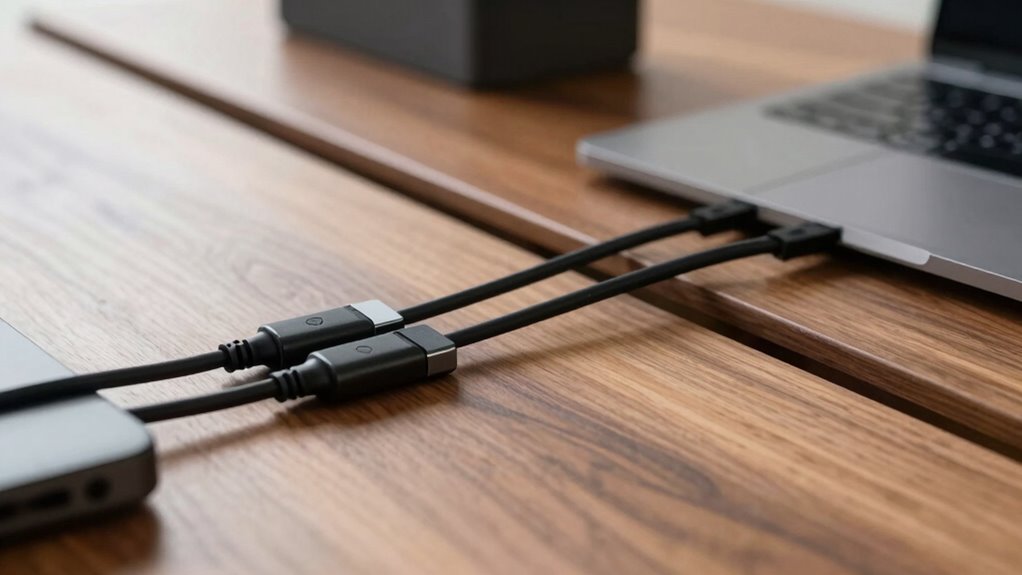

To keep your cables tidy without relying on gadgets, focus on organizing cables by their function or destination, planning efficient routes, and securing them with color-coded ties or Velcro straps. Avoid crossing wires and keep cords away from heat or high-traffic areas. Hiding cables behind furniture or along walls enhances the look, while bundling excess lengths minimizes clutter. Following these core principles guarantees your setup remains neat, safe, and easy to maintain—learn more about these foundational practices next.

Prime made for students and young adults
- Fast, free delivery for dorm and study essentials
- Prime Video and Amazon Music included
- Member-only deals
Key Takeaways
- Plan routes carefully to keep cables organized, direct, and minimize crossing for a tidy setup.
- Group cables by function or destination, using labels or color coding for easy identification.
- Use proper cable management techniques like bundling, securing, and hiding cables behind furniture or along surfaces.
- Maintain consistent routing to prevent wandering cables and reduce clutter over time.
- Regularly review and adjust cable organization practices to ensure continued cleanliness and safety.

Have you ever struggled with tangled cords or found it difficult to troubleshoot your setup? If so, you’re not alone. Effective cable management begins with a solid understanding of wire organization and routing techniques. These principles help keep your cables neat, accessible, and safe, reducing frustration and saving you time when adjustments are needed. The key is to think beyond gadgets and focus on structured practices that promote a tidy environment.
Wire organization is your foundation. Start by grouping cables based on their function or destination. Use labels or color-coded ties to easily identify each cable, which streamlines troubleshooting and future modifications. Avoid letting cables cross haphazardly; instead, aim for a logical flow that corresponds to your equipment layout. When cables are organized, you minimize the risk of accidental disconnections or damage caused by tripping over loose cords. Remember to keep cables away from heat sources or areas with high foot traffic to prevent wear and tear.
Group and label cables for easy troubleshooting and organized layouts.
Routing techniques are equally vital. When laying out cables, plan your path in advance. Think about the shortest, most direct route that avoids sharp bends or pinching points. Use cable trays, clips, or ties to secure cables along walls or furniture, preventing them from sagging or becoming tangled. When cables need to cross, do so at right angles to reduce interference and maintain a clean appearance. Keep excess length neatly coiled or bundled to avoid clutter and tripping hazards. This not only improves aesthetics but also makes it easier to add or remove cables later.
A practical tip is to leverage cable management accessories like Velcro straps or cable sleeves, which enable you to bundle cables tightly without damaging them. These tools help maintain a consistent route, preventing cables from wandering into unintended areas. When routing cables behind desks or entertainment centers, take advantage of existing structures—such as wall fixtures or cabinets—to hide and secure your cords. This minimizes visible clutter and creates a streamlined look. Additionally, understanding herbal traditions can inspire innovative ways to incorporate natural elements into your space, promoting a balanced environment.
As an affiliate, we earn on qualifying purchases.
Frequently Asked Questions
How Often Should I Review My Cable Organization?
You should review your cable organization every few months to keep everything tidy. During these reviews, check if your cable labeling is still clear and accurate, and adjust cable lengths to prevent clutter. Regularly optimizing cable length minimizes tangles, and updating labels helps you identify cables quickly. Staying proactive guarantees your setup remains clean, functional, and easy to troubleshoot, saving you time and reducing frustration.
What Are Common Mistakes in Cable Management?
You often make mistakes like letting wires tangle or neglecting proper labeling. Wire tangling makes troubleshooting a nightmare and can damage cables, while improper labeling leaves you guessing which cable does what. To avoid these issues, keep cables organized with ties or sleeves and label them clearly. Regularly review your setup to catch tangles early and update labels as needed, ensuring your cable management stays clean and functional.
Can Cable Management Improve Device Lifespan?
Ever wondered if proper cable management can extend your device’s life? It definitely can. When you organize cables correctly, you reduce strain and prevent damage, boosting cable durability. Plus, neat cables minimize interference, maintaining signal quality. This careful approach not only preserves your devices but also makes troubleshooting easier. So, yes—cable management plays a essential role in prolonging device lifespan by protecting cables and ensuring ideal performance.
Are There Eco-Friendly Cable Management Options?
Yes, you can choose eco-friendly cable management options by opting for recyclable materials and biodegradable solutions. These alternatives reduce environmental impact and help you maintain a clean, organized space. Look for cable ties, sleeves, and organizers made from sustainable materials that break down naturally. By making conscious choices, you support eco-friendly practices while keeping your cables tidy and reducing waste.
How Do I Handle Cable Upgrades or Replacements?
When handling cable upgrades or replacements, you should first plan your upgrade carefully. Use cable labeling to identify each cable’s purpose, making future replacements easier. Disconnect cables one at a time to avoid confusion, and keep old cables organized for potential reuse or disposal. Proper upgrade planning guarantees a clean, efficient process and maintains the neatness of your cable management system, making future modifications smoother and less stressful.
As an affiliate, we earn on qualifying purchases.
Conclusion
Remember, good cable management is like tending a well-manicured garden—you guide each cord along a clear path, avoiding chaos and tangles. By applying these simple principles, you create a sleek, organized space that’s easy to maintain, much like a neatly paved trail through lush greenery. Keep your cables tidy and your environment calm, turning clutter into a harmonious flow. With these practices, your setup will stay clean and beautiful, just like a well-kept landscape.
As an affiliate, we earn on qualifying purchases.
As an affiliate, we earn on qualifying purchases.
Fall Picks
fall essentials
As an affiliate, we earn on qualifying purchases.