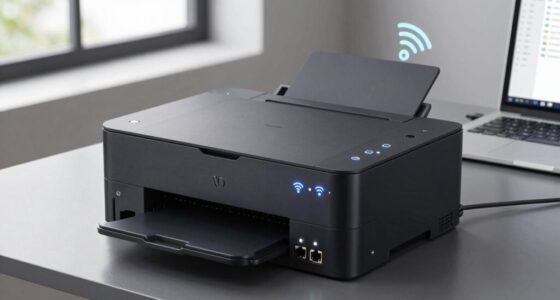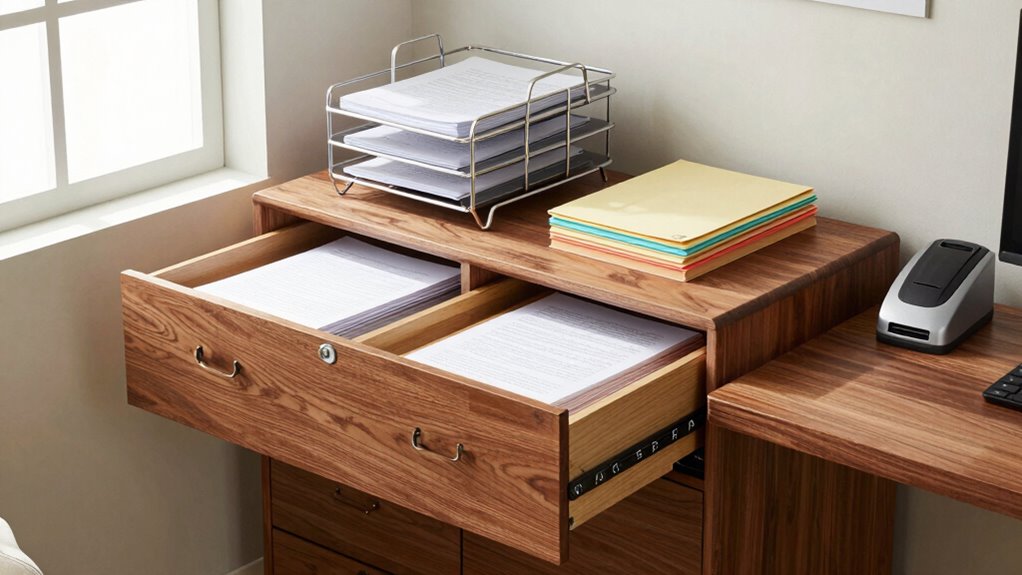

To build a practical home records system, start by sorting your documents into categories like financial, medical, legal, warranties, and household info. Use labeled folders or digital scans stored securely in the cloud. Keep physical files in a fireproof safe and digital copies encrypted with strong passwords. Regularly review, update, and purge outdated papers to stay organized. Incorporating these steps enhances security and accessibility—keep going to discover more ways to streamline your system effectively.

Get school and study supplies delivered free — and shop member deals
- Fast, free delivery on millions of items
- Access to Prime Big Deal Days deals on October 6–7
- Prime Video, Amazon Music and more included
Key Takeaways
- Categorize documents into clear groups like financial, medical, legal, warranties, and household info for easy retrieval.
- Digitize essential papers and store them securely in encrypted cloud or local digital storage.
- Use labeled, fireproof physical filing systems for important hard copies, kept in a secure, accessible location.
- Regularly review, update, and purge outdated documents to maintain organization and security.
- Implement strong security measures, including encryption, passwords, and shredding of sensitive materials no longer needed.
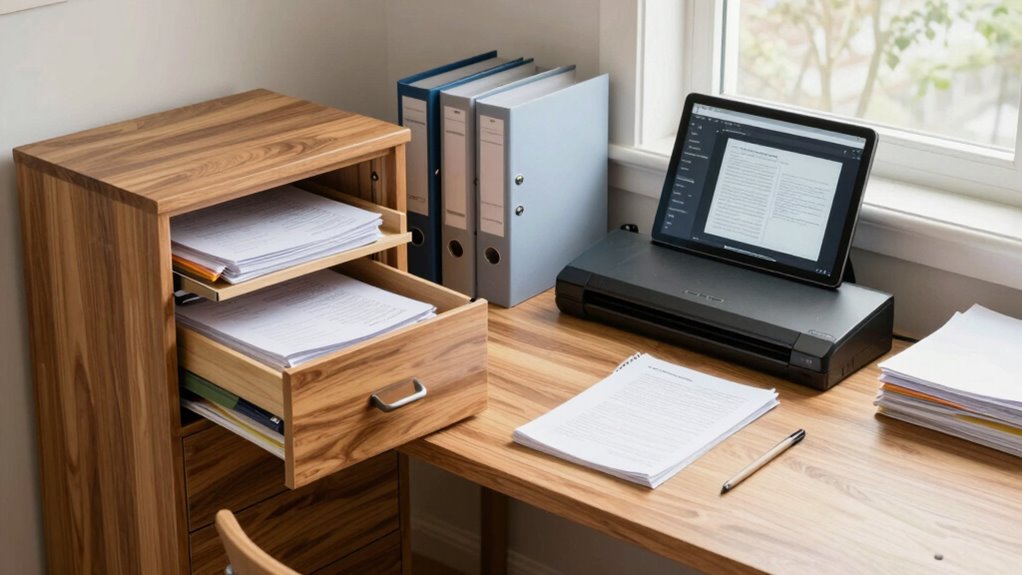
Having a well-organized home records system is essential for quickly finding important papers when you need them most. You don’t want to waste time sifting through clutter or digging through piles of documents. Instead, you can create an efficient system that combines digital organization with secure storage solutions. This approach guarantees your critical papers are both accessible and protected from damage or theft. Start by sorting your papers into broad categories, such as financial records, medical documents, legal papers, warranties, and household information. Once sorted, decide which of these categories benefit from digital organization. For instance, you can scan tax returns, insurance policies, or medical records and save them securely on your computer or in cloud storage. Digital organization makes it easy to find documents quickly and reduces paper clutter. When choosing a digital storage method, opt for secure platforms that offer encryption and backup options to prevent data loss. Use strong, unique passwords and enable two-factor authentication whenever possible to keep your digital files safe from cyber threats. Additionally, digital security measures are vital to protect your sensitive information from potential breaches. Incorporating data encryption can further enhance your online document safety, ensuring your private information remains secure even if accessed by unauthorized individuals. Implementing a consistent organizational system helps maintain order and makes future updates more manageable.
For physical documents, invest in high-quality, labeled file folders or binders. Store these in a dedicated, fireproof safe or a lockable filing cabinet to guarantee secure storage. Label each folder clearly, so you can easily locate what you need without rifling through multiple files. Keep the safe or cabinet in a discreet, accessible location, preferably away from potential hazards like water pipes or heat sources. Regularly review and purge outdated or unnecessary papers to keep your system streamlined and manageable. Shred documents containing sensitive information that you no longer need to prevent identity theft.
Incorporate a routine to update your records system periodically. This might mean scanning new documents and adding them to your digital archive or reorganizing physical files. By staying consistent, you prevent clutter from building up and ensure your system remains reliable. Remember, the goal isn’t only to organize but also to protect your important papers. Combining digital organization with secure physical storage provides a thorough solution. It gives you quick access when needed and peace of mind knowing your documents are safe. With a little effort upfront, you’ll save time, reduce stress, and have confidence that your critical papers are well protected and easy to find at a moment’s notice.
As an affiliate, we earn on qualifying purchases.
Frequently Asked Questions
How Often Should I Review and Update My Home Records System?
You should review and update your home records system at least once a year, or whenever you experience major life changes like moving, job shifts, or new insurance policies. During these reviews, focus on paper organization and make certain your digital backups are current. Regular updates keep your records accurate, protect your important documents, and make it easier to find what you need quickly. Staying consistent ensures your system remains practical and reliable.
What Are the Best Digital Tools for Organizing Important Papers?
Did you know 73% of people say digital storage makes managing important papers easier? You should consider using cloud storage and document scanning tools like Evernote or Google Drive. These digital tools help you organize, access, and secure your important papers from anywhere. Scanning documents keeps digital copies safe, while cloud storage ensures you can retrieve them quickly. Embracing these tools simplifies your record-keeping and safeguards your essential documents.
How Do I Protect Sensitive Information in My Records System?
To protect sensitive information in your records system, you should use data encryption for digital files, making sure only authorized people can access the data. Store important papers in secure storage like a fireproof safe or lockable cabinet, and consider backing up digital records on encrypted external drives or cloud services with strong security measures. Regularly update passwords and monitor access to keep your records safe.
What Should I Do if I Lose an Important Document?
If you lose an important document, don’t panic. Immediately, scan your remaining copies for digital backup and check your secure storage. Contact relevant institutions to request replacements, and keep a record of all communication. Using document scanning and secure storage guarantees you can quickly replace lost papers and safeguard your critical information. Staying proactive and organized minimizes stress and restores your peace of mind swiftly.
How Can I Make My Records System Accessible During Emergencies?
During emergencies, you should guarantee your records system is highly accessible by incorporating emergency preparedness and accessibility considerations. Keep copies of essential documents in a secure, yet easily reachable location, like a fireproof lockbox or a digital cloud service with secure access. Clearly label folders or digital files, and consider providing trusted family members or emergency contacts with access details. This way, you can quickly retrieve important papers when it matters most.
labeled file folders for important papers
As an affiliate, we earn on qualifying purchases.
As an affiliate, we earn on qualifying purchases.
Conclusion
By now, you’ve got the tools to organize your important papers effectively. Will you take the first step toward peace of mind and a clutter-free home? Remember, a well-structured records system isn’t just about convenience—it’s about protecting your most valuable documents for years to come. Start today, and soon you’ll enjoy the confidence that comes with knowing everything’s in its right place. Isn’t it time to make your home truly organized?
As an affiliate, we earn on qualifying purchases.
As an affiliate, we earn on qualifying purchases.
Halloween Picks
halloween
As an affiliate, we earn on qualifying purchases.