
TL;DR

Prime made for students and young adults
- Fast, free delivery for dorm and study essentials
- Prime Video and Amazon Music included
- Member-only deals
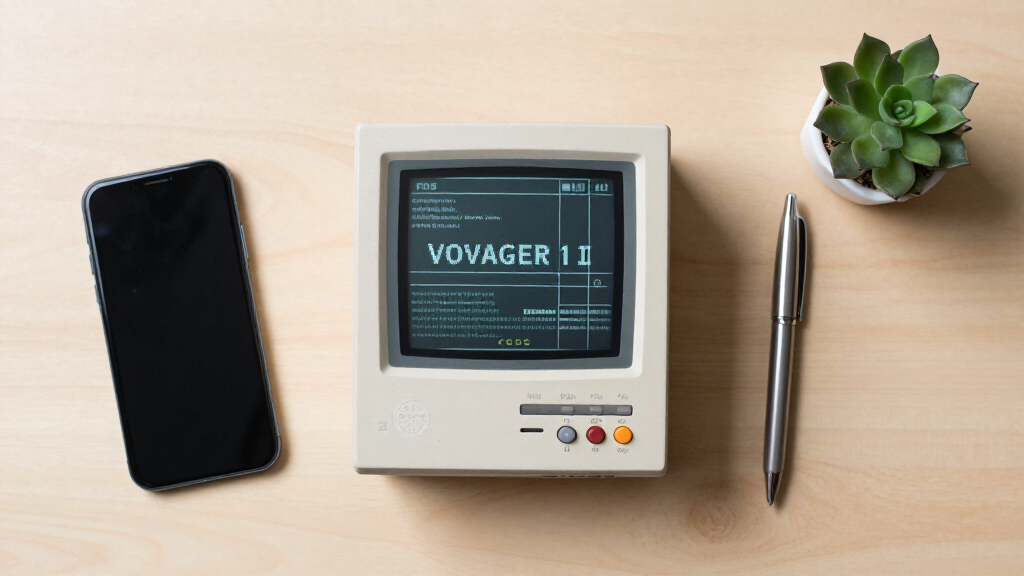
NASA has successfully created a computer emulator for Voyager 1’s Flight Data System, allowing renewed access to its onboard data. This development could extend the spacecraft’s scientific capabilities and provide new insights from interstellar space.
NASA has developed a software emulator that replicates Voyager 1’s original Flight Data System (FDS), allowing engineers to access and retrieve data from the spacecraft’s onboard systems for the first time in years. This breakthrough aims to extend Voyager 1’s operational lifespan and enhance scientific data collection from interstellar space, making it a significant milestone in deep-space exploration technology.
The emulator was built to replicate Voyager 1’s FDS hardware and software environment, which has been non-operational since the spacecraft’s last major communication upgrade. According to NASA officials, this emulator enables scientists to interpret data transmitted from Voyager 1 more effectively, potentially unlocking new insights about its environment beyond the heliosphere.
NASA confirmed that initial tests of the emulator have been successful, allowing engineers to decode and analyze data streams that previously could not be accessed due to outdated hardware limitations. The project was initiated after engineers identified that the original FDS hardware was no longer operational but that a software-based solution could restore functionality.
Potential to Revive Voyager 1 Data Capabilities
This development could significantly extend Voyager 1’s scientific mission, enabling it to transmit more complex data and potentially gather new information from interstellar space. It also demonstrates a novel approach to maintaining legacy spacecraft, which may influence future deep-space exploration efforts and long-term mission planning.
spacecraft flight data system emulator
As an affiliate, we earn on qualifying purchases.
As an affiliate, we earn on qualifying purchases.
Legacy of Voyager 1 and Past Data Limitations
Voyager 1, launched in 1977, has been traveling through interstellar space for over 45 years, providing invaluable data about the outer planets and now the environment beyond the solar system. However, its original onboard systems, including the Flight Data System, are no longer operational due to age and hardware degradation. NASA has been relying on limited communication and data interpretation methods, which restrict the depth of scientific analysis.
Recent years have seen efforts to develop software solutions to access the limited data Voyager 1 continues to transmit, but hardware emulation represents a new step forward. This emulator is based on reverse-engineering the original FDS and creating a software replica that can run on modern hardware, allowing for more sophisticated data decoding.
NASA Voyager 1 data retrieval device
As an affiliate, we earn on qualifying purchases.
As an affiliate, we earn on qualifying purchases.
Extent of Data Access and Future Capabilities Still Unclear
It is not yet confirmed how much additional data Voyager 1 can transmit using the emulator or whether it will enable new scientific experiments. The emulator has passed initial tests, but full operational deployment and its impact on data quality are still under evaluation. Further testing is required to determine if the emulator can handle the full range of onboard data and commands.
As an affiliate, we earn on qualifying purchases.
Next Steps Include Extended Testing and Data Collection Trials
NASA plans to conduct extended operational tests of the emulator over the coming months, aiming to verify its reliability and data fidelity. If successful, the emulator could be used to retrieve more detailed measurements of interstellar space and support ongoing mission operations. Additionally, NASA may explore applying similar emulation techniques to other aging spacecraft.
As an affiliate, we earn on qualifying purchases.
Key Questions
What is the Voyager 1 FDS emulator?
The emulator is a software replica of Voyager 1’s original Flight Data System, designed to enable communication and data retrieval from the spacecraft’s onboard systems after hardware failure.
Why is this development important?
It could extend Voyager 1’s scientific mission, allowing more detailed data collection from interstellar space, and demonstrates a new approach to maintaining legacy spacecraft systems.
Can the emulator restore all of Voyager 1’s data capabilities?
It is currently unclear how much data can be transmitted and decoded using the emulator. Full operational capability is still under testing.
When will Voyager 1 start transmitting new data using the emulator?
NASA plans to begin extended testing in the coming months, with potential data collection trials scheduled after successful validation.
Could this approach be used for other spacecraft?
Possibly. If successful, similar emulation techniques could be applied to other aging spacecraft to prolong their operational life and scientific output.
Source: hn
Fall Picks
fall essentials
As an affiliate, we earn on qualifying purchases.