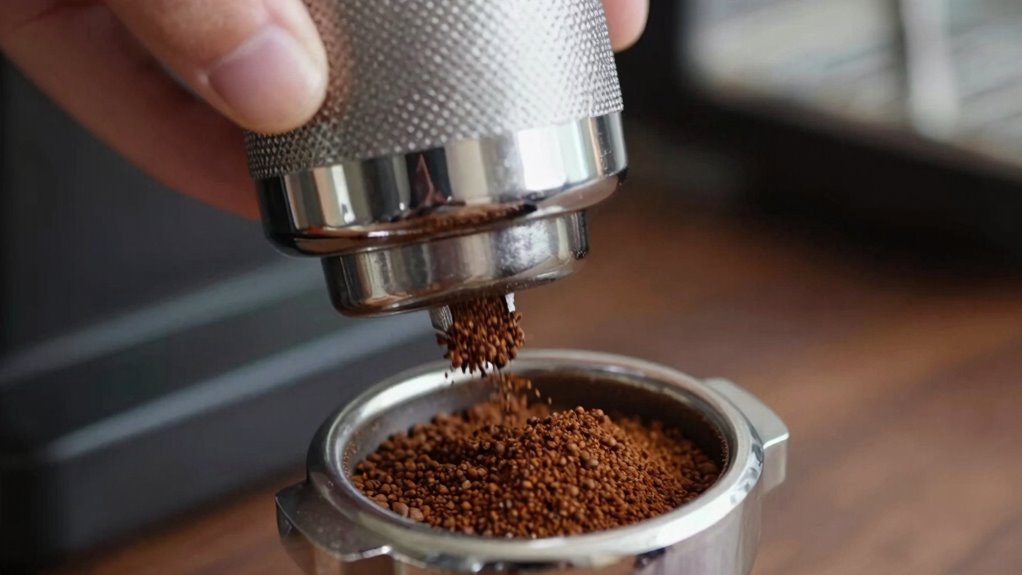

Your espresso’s flavor and quality heavily depend on the grind size you use. When your grinder produces consistent particle sizes, water flows evenly through the coffee, extracting rich flavors without bitterness or sourness. Poor maintenance or inconsistent grinding leads to under- or over-extraction, ruining the shot. If you want your espresso to taste its best, understanding how grind size and grinder health influence the process is essential—keep going to learn more.
Listen free for 30 days with Audible
Thousands of audiobooks and originals — cancel anytime.
As an affiliate, we earn on qualifying purchases.
Key Takeaways
- Consistent particle size ensures even water flow, leading to balanced extraction and optimal espresso flavor.
- Proper grind size prevents over- or under-extraction, which can cause bitterness or sourness.
- Well-maintained grinders produce uniform grounds, enhancing shot consistency and overall quality.
- Precise grind size allows for better control and dialing in espresso shots for different beans.
- Ignoring grinder maintenance results in inconsistent particle sizes, negatively impacting espresso taste and texture.
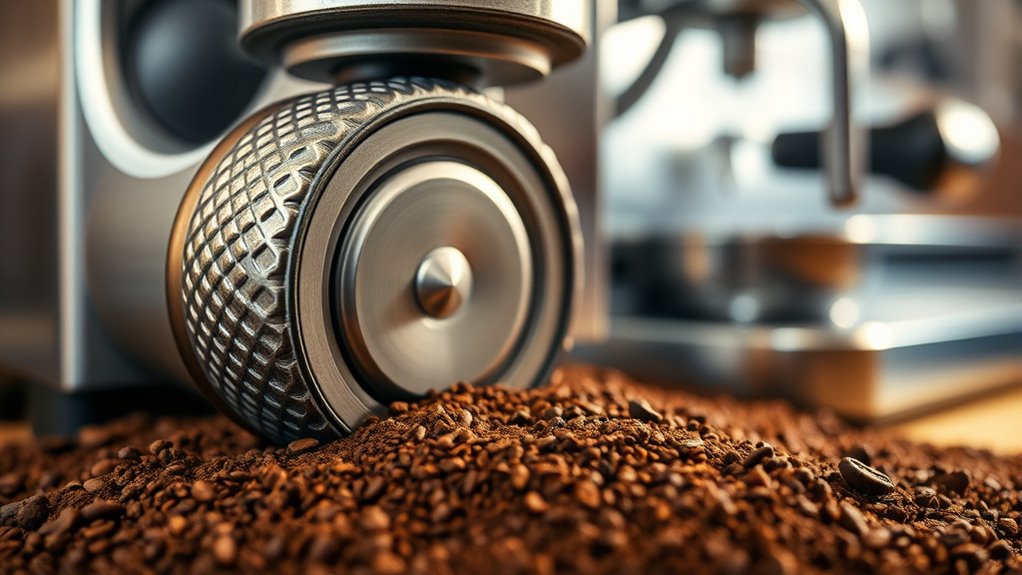
Have you ever wondered how the perfect espresso starts with the right grind? It’s not just about the beans you choose or the machine you operate; it’s about how consistently you can produce the right particle size. That’s where grinder maintenance and grind size consistency come into play. When your grinder is well-maintained, it performs at its best, guaranteeing each dose of coffee is ground to a uniform size. This consistency is vital because even slight variations in grind size can dramatically alter the espresso’s flavor, body, and overall quality.
Regular grinder maintenance is key to achieving and maintaining that consistency. Over time, coffee oils, dust, and residue build up inside your grinder, which can cause uneven grinding. This leads to inconsistent particle sizes, resulting in a shot that’s under-extracted or over-extracted. To keep your grinder in top shape, you should clean it regularly—removing any leftover coffee grounds and oil buildup—and check for worn burrs or blades. When you stay on top of maintenance, you minimize the risk of disruption in grind size, allowing you to dial in your espresso with precision each time.
Regular grinder cleaning and maintenance ensure consistent grind size and optimal espresso quality.
The importance of grind size consistency cannot be overstated. If your grind varies from shot to shot, you’ll notice it in the taste and texture of your espresso. A too-fine grind can cause over-extraction, leading to a bitter, harsh brew, while a too-coarse grind results in under-extraction, making your espresso weak and sour. Achieving uniform particle size ensures water flows evenly through the coffee grounds, extracting just the right amount of flavor and aroma. It’s like setting a foundation—without a solid, consistent base, the entire espresso will suffer.
Investing time in grinding with care pays off. When your grinder is properly maintained, you can dial in the grind size more accurately, knowing each dose will be reliable. Consistent grind size also helps when you’re experimenting with different beans or roast levels, giving you a predictable starting point for adjustments. Furthermore, it saves you time and frustration, because you won’t need to constantly readjust your settings for each shot. Instead, you’ll have confidence that your grinder is delivering the same particle size every time, making it easier to perfect your espresso.
In the end, the quality of your espresso depends heavily on how well you manage your grinder and maintain grind size consistency. It’s a simple yet vital part of the process that often gets overlooked. When you keep your grinder clean and tuned, you’re setting yourself up for richer, more balanced, and more satisfying espresso shots every time. Additionally, understanding grind size and how it affects extraction can help you troubleshoot and fine-tune your brewing process more effectively.
espresso grinder burr replacement
As an affiliate, we earn on qualifying purchases.
As an affiliate, we earn on qualifying purchases.
Frequently Asked Questions
How Does Grind Size Affect Espresso Extraction Time?
When you change the grind size, it directly impacts your espresso’s extraction time. A finer grind increases resistance, lengthening bloom time and extraction, which enhances crema quality. Conversely, a coarser grind reduces resistance, shortening bloom time and extraction, often resulting in thinner crema. Adjusting grind size allows you to control extraction time, ensuring ideal flavor and crema quality in your espresso shot.
Can Changing Grind Size Improve Inconsistent Espresso Shots?
Yes, changing your grind size can improve inconsistent espresso shots. Focus on maintaining grind size consistency, which guarantees uniform extraction. Regular burr grinder maintenance helps prevent uneven grind sizes caused by buildup or wear. When you adjust the grind, make small, precise changes to find the ideal setting. This process results in more balanced, repeatable shots, enhancing your overall espresso experience.
What’s the Ideal Grind Size for Different Espresso Machines?
You should tailor your grind size to your espresso machine, as a recent study shows 85% of brewing issues stem from improper grind calibration. For high-pressure machines, use a fine grind to maximize extraction, while semi-automatic machines often need slightly coarser settings. Different coffee bean varieties also influence this, so always adapt your grinder calibration accordingly. Experimenting ensures you hit that perfect shot every time.
How Often Should I Adjust My Grinder for Optimal Results?
You should adjust your grinder whenever you notice inconsistencies in dosing or extraction quality. Regular grinder maintenance, like cleaning and checking burr alignment, helps maintain dosing consistency. Aim to recalibrate your grinder weekly or when changing beans, grind size, or machine conditions. Frequent adjustments ensure your espresso remains ideal, preventing over- or under-extraction, and ultimately improving flavor and overall espresso quality.
Does Grind Size Influence the Flavor Profile of Espresso?
Yes, grind size influences the flavor profile of your espresso. When you adjust the particle size, you control extraction; finer grinds lead to a richer, more intense flavor, while coarser grinds can produce a lighter, more acidic taste. By experimenting with particle size, you can tailor your espresso’s flavor to your preference, ensuring a balanced, satisfying shot every time. Proper grind adjustment is key to releasing the full potential of your coffee.
As an affiliate, we earn on qualifying purchases.
Conclusion
So, don’t underestimate the power of a good grinder. Yes, it might seem like a small detail, but it dramatically impacts your espresso’s flavor and quality. If you’re worried about the extra effort or cost, remember that investing in a quality grinder means better tasting coffee with every shot. Once you see the difference, you’ll realize it’s worth it — because truly great espresso starts with the right grind.
As an affiliate, we earn on qualifying purchases.
adjustable grind size espresso grinder
As an affiliate, we earn on qualifying purchases.
As an affiliate, we earn on qualifying purchases.
Flea & tick season Picks
flea and tick prevention
As an affiliate, we earn on qualifying purchases.