

Recognizing early signs of identity theft is essential to protect your finances. Watch for unfamiliar charges, new accounts, or difficulty accessing your online profiles. Pay attention to alerts from banks or credit bureaus about suspicious activity. Scrutinize your credit reports and bank statements for unexpected entries. Be cautious with emails requesting personal info or links to fake websites. Staying alert to these warning signs can help you respond quickly and keep your identity safe — learn more to stay protected.
Key Takeaways
- Unfamiliar accounts or charges appearing on credit reports indicate potential identity theft.
- Difficulty accessing accounts due to unauthorized password changes signals suspicious activity.
- Alerts from financial institutions about unusual transactions suggest possible fraud.
- Discovery of new, unrecognized accounts in your name is a warning sign.
- Unexpected activity on bank statements or credit reports points to possible identity compromise.
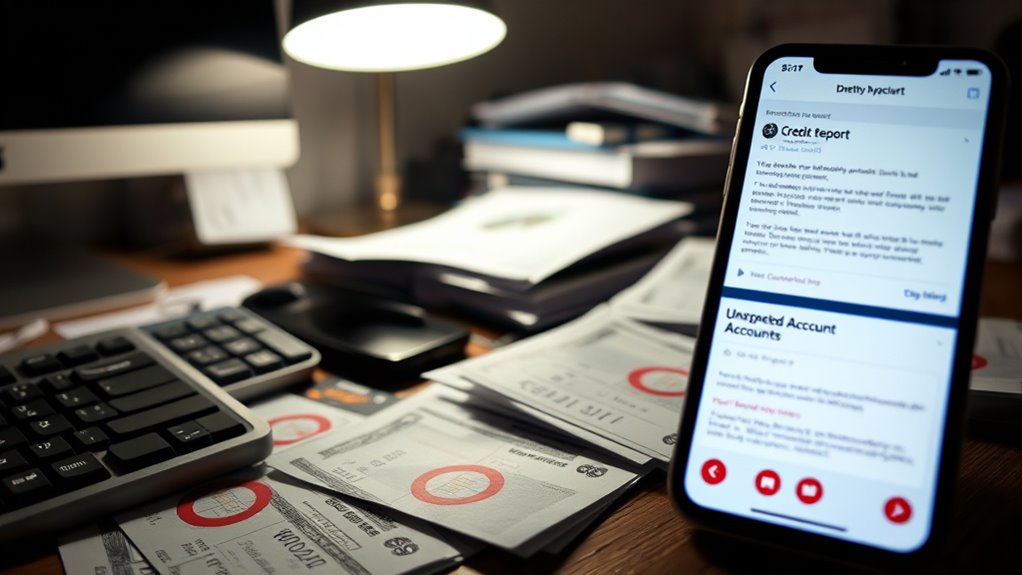
Identity theft occurs when someone illegally accesses your personal information and uses it for fraudulent purposes. It’s a sneaky crime that can happen in many ways, often catching you off guard. One common method cybercriminals use is sending fraudulent emails that appear legitimate. These emails might look like they’re from your bank, a trusted retailer, or even a government agency. They often ask you to click on a link or provide personal details, such as your Social Security number, account numbers, or passwords. If you fall for these scams, you might unknowingly give away your sensitive information, which can then be stolen and misused.
Be cautious of fake emails asking for personal info to prevent identity theft.
Another warning sign involves fake websites. Cybercriminals create convincing replicas of real sites to trick you into entering your login details or personal information. These fake websites look authentic, mimicking logos, layouts, and URLs closely. Always be cautious when entering personal data online, especially if the website URL looks suspicious or doesn’t start with “https://.” If you notice that a website seems poorly designed or has misspellings, it’s a red flag that it might be a scam. Cybercriminals rely heavily on these fake sites to harvest your information, so being vigilant about where you input personal details is essential.
Beyond fraudulent emails and fake websites, you might notice other early signs that indicate your identity has been compromised. For example, if you get notices about unfamiliar accounts or charges on your credit report, it’s time to investigate. Sometimes, thieves will try to open new accounts in your name, and these will show up unexpectedly. You may also experience difficulty accessing your accounts because your passwords have been changed without your consent. Another sign is receiving alerts about suspicious activity from financial institutions or credit bureaus. These alerts are designed to catch fraud early and can help you act quickly.
Being aware of these early warning signs is vital to protecting yourself from identity theft. Always verify the authenticity of emails before clicking on links or providing personal information. Be cautious of websites that seem suspicious or untrustworthy. Regularly monitor your credit reports and bank statements for any unfamiliar activity. If something seems off, don’t hesitate to act quickly—report the issue to your bank or relevant authorities. The sooner you recognize the signs, the better your chances of preventing further damage. Staying vigilant and cautious online is your best defense against falling victim to identity theft. Additionally, understanding navigation and mapping of your accounts and devices can help detect unusual activity early.
Frequently Asked Questions
How Can I Recover Stolen Credit Card Information Quickly?
If you notice credit card fraud, act quickly with a rapid response. Contact your bank or credit card company immediately to report the theft, and request a card freeze or cancellation. Monitor your account for unauthorized transactions and dispute any charges. Change your online banking passwords, and consider placing a fraud alert or credit freeze. Swift action minimizes damage and helps recover stolen credit card information efficiently.
What Are the Long-Term Effects of Identity Theft?
You might face long-term effects like damaged credit report impacts and lingering financial stress. Identity theft can lead to decreased credit scores, making it harder to get loans or credit in the future. To minimize these effects, focus on financial recovery strategies such as monitoring your credit report regularly, disputing fraudulent charges, and working with credit bureaus. Staying proactive helps protect your financial health and rebuilds trust in your credit profile over time.
How Often Should I Check My Credit Reports?
You should check your credit reports at least once a year, but more often if you suspect fraud or experience suspicious activity. To stay protected, consider using credit monitoring services that provide report frequency alerts, helping you catch unauthorized transactions early. Regular checks allow you to spot errors or signs of identity theft quickly, so you can take action before serious damage occurs.
Can Identity Theft Affect My Employment or Background Checks?
Yes, identity theft can affect your employment security and background screening. If someone uses your stolen identity, it might appear on background checks, causing potential employers to question your credibility or integrity. This can lead to job delays or rejections. To protect yourself, monitor your credit reports regularly, and promptly report any suspicious activity. Staying vigilant helps guarantee your identity remains secure, safeguarding your employment prospects.
What Steps Should I Take if I Suspect Identity Theft?
If you suspect identity theft, act quickly. First, review your bank and credit accounts for suspicious activity or fraudulent emails. Report any unauthorized transactions to your bank and credit bureaus immediately. Place a fraud alert or freeze your credit to prevent further damage. Contact the Federal Trade Commission and local authorities to file a report. Keeping vigilant helps protect your identity and minimizes potential harm.
Conclusion
Being aware of early warning signs can save you from serious trouble. Nearly 1 in 15 Americans has experienced identity theft, highlighting how common it is. Stay vigilant for unusual account activity or unexpected bills. By recognizing these signs early, you can act quickly to protect your personal information. Remember, staying informed and proactive is your best defense against falling victim to identity theft. Don’t wait—your financial security depends on it.