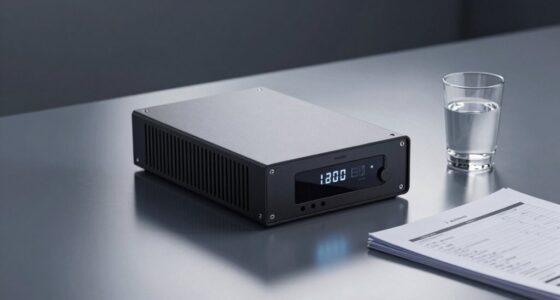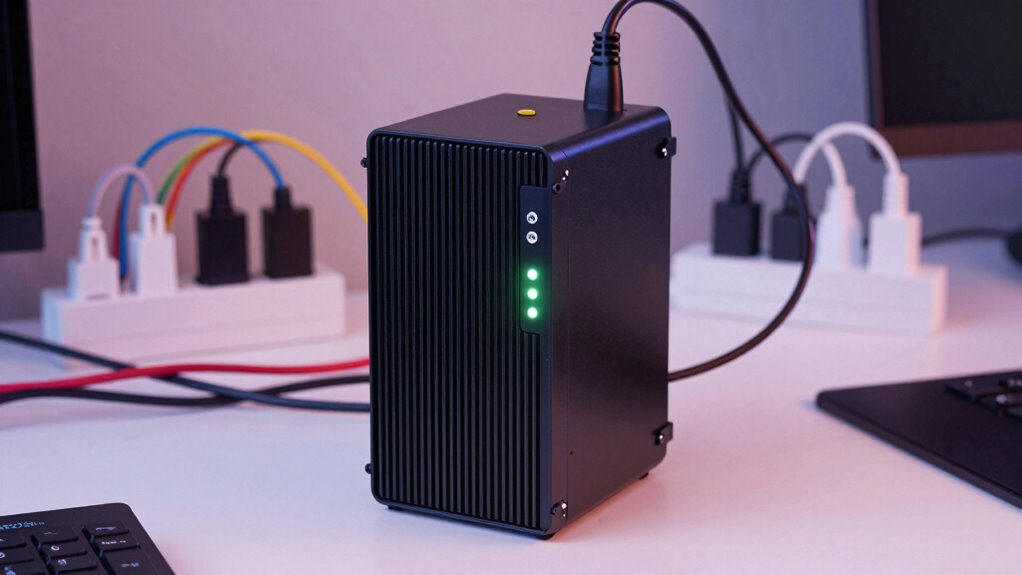

A UPS offers surge protection that a power strip can’t match by actively sensing, absorbing, and diverting dangerous voltage spikes before they reach your devices. It monitors power quality in real time and isolates your electronics from harmful surges during electrical events like lightning strikes or faults. This proactive response helps prevent damage and data loss. To discover how a UPS provides these advanced features and why they matter, keep exploring the details behind effective surge protection.

Prime made for students and young adults
- Fast, free delivery for dorm and study essentials
- Prime Video and Amazon Music included
- Member-only deals
Key Takeaways
- UPS units contain built-in surge suppression components designed for high-energy electrical events, unlike power strips.
- UPS continuously monitors power quality and isolates devices instantly during voltage spikes.
- UPS offers backup power to maintain device operation during outages, providing added protection.
- Power strips only prevent overloads and lack the capability to absorb or divert large surges.
- UPS minimizes data loss and hardware damage by effectively diverting dangerous voltage spikes before reaching devices.
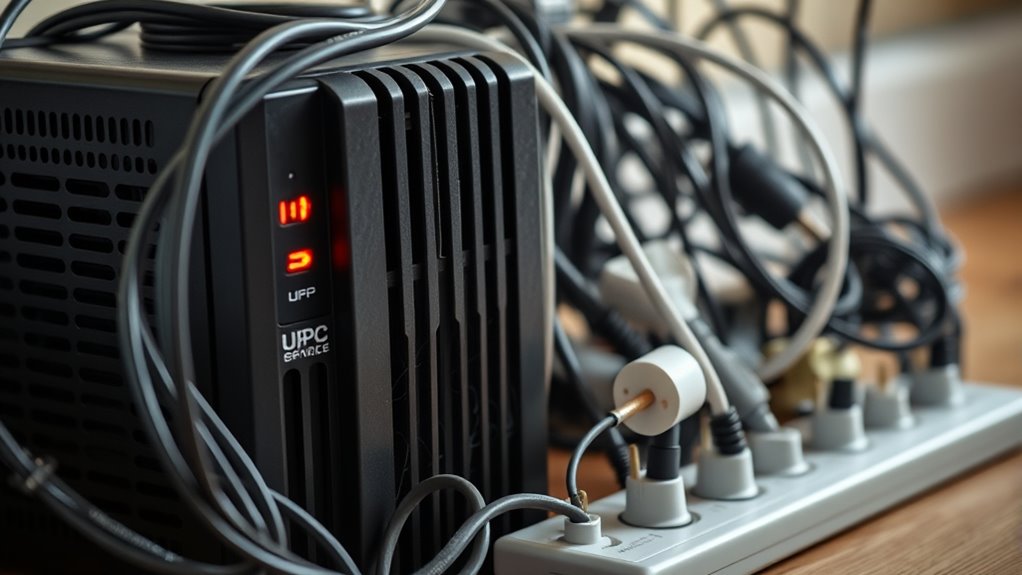
Surge protection is vital for safeguarding your electronic devices from sudden voltage spikes caused by lightning strikes, power outages, or utility switching. When lightning strikes nearby, it can send a massive surge of electrical energy through the power lines, overwhelming your devices and causing irreversible damage. Electrical surges, whether triggered by lightning or other factors like faulty wiring or high-powered appliances turning on and off, can quickly fry sensitive components inside your electronics. While plugging your devices into a power strip may seem sufficient, it’s often not enough to protect against the high-intensity surges associated with lightning strikes or electrical surges. Power strips are primarily designed to prevent overloads and provide convenience, but they lack the advanced components needed to absorb or divert dangerous voltage spikes.
A UPS, or uninterruptible power supply, offers much more extensive protection. Its primary function is to provide backup power during outages, but it also acts as a robust surge protector. Unlike standard power strips, UPS units contain built-in surge suppression components that can absorb and divert electrical surges before they reach your devices. This means that when lightning strikes nearby or an electrical surge occurs, your UPS steps in to prevent that excess voltage from reaching your sensitive equipment. By doing so, it minimizes the risk of data loss, hardware failure, or even permanent damage. The surge protection offered by a UPS is designed specifically to handle high-energy surges, providing an extra layer of security that a regular power strip simply cannot match. Effective surge suppression is crucial for protecting valuable electronics from electrical damage.
Furthermore, a UPS continuously monitors power quality, detecting fluctuations and surges in real-time. When it senses a spike caused by lightning or other electrical surges, it quickly isolates your devices from the harmful energy. This proactive approach ensures your equipment remains stable and protected, even during severe electrical disturbances. Power strips, on the other hand, lack this level of monitoring and often only offer basic suppression against minor surges. They’re more of a convenience tool for organizing multiple devices rather than a serious safeguard against power anomalies.
In short, if you want to truly protect your electronics from lightning strikes and electrical surges, investing in a UPS is the smarter choice. Its advanced surge suppression capabilities, combined with backup power features, make it far superior to standard power strips. You’ll appreciate the peace of mind knowing your valuable devices are shielded from unpredictable electrical events that could otherwise cause costly damage.
uninterruptible power supply with surge protection
As an affiliate, we earn on qualifying purchases.
As an affiliate, we earn on qualifying purchases.
Frequently Asked Questions
Can a UPS Protect Against Lightning Strikes?
A UPS can’t fully protect against lightning strikes, but it helps with lightning safety by providing backup power during outages caused by strikes. It maintains power grid stability for your devices, preventing sudden shutdowns. However, for direct lightning strikes, you should use a dedicated surge protector and make sure your home’s grounding system is solid. Combining these measures minimizes damage and keeps your equipment safe during thunderstorms.
How Often Should I Replace My UPS Surge Protector?
You should replace your UPS surge protector every 3 to 5 years, depending on its maintenance frequency and exposure to power surges. Regularly inspect it for signs of wear, such as frayed cords or blinking indicator lights. Follow replacement guidelines from the manufacturer, especially if it has taken a direct hit from a surge or no longer provides reliable protection. Staying proactive guarantees your devices stay safe from power fluctuations.
Do All UPS Units Include Surge Protection?
Not all UPS units include surge protection, so you need to check your specific model. Many modern UPS systems do offer built-in surge protection to help improve power quality and extend your equipment’s lifespan. However, some basic units may lack this feature. If surge protection is important to you, choose a UPS that explicitly states it includes surge suppression, ensuring your devices stay safe from power spikes.
What Is the Difference Between Surge Protection and Voltage Regulation?
Imagine your devices are sailing smoothly on calm waters. Surge protection shields against sudden storms, blocking voltage spikes, while voltage regulation acts like a steady lighthouse, ensuring voltage stays stable even during rough seas. Power conditioning in a UPS not only protects from surges but also maintains voltage stability, providing consistent power. So, surge protection prevents damage, and voltage regulation keeps your equipment functioning effectively, even amid fluctuating power conditions.
Is a UPS Necessary if I Already Have a Surge Protector?
A UPS isn’t always necessary if you already have a surge protector, but it can substantially improve your power quality and device compatibility. A UPS provides backup power during outages and protects against power fluctuations, ensuring your devices stay safe and functional. If you rely on sensitive equipment or want continuous operation, investing in a UPS is worthwhile. Otherwise, a surge protector alone might suffice for basic protection.
best UPS for electronics protection
As an affiliate, we earn on qualifying purchases.
As an affiliate, we earn on qualifying purchases.
Conclusion
In short, a UPS uniquely safeguards your gear with superior surge shielding, sparing devices from sudden sizzles and surges. While power strips may seem simple and swift, they lack the layered, reliable protection that a UPS provides. By investing in a UPS, you ensure your electronics enjoy a secure, steady, and stress-free sanctuary. So, safeguard your setup, stay secure, and sleep soundly knowing your devices are shielded from shock and surge storms.
As an affiliate, we earn on qualifying purchases.
As an affiliate, we earn on qualifying purchases.
Fall Picks
fall essentials
As an affiliate, we earn on qualifying purchases.