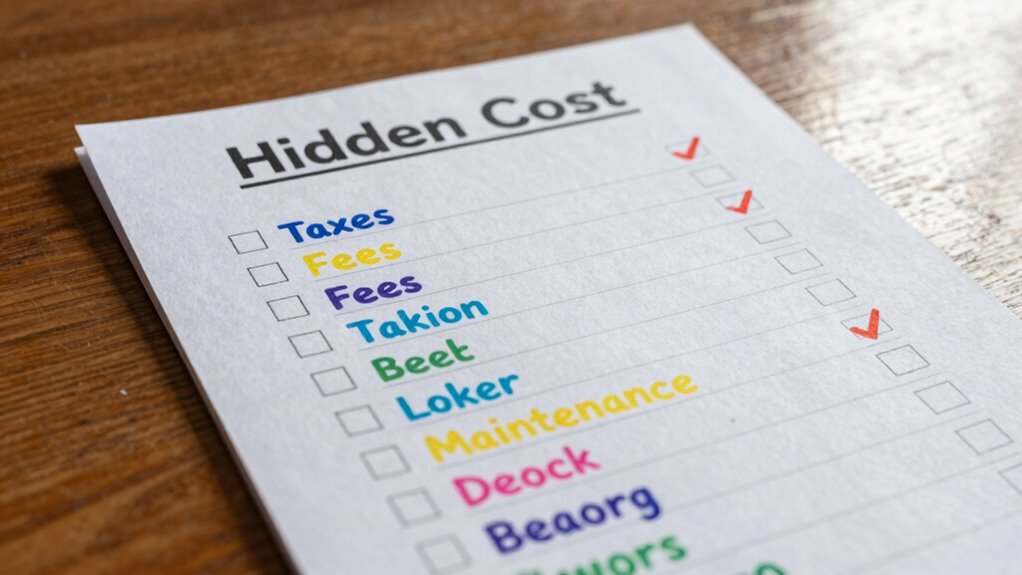

A “Hidden Cost” checklist helps you see beyond the initial price to uncover fees, long-term expenses, and charges buried in fine print. It guides you to review the full cost breakdown, including taxes, maintenance, and potential surcharges, so you can make smarter, more informed decisions. By paying attention to these hidden fees, you’ll avoid surprises and budget accurately. Keep exploring, and you’ll learn how to spot these costs effectively every time you make a purchase.
Key Takeaways
- Always review the full price breakdown, including taxes, fees, and additional charges before committing.
- Read terms and conditions carefully to identify potential hidden fees or restrictions.
- Use cost-planning tools to estimate ongoing expenses like maintenance, upgrades, or subscriptions.
- Compare multiple options to spot hidden costs in fine print and ensure the best overall value.
- Include long-term costs in your analysis for accurate budgeting and smarter purchasing decisions.
What Are Hidden Costs and Why Do They Matter?

Have you ever overlooked extra expenses that pop up after making a purchase or signing a deal? That’s where hidden costs come into play. They’re the additional charges not immediately obvious during the initial transaction, often clouded by a lack of cost transparency. Hidden costs matter because they can drastically inflate the real price you pay, making it harder to compare options accurately. Understanding the role of pricing psychology helps you recognize how marketers might intentionally conceal fees to influence your decision. By being aware of these tactics, you gain better control over your spending. Spotting hidden costs isn’t just about saving money—it’s about making smarter, more informed choices. Recognizing their presence empowers you to avoid surprises and ensures you’re truly aware of what you’re paying for upfront. Additionally, understanding energy-efficient cloud servers can help identify long-term savings and sustainability benefits that are often overlooked. Being mindful of vetted wave and wind options can also reveal environmentally friendly and cost-effective solutions that many consumers miss. Awareness of support breakfast options can further enhance your breakfast experiences by highlighting quality and value in your choices. Furthermore, paying attention to transparent pricing can help uncover hidden fees that might otherwise inflate your total costs. Moreover, paying attention to projector technology features, such as contrast ratio and color accuracy, can significantly impact your overall viewing experience and value for money.
Common Types of Hidden Costs in Everyday Purchases

When making everyday purchases, you’re often unaware of hidden costs like extra fees or surcharges that can increase the final price. Maintenance and upkeep costs also add up over time, impacting your budget more than you expect. Additionally, consider the time and convenience you might be sacrificing, which can have hidden value that’s easy to overlook. To truly understand the full expense, cost‑planning tools can help you anticipate and budget for these hidden factors more effectively. Recognizing electric bike horsepower and other features can also be crucial for evaluating the true value of your purchase. Seasonal flavor promotions or extended warranties can also be important for resolving disputes or returns.
Additional Fees and Surcharges
Ever notice how the final price of a product or service often differs from the sticker price? That’s usually due to additional fees and surcharges that aren’t immediately obvious. These hidden costs can include service fees, processing charges, or extra charges for premium options. Because of a lack of pricing transparency, many consumers aren’t aware of these costs until after they’ve committed. To avoid surprises, always look for clear fee disclosure before making a purchase. Businesses should be upfront about extra charges, but many don’t. By questioning and researching these fees upfront, you can better compare prices and avoid paying more than expected. Recognizing these common surcharges helps you make smarter choices and keeps your budget intact. Understanding pricing transparency is essential to avoiding unexpected expenses and making informed purchasing decisions. Additionally, being aware of additional fees and surcharges allows consumers to identify potential costs associated with specific services or products more easily.
Maintenance and Upkeep Costs
Maintenance and upkeep costs often sneak into your expenses long after making a purchase, adding up over time in ways you might not expect. These hidden costs impact your overall cost analysis and challenge your expense management. To avoid surprises, consider items like:
- Regular maintenance or repairs that aren’t included in the initial price
- Replacement parts or accessories that wear out quickly
- Increased utility or energy costs due to inefficient equipment
- Proper ventilation can significantly influence ongoing maintenance needs and energy consumption, especially in setups like saunas and cold plunges. Additionally, choosing energy-efficient appliances can help reduce long-term utility expenses and minimize unforeseen costs. Being aware of long-term operational costs is essential to making truly informed purchasing decisions and avoiding unexpected financial burdens. Understanding initial purchase costs alongside ongoing expenses can provide a more comprehensive view of total ownership costs. Furthermore, staying informed about sector performance metrics can help consumers evaluate the stability and sustainability of their investments in related equipment or infrastructure.
Time and Convenience Factors
While upfront costs are often the focus of your budget, time and convenience factors can quietly add hidden expenses to your purchases. Pricing psychology influences how you perceive value, sometimes leading you to choose convenience over cost-effectiveness. For example, opting for quick delivery or pre-cut items may seem convenient but often costs more and consumes your time. Using time saving strategies, like batch shopping or online ordering, can reduce these hidden costs. Additionally, employing air fryer techniques to prepare meals quickly can save you significant time in the kitchen. Moreover, without awareness, you might overlook how much time you spend on errands or waiting in lines, which can impact your overall productivity. Recognizing these factors helps you weigh the true value of your purchases, balancing convenience with cost. For instance, understanding the Gold IRA Markets can help you avoid hidden fees and make more informed investment decisions. Furthermore, being aware of potential hidden charges in various transactions ensures you’re not caught off guard. Moreover, considering sound healing science can enhance your well-being without additional expense, potentially reducing healthcare costs over time. Being mindful of the piercing care and hygiene requirements, such as proper cleaning and avoiding infection, can prevent costly complications later. Ultimately, understanding the hidden time and convenience costs allows you to make smarter, more cost-effective decisions.
How to Spot Hidden Fees in Service and Subscription Plans

Hidden fees in service and subscription plans often lurk behind vague language or overlooked details, making it easy to overspend without realizing it. To spot these costs, start by carefully reading the fine print. Watch for extra charges labeled as “fees,” “additional costs,” or “administrative charges.” Pay attention to how discounts are offered—sometimes, introductory rates mask higher renewal prices. Loyalty programs may seem beneficial but can include hidden requirements or restrictions. To avoid surprises, ask about:
Watch out for hidden fees in plans—read the fine print, ask about charges, and beware of sneaky renewal tactics.
- Renewal or cancellation fees
- Service upgrade charges
- Limitations on discount strategies
Being vigilant helps you understand the true cost and avoid being caught off guard by hidden fees hiding within seemingly straightforward plans.

When shopping online or in retail stores, you need to watch out for hidden fees like shipping and handling charges that can add up quickly. Unexpected costs, such as extra fees for premium packaging or taxes, can also surprise you at checkout. Being aware of these potential charges helps you avoid overspending and makes sure you’re comparing true prices. Additionally, understanding effective email marketing strategies can help retailers communicate transparently about costs and avoid customer frustration. Recognizing transparency in pricing can build trust and encourage repeat business from shoppers.
Shipping and Handling Fees
Shipping and handling fees can considerably increase your overall purchase cost, even if they aren’t immediately obvious at checkout. Many retailers lack clear pricing transparency, making it easy to overlook these extra charges until the final step. Always look for fee disclosure details before confirming your order. Hidden shipping costs can vary widely depending on the seller, delivery location, or order size. To avoid surprises, consider these points:
- Check if free shipping thresholds exist and plan your purchase accordingly
- Compare shipping rates across different vendors
- Review whether handling fees are included or added separately
Understanding how shipping and handling fees are revealed helps you make informed decisions and prevents unexpected costs. Keep an eye out for transparency in pricing to ensure you’re not caught off guard.
Unexpected Additional Costs
Unexpected additional costs can quickly turn a seemingly affordable purchase into a surprise expense if you’re not careful. Hidden fees like taxes, service charges, or maintenance costs often aren’t included in the initial price, making cost comparison tricky. To avoid surprises, always check the fine print and factor in these extra expenses during your budget planning. Online shopping can hide fees such as shipping surcharges or processing fees that aren’t obvious upfront. When comparing prices, don’t just look at the sticker price—consider the total cost, including hidden charges. Doing so helps you make smarter buying decisions, ensuring you stay within your budget and avoid unexpected financial stress. Being aware of these potential costs keeps your shopping transparent and your finances on track.
Hidden Costs When Buying or Renting a Home

Buying or renting a home often comes with more costs than meet the eye. Beyond the listed price, you’ll encounter hidden expenses that can catch you off guard. For instance, a mortgage application fee may surprise you with its upfront cost, and a property inspection is essential but often overlooked in the budget. These costs add up rapidly and can strain your finances if unprepared.
Be aware of these hidden costs:
- Loan origination or application fees
- Inspection and appraisal expenses
- Moving costs and initial setup fees
Understanding these expenses helps you plan better and avoid surprises. Don’t forget to factor in ongoing costs like property taxes and insurance, which can considerably impact your overall budget when buying or renting a home.
Unexpected Travel Expenses You Should Know About

Have you considered all the costs that can pop up during your travels? Beyond airfare and hotel rates, unexpected expenses like travel insurance and baggage fees can catch you off guard. Travel insurance is essential for covering medical emergencies, trip cancellations, or lost belongings, but it adds to your budget. Baggage fees are another common surprise, especially if you’re packing light or flying budget airlines. These fees can quickly add up if you have multiple checked bags or oversized luggage. It’s easy to overlook these costs when planning, but they can considerably increase your overall trip expenses. To avoid surprises, research airline policies and consider purchasing travel insurance early. Being prepared helps ensure your trip stays enjoyable, not financially stressful.
How to Use the Hidden Cost Checklist Effectively

Wondering how to get the most out of your Hidden Cost Checklist? First, integrate it into your budget planning process to identify potential surprises before they occur. Improving your financial literacy helps you recognize which costs are often overlooked. To use the checklist effectively:
- Regularly review and update it to reflect changing expenses
- Cross-reference your expenses with receipts and bills
- Prioritize hidden costs that could considerably impact your budget
Tips for Comparing Prices and Avoiding Surprises

When comparing prices, make sure to look for hidden fees that can increase the total cost. Always review the full breakdown to understand what you’re paying for, and read the terms and conditions carefully. This way, you can avoid surprises and choose the best deal with confidence.
Hidden Fees to Watch
Are hidden fees sneaking into your bills more often than you realize? To avoid surprises, focus on ensuring price transparency and fee disclosure upfront. Hidden fees can inflate costs unexpectedly, making it hard to compare prices accurately. Always read the fine print and ask questions about potential charges.
Watch out for these common hidden fees:
- Additional service charges or processing fees
- Mandatory equipment rentals or maintenance costs
- Hidden cancellation or late payment fees
Total Cost Breakdown
To truly compare prices effectively, you need a clear picture of the total costs involved in each option. Conducting a thorough cost analysis helps you see beyond the sticker price and identify hidden expenses. Expense tracking allows you to account for every fee, so surprises don’t derail your budget. Use this simple table to visualize potential costs:
| Item | Estimated Cost |
|---|---|
| Base Price | $ |
| Additional Fees | $ |
| Maintenance & Upkeep | $ |
| Total Cost | $ |
Terms and Conditions
Carefully reviewing the terms and conditions is essential to avoid unexpected costs and surprises. These documents contain critical contract clauses that clarify your obligations and rights. Pay close attention to liability issues, as they can profoundly impact your financial exposure if problems arise. To compare prices effectively:
- Read the fine print to identify hidden fees or penalties
- Check for clauses that limit the company’s liability or shift costs onto you
- Understand cancellation, refund, and renewal policies upfront
Recognizing these details helps you spot potential pitfalls before signing. By understanding contract clauses related to liability issues, you minimize surprises and ensure you’re aware of any additional expenses. This careful review empowers you to make informed decisions and avoid costly misunderstandings down the line.
How Understanding Hidden Costs Leads to Smarter Spending

Have you ever considered how small, overlooked costs can add up and impact your overall budget? Recognizing hidden expenses improves your understanding of price transparency, allowing you to see the true cost of purchases. When you’re aware of these extra charges, you can adjust your budgeting strategies accordingly, avoiding surprises that drain your funds. Smarter spending comes from analyzing all costs, not just the sticker price. By factoring in hidden fees and understanding their influence, you make more informed decisions and prevent lingering financial strain. This awareness helps you prioritize value over impulse buys and fosters discipline. Ultimately, understanding hidden costs empowers you to allocate your money more effectively, leading to healthier finances and more control over your financial future.

Before finalizing any purchase or financial plan, it’s essential to go through a thorough checklist to uncover all hidden expenses. This step ensures your budget planning accounts for unexpected costs and helps you avoid surprises later. Start by reviewing the total cost, including taxes, fees, and maintenance. Compare shopping options to find the best deal, considering long-term expenses. Don’t forget to assess potential recurring charges, such as subscriptions or service fees.
- Check for hidden fees or charges in the fine print
- Compare prices across multiple vendors or providers
- Estimate ongoing costs like maintenance or upgrades
Frequently Asked Questions
How Can I Identify Hidden Costs Before Making a Purchase?
To identify hidden costs before making a purchase, look for upfront transparency from sellers about all fees. Ask questions about additional charges, maintenance, or future expenses. Research the product or service to see if there are any recurring costs. Prioritize companies that emphasize pricing transparency, ensuring you understand the full cost upfront. By doing this, you avoid surprises and make smarter, more informed decisions.
Are Hidden Costs the Same Across All Industries and Products?
Hidden costs aren’t the same across all industries and products; they’re the shadows lurking behind every purchase. Industry variations and product differences shape these extra charges, so what’s hidden in one sector might be obvious in another. You must stay alert, like a detective in a maze, because understanding these nuances helps you avoid surprises and make smarter decisions, no matter what you’re buying.
What Tools or Resources Can Help Reveal Hidden Fees?
You can use price comparison websites and transparency tools to reveal hidden fees easily. These resources let you compare costs across brands and services, exposing extra charges that might not be obvious upfront. By leveraging these tools, you gain clarity on the true price, helping you make smarter decisions and avoid surprises. Always check for detailed breakdowns and reviews to guarantee you’re seeing the full picture before committing financially.
How Do Hidden Costs Impact Long-Term Financial Planning?
Hidden costs can seriously disrupt your long-term financial planning by skewing your cost analysis and increasing risks you may not have anticipated. When you overlook these fees, you risk making decisions based on incomplete data, which can lead to unexpected expenses down the line. To manage this, actively identify and evaluate hidden costs, integrating them into your risk management strategy. This way, you guarantee your financial goals stay on track and your plans remain resilient.
Can Hidden Costs Ever Be Legally Disclosed or Required?
Yes, hidden costs can be legally disclosed or required through transparency requirements. Laws often mandate legal disclosures, especially in financial and consumer products, to protect you from unexpected expenses. Businesses must provide transparent information about potential costs, ensuring you understand what you’re paying for. However, some hidden costs may still slip through due to loopholes or lack of enforcement, so it’s wise to review all disclosures carefully before committing.
Conclusion
By using this hidden cost checklist, you’ll avoid surprises and make smarter purchasing decisions. Did you know that hidden fees can add up to 20% more than the initial price? That’s why being aware of these costs is essential. When you spot hidden expenses early, you save money and stress. Keep this checklist handy, compare prices carefully, and you’ll always stay in control of your spending.