
When you save money, inflation can still chip away at its value even if you earn interest. Central banks often raise interest rates to combat rising prices, but fixed savings accounts rarely keep pace with inflation. This means your money’s purchasing power declines over time, making your savings less effective at preserving wealth. If you want to understand how inflation, interest, and your savings interact, keep exploring these factors further.
Key Takeaways
- Fixed interest rates in savings accounts often do not keep pace with inflation, reducing real value over time.
- Rising inflation erodes purchasing power, meaning money saved today buys less in the future.
- Central banks may raise interest rates to combat inflation, but savings interest rarely matches inflation rates.
- Alternative assets like real estate or cryptocurrencies can better preserve wealth during inflation.
- Higher interest rates increase borrowing costs, which can slow savings growth and investment returns.
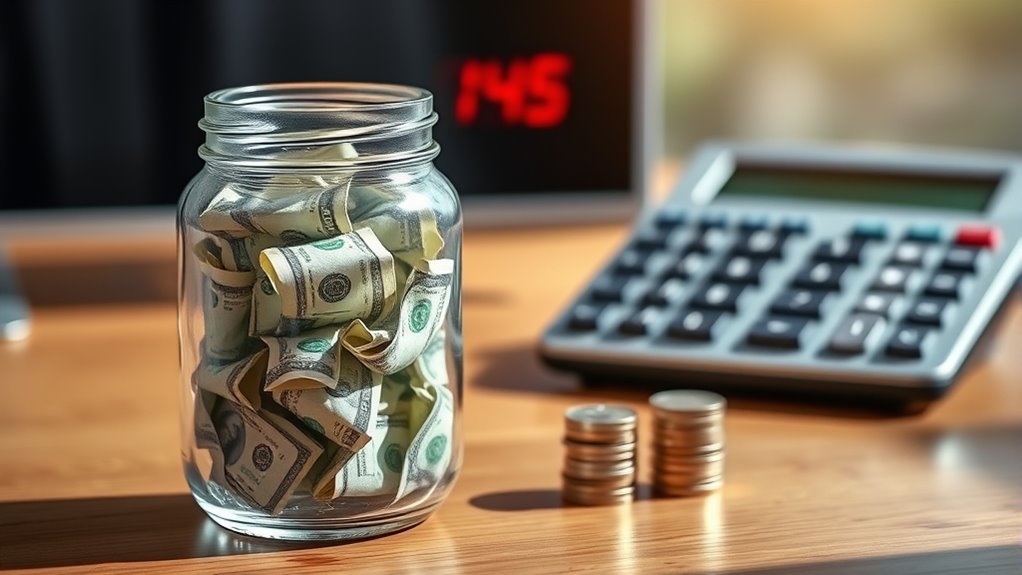
When inflation rises, it often leads to higher interest rates, but understanding how these two forces interact can be confusing. Essentially, as prices increase across the economy, central banks respond by raising interest rates to cool down spending and curb inflation. However, this doesn’t guarantee your savings will keep pace. If your savings are in a traditional bank account earning a fixed interest rate, inflation can erode its real value over time. For example, if you have money in cash or a low-yield savings account, the interest you earn might not be enough to offset the rising prices of goods and services. This means your purchasing power diminishes, and what you can buy today might cost markedly more in the future.
When it comes to investments like real estate, the picture becomes more nuanced. Real estate often acts as a hedge against inflation because property values tend to rise as prices increase. If you own property, its value might appreciate faster than inflation, helping preserve your wealth. Additionally, rental income from real estate investments can increase with inflation, providing a steady income stream that keeps pace with rising costs. Still, it’s important to remember that real estate isn’t immune to market fluctuations or interest rate impacts. Higher interest rates can make borrowing more expensive, slowing down property purchases and potentially dampening property price growth. So, while real estate can protect you from inflation, its performance during periods of rising interest rates depends on market conditions and your ability to finance investments.
Cryptocurrency introduces a different dynamic. Many see digital currencies like Bitcoin as a store of value that isn’t directly tied to inflation or traditional monetary policies. During high inflation, some investors turn to cryptocurrencies, hoping they will retain or increase their value. However, cryptocurrencies are highly volatile and can swing dramatically, making them a risky hedge. They aren’t backed by any physical assets or government guarantees, so their value depends largely on market sentiment. When inflation rises and interest rates go up, crypto prices can either surge due to investor demand for alternative assets or plummet if confidence wanes or if regulatory pressures increase.
Frequently Asked Questions
How Do Inflation Rates Vary Globally?
You’ll notice that inflation rates vary globally due to currency fluctuations and differing levels of economic stability. Countries with unstable economies often experience higher inflation, reducing your savings’ value faster. Conversely, stable economies with strong currencies tend to have lower inflation rates. This means your savings can lose value more quickly in some regions, so it’s vital to take into account economic stability and currency trends when managing international finances or investments.
Can Interest Rates Predict Inflation Trends?
Interest rates can help predict inflation trends because they reflect current monetary policy and influence future inflation forecasts. When central banks raise rates, they often aim to curb inflation, making higher interest rates a sign of anticipated inflation control. Conversely, falling rates may signal that policymakers expect weaker inflation. By analyzing interest rate movements and monetary policy adjustments, you can better anticipate potential inflation changes.
What Assets Outperform Savings During Inflation?
Like a vintage 80s arcade game, real estate and precious metals often outperform savings during inflation. You’ll find that investing in property or gold can help preserve your wealth, as these assets tend to appreciate or hold value when prices rise. Unlike cash, which loses purchasing power, real estate and metals act as a hedge, giving you a better shot at protecting your money amid inflationary pressures.
How Does Inflation Impact Fixed-Income Investments?
Inflation erodes the real value of fixed-income investments because, as inflation measurement rises and inflation expectations increase, your returns may not keep pace. When inflation expectations climb, interest rates often rise, reducing bond prices and your income’s purchasing power. You might think your fixed-income investments are safe, but if inflation outpaces their yield, you’ll see your money lose value over time despite steady interest payments.
Are There Safe Ways to Hedge Against Inflation?
Yes, you can hedge against inflation by diversifying your investments. Consider real estate, which often appreciates with inflation, providing a hedge. Cryptocurrency diversification also offers potential protection, as digital assets can outperform traditional investments during inflationary periods. Combining these strategies helps safeguard your savings, reducing the risk of losing value. Stay informed about market trends and adjust your portfolio accordingly to better protect your financial future.
Conclusion
Just like a river that keeps flowing, inflation constantly erodes your savings’ value, even when interest rates rise. So, you can’t just rely on interest earnings to beat inflation; it’s like trying to catch water with a net. To truly protect your money, consider investing in assets that outpace inflation. Stay proactive and keep your eyes open—otherwise, your savings might drift away like leaves on a stream, losing their worth over time.