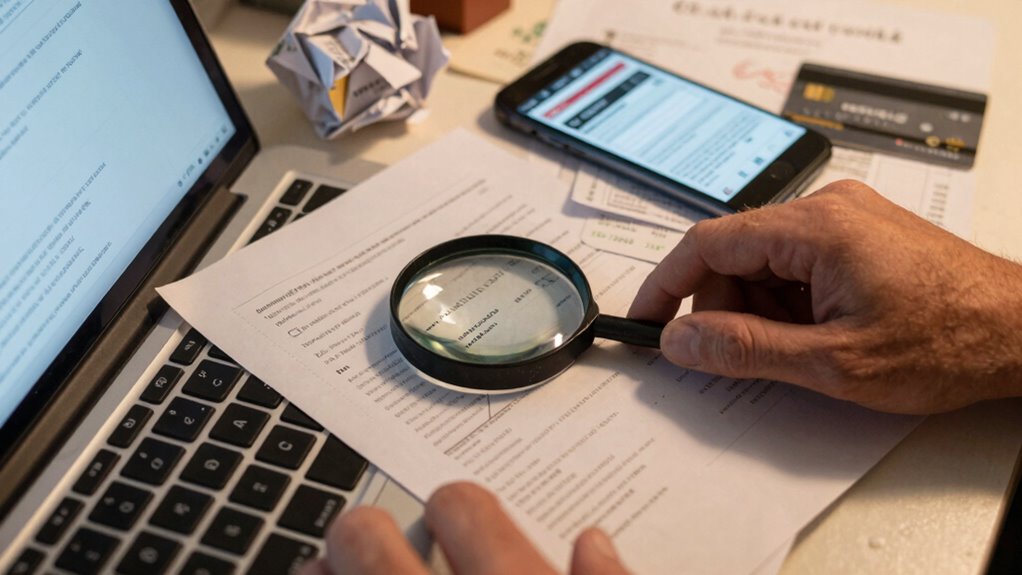

If you spot offers with unrealistically low prices, vague descriptions, or suspicious website details, you might be dealing with a scam. Watch out for pressure tactics, urgent messages, or requests for quick payment via gift cards or cryptocurrencies. Be wary of fake guarantees, unverified seller info, and poor website design. Always protect your personal info and double-check links or emails for phishing signs. Keep an eye out—more scam signals can help you stay safe when you pay closer attention.
Key Takeaways
- Look for offers that seem too good to be true, especially with unrealistic discounts or exaggerated claims.
- Be cautious of high-pressure tactics and time-limited deals that rush your decision-making.
- Verify seller credentials, reviews, and website security to confirm legitimacy before proceeding.
- Watch for suspicious payment requests like cryptocurrency, urgent upfront fees, or unverified transfer methods.
- Detect phishing signs such as suspicious email domains, spelling errors, or inconsistent contact information.
How Can You Recognize a Scam Offer Online?

Recognizing a scam offer online can be easier if you stay alert for common warning signs. Phishing scams often disguise themselves as legitimate messages, trying to trick you into revealing personal information. Be cautious of emails or links that seem suspicious or ask for sensitive data unexpectedly. Fake reviews are another red flag; they often appear overly positive or uniform, aiming to boost a product’s credibility artificially. Always verify reviews through multiple sources and check for inconsistencies or signs of manipulation. If an offer sounds too good to be true or pressures you to act quickly, take extra care. Staying vigilant and questioning unusual requests or suspicious content helps protect you from falling for scams and ensures you don’t get deceived by fake reviews or phishing scams. Additionally, being aware of common online scams can further enhance your ability to recognize deceptive offers. Paying attention to trust signals, such as secure website connections and verified contact information, can also help you avoid fraudulent schemes. Recognizing the importance of auditory cues, similar to visual warning signs, can further aid in identifying suspicious online activities. For example, inconsistent or overly urgent language in voice or text communications can be a red flag for scams. Furthermore, understanding the typical characteristics of legitimate offers can help differentiate authentic opportunities from scams.
What Are the Common Signs of Fake or Too-Good-to-Be-True Deals?

Have you ever come across a deal that seems almost too perfect to be true? If so, be cautious. One common sign of a fake or suspicious deal is the presence of counterfeit products. These offers often promise high-quality items at prices that seem unbelievable. Additionally, check the reviews—if they’re all glowing and overly positive, they might be fake reviews designed to lure you in. Be wary of deals that seem to lack detailed descriptions or have inconsistent images. Scammers often use these tactics to hide the fact that the product is counterfeit or subpar. Trust your instincts: if a deal feels too good to be true, it probably is. Always verify seller credibility before making any purchases. Also, be mindful of Berkley Vallone and other scams that utilize persuasive design elements to manipulate consumers. Recognizing common juice extraction techniques can help you spot fake health-related offers that promise quick results. Moreover, understanding electric bike specifications can prevent you from falling for deceptive listings that exaggerate performance features. Being aware of common online scam tactics can further help you identify fraudulent deals before falling victim. Staying informed about security measures in payment processing can also protect your financial information when shopping online.
How Do Urgent or Pressure Tactics Signal a Scam?
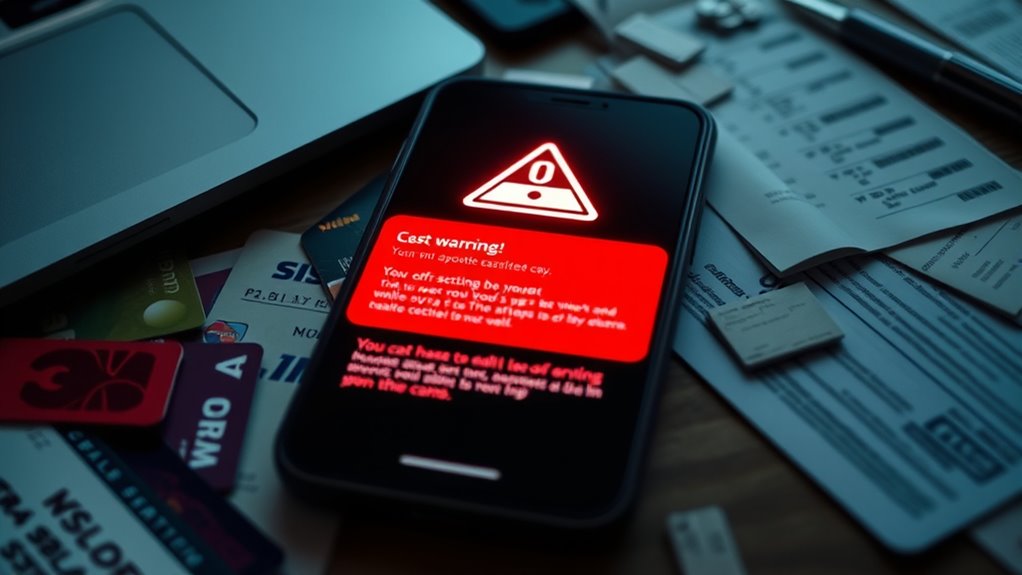
When someone pushes you to act quickly, it often triggers panic and clouded judgment. Limited-time offers are designed to pressure you into making impulsive decisions without thinking. These tactics create a sense of urgency that’s a common sign of a scam. Recognizing pressure tactics can help you stay alert and avoid falling victim to deceptive schemes. Being aware of trust signals can further assist in identifying legitimate offers and protecting yourself from fraud. Additionally, understanding smart home security features can help you verify the authenticity of online offers related to home safety devices.
Urgency Creates Panic
Urgency is a common tactic scammers use to make you act quickly without thinking. When you feel pressured, you might overlook warning signs like fake reviews or scam alerts that could reveal the scam. Scammers often create a sense of panic, making you believe you’ll lose out if you don’t act now. This rush prevents you from carefully analyzing the offer or verifying its legitimacy. They might insist that the deal is only available for a limited time or that urgent action is needed to avoid consequences. Recognizing this panic-inducing tactic helps you stay calm and scrutinize the offer more thoroughly. Always pause and double-check, especially if something feels off or if scam alerts have already warned you about similar schemes. Being aware of common scam tactics can help you identify red flags more effectively. Additionally, understanding how urgency creates panic can empower you to resist impulse decisions and protect yourself from potential fraud. Developing awareness of psychological manipulation techniques used in scams can further strengthen your defenses against hasty judgments, especially when high-pressure tactics are employed to cloud your judgment. Recognizing these tactics, along with understanding the impact of urgency, can significantly improve your ability to avoid falling for scams.
Limited Time Offers
Limited time offers often serve as a red flag because scammers use them to pressure you into making quick decisions. They create a sense of urgency with time limited deals or exclusive offers that seem too good to pass up. These tactics encourage you to act fast without thoroughly verifying the source, increasing your risk of falling for a scam. Beware of messages that push you to buy immediately, claiming the deal is ending soon or that only a few spots remain. Scammers rely on these tactics to override your caution, making you less likely to scrutinize the offer. Always take a moment to verify the legitimacy of such offers, especially when they seem overly tempting or rushed. Recognizing urgency signals can help you avoid falling victim to scams. If it feels too urgent, it’s probably best to pause and investigate further. User privacy and cookies are often compromised in scams that use urgency to bypass security measures. Being aware of common scam tactics can further protect you from falling prey to fraudulent schemes. Stay cautious of pressure tactics that are designed to make you act without thinking.
Pressure to Decide
How can you tell if a scam is trying to pressure you into quick decisions? Scammers often create a sense of urgency, pushing you to act fast with limited time offers or threats. They may use peer pressure, implying others are waiting or missing out, to nudge you into quick decisions. This tactic leaves little room for you to think or research, increasing the chance of falling for the scam. If someone insists you decide immediately or makes you feel guilty for taking time, it’s a red flag. Legitimate deals never demand instant commitment. Recognize these pressure tactics as signs to step back, ask questions, and take your time. Trust your instincts—rapid decisions are often a scammer’s best tool. Understanding scam tactics can help you stay alert and protect yourself from falling victim.
How to Check if the Seller or Website Is Legitimate?

To determine if a seller or website is legitimate, start by verifying their contact details to guarantee they’re real. Next, check for website security features like HTTPS to protect your information. Finally, research the seller’s reputation through reviews and trusted sources to confirm their credibility.
Verify Contact Details
Wondering if a seller or website is trustworthy? Start with contact verification. Check the provided phone number, email, and physical address to see if they’re consistent and active. Look for a professional email domain and avoid generic addresses like Gmail or Yahoo, which can be suspicious. Search online for reviews or feedback about the contact details; legitimate credentials often come with verifiable contact information. Call the phone number to confirm it’s working and belongs to the seller. If the website lists a physical address, verify its authenticity through maps or local directories. Authentic businesses usually have consistent contact details across their site and other platforms. By verifying contact details thoroughly, you reduce the risk of falling for scams and ensure you’re dealing with a legitimate seller.
Check Website Security
Is the website secure enough to trust with your personal and financial information? Check for website encryption by looking for “https://” at the start of the URL—this indicates data is protected. A secure site uses SSL certificates, ensuring your info is encrypted during transmission. Next, verify domain authenticity by examining the domain name carefully; look for misspellings or strange extensions that could signal a fake site. Legitimate businesses often have consistent branding and a professional appearance. Avoid sites without clear contact details or with suspicious URLs. By confirming website encryption and verifying domain authenticity, you reduce your risk of falling victim to scams and ensure your sensitive information stays safe. Always prioritize security before sharing any personal or financial data online.
Research Seller Reputation
Researching a seller’s reputation is vital before making any online purchase. Start with reputation checks by searching for reviews, ratings, and feedback from previous customers. Look for consistent positive experiences and verify seller credentials, such as contact information, business address, and registration details. Be cautious of sellers with limited or suspicious credentials, or those that avoid transparency. Conduct a quick online search to see if any scams or complaints are associated with the seller. Trustworthy sellers will have a solid reputation and transparent seller credentials. If something feels off, don’t hesitate to move on. Proper reputation checks help you avoid scams and guarantee you’re dealing with legitimate sellers. It’s an essential step in protecting your money and personal information.
What Are Suspicious Payment Methods Used by Scammers?

Have you ever received a request to make a payment through an unusual method? Scammers often use suspicious payment methods to trick you. Cryptocurrency scams are common because they’re hard to trace, making them attractive to fraudsters. They might ask for payments in Bitcoin or other digital currencies, claiming it’s quick and secure. Another red flag is when scammers pose as a fake charity, requesting donations via wire transfers or gift cards. These methods are difficult to recover and leave you vulnerable. Be wary of anyone insisting on fast payments or refusing traditional payment options. Always verify the legitimacy of the request before sending money. Recognizing these suspicious payment methods can help you avoid falling victim to scams.
How Can Fake Website Design and Branding Reveal a Scam?
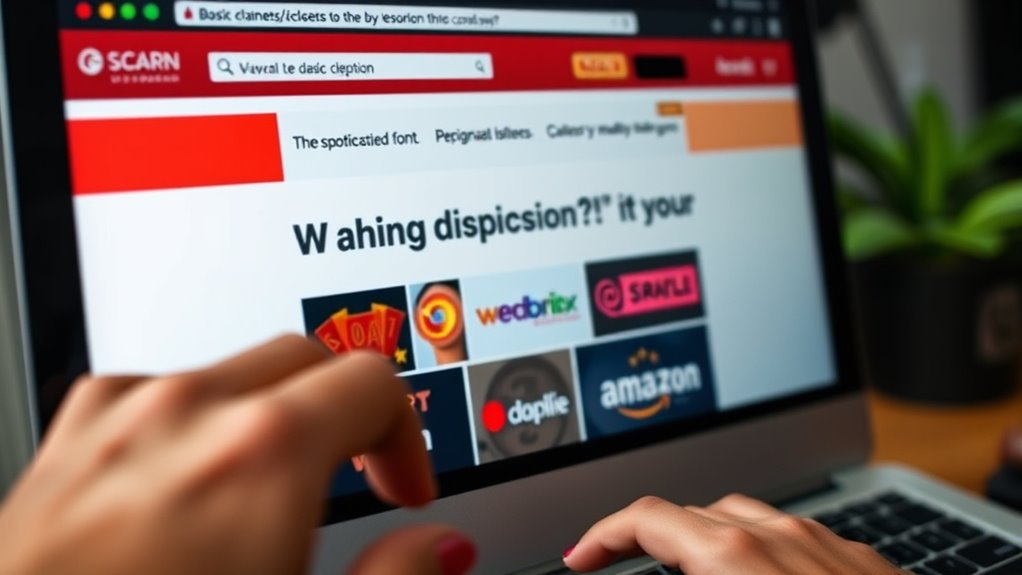
Fake websites often show poor visual consistency and low-quality graphics, making them look unprofessional. You might notice inconsistent branding elements, like mismatched logos or colors that don’t match official sites. These visual clues can help you spot scams before sharing personal information.
Poor Visual Consistency
When a website’s design and branding appear inconsistent or poorly executed, it often raises red flags about its authenticity. Fake sites often lack visual harmony, with mismatched fonts, colors, and images that clash or seem out of place. They also tend to lack branding consistency, showing different logos, slogans, or style elements that don’t align with the official brand. These visual inconsistencies can make the site appear rushed or unprofessional, signaling that it’s a scam. Authentic brands maintain a cohesive look across all pages, reinforcing trust and recognition. If you notice disjointed visuals or conflicting branding elements, it’s a strong indication that the website may not be legitimate. Pay close attention to these signs to avoid falling for a scam.
Low-Quality Graphics
Low-quality graphics are a clear warning sign that a website may not be legitimate. If the images look blurry, pixelated, or poorly designed, it suggests the site didn’t invest in professional branding. Fake testimonials often accompany these sites, sometimes using stock photos or generic names that don’t add credibility. These websites tend to cut corners with visual elements, making them look unprofessional and rushed. When you see low quality graphics paired with suspicious testimonials, it’s a strong indicator that the site is trying to deceive you. Always scrutinize the visuals; high-quality, consistent graphics usually reflect genuine businesses, while poor visuals hint at a scam. Trust your instincts and dig deeper if something seems off visually.
Inconsistent Branding Elements
Inconsistent branding elements are a telltale sign that a website might not be trustworthy. When visual branding isn’t cohesive, it raises suspicion, signaling that the site may be a scam. Genuine brands maintain branding consistency across all pages, using uniform logos, colors, and fonts. If you notice mismatched logos, varying color schemes, or inconsistent font styles, it’s a red flag. Fake websites often neglect careful visual branding, making their design look sloppy or unprofessional. These discrepancies can indicate that the site lacks legitimacy or is trying to deceive you. Pay close attention to how the branding elements align throughout the site—authentic sites prioritize visual branding that’s seamless and consistent. Spotting these inconsistencies can help you avoid falling victim to online scams.
How to Verify Seller Reputation and Read Customer Reviews?
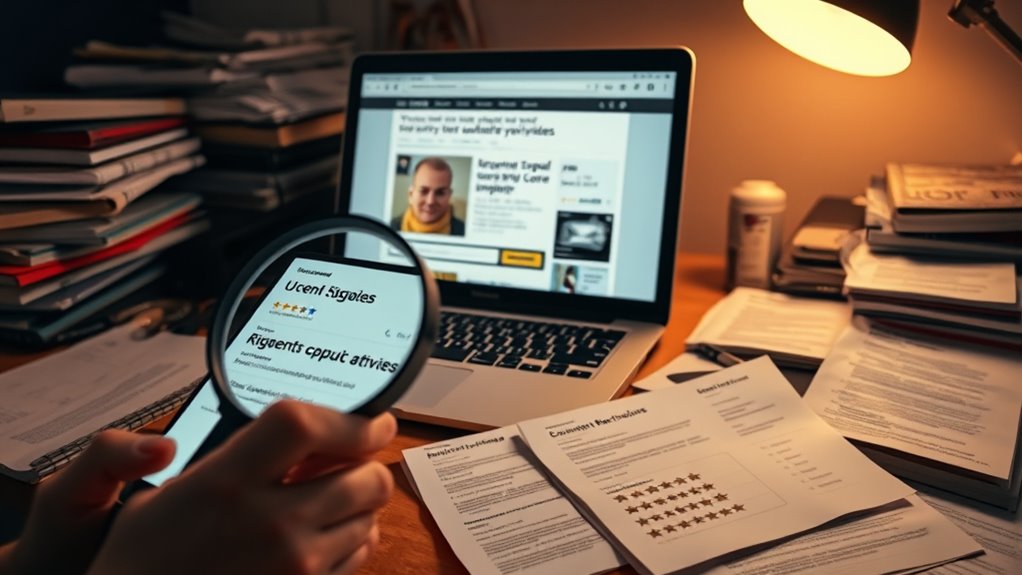
Ever wonder how to quickly determine if a seller is trustworthy? Start by checking seller ratings on trusted platforms—high ratings generally indicate reliability. Next, read customer feedback carefully; look for consistent positive comments or warning signs like unresolved complaints or negative trends. Pay attention to the details in reviews—specifics about product quality, shipping speed, and customer service matter more than vague praise. Cross-reference reviews across multiple sites to spot patterns. Be cautious if reviews seem overly generic or if most are recent and negative. Remember, reputable sellers usually have a solid track record and transparent feedback. Verifying these signals helps you avoid scams and guarantees a safer online shopping experience.
Why You Should Be Cautious About Upfront Payments and Fees?
You should be cautious about upfront payments and fees because scammers often ask for money before delivering any goods or services, making it easy for them to disappear with your funds. Payment scams thrive on this trust, convincing you to pay early for promises that may never materialize. Upfront fee risks are especially high when offers seem too good to be true or pressure you to act quickly. Always question why a legitimate business would require full payment upfront, especially for unknown or unverified vendors. Reputable companies usually allow payment after delivery or offer secure payment options. If asked for an upfront fee, consider it a red flag. Protect yourself by researching thoroughly and avoiding deals that prioritize quick payments over trust and transparency.
How to Spot Fake Guarantees and Unrealistic Promises?
Fake guarantees and unrealistic promises are common tactics scammers use to lure victims and make their schemes seem legitimate. They often rely on fake reviews and scam testimonials to build false trust, making their offers appear more credible. If an offer promises overnight riches or guarantees success regardless of effort, it’s a red flag. Be wary of claims that seem too good to be true, especially when they lack specifics or proof. Check for inconsistencies or overly enthusiastic endorsements, which are often fake reviews designed to manipulate your perception. Remember, legitimate companies don’t promise guaranteed results or quick fixes. If something feels suspicious or too perfect, take a step back, do your research, and verify the credibility of the guarantees before proceeding.
What Personal or Financial Info Should You Avoid Sharing Unnecessarily?
Sharing unnecessary personal or financial information can open the door for scammers to steal your identity or drain your accounts. It’s important to set clear personal boundaries and avoid revealing details like your social security number, full address, or bank account numbers unless absolutely necessary. Be cautious about sharing financial boundaries, such as your credit card information or login credentials, especially in unsolicited emails or messages. Legitimate organizations rarely ask for sensitive info through insecure channels. Trust your instincts—if something feels off or too intrusive, don’t share. Protect your privacy by only providing essential details on secure, trusted platforms. Keeping personal and financial boundaries intact helps prevent scams and keeps your information safe.
How to Detect Phishing Signs in Scam Emails or Messages?
Detecting phishing signs in scam emails or messages requires careful attention to detail, as scammers often try to mimic legitimate communications. Watch for email spoofing, where the sender’s address looks authentic but isn’t. Check the sender’s email address closely for subtle changes or misspellings. Domain impersonation is also common; scammers create fake websites that resemble real ones to steal your info. Be wary of urgent language or unexpected requests for personal or financial data. Look for inconsistencies in the email’s tone, grammar, or formatting. Hover over links to see if the URL matches the legitimate site; avoid clicking on suspicious links. Recognizing these signs helps you avoid falling victim to scams that rely on deception through email spoofing and domain impersonation.
When and How to Trust Your Instincts and Report Online Scams?

Recognizing the signs of scams isn’t always straightforward, but trusting your instincts can be a powerful tool. If something feels off—like pressure to act quickly, unrealistic promises, or odd communication styles—trust instincts and take a moment to evaluate. When in doubt, don’t hesitate to report scams to the appropriate authorities or platform. Reporting scams helps protect not only yourself but others as well. Know that your intuition is often a reliable warning system, so listen to it. If you suspect an offer or message is a scam, act immediately by reporting it. Your proactive response can prevent financial loss and stop scammers from targeting others. Trust your instincts, stay alert, and report scams promptly to stay safe online.
Frequently Asked Questions
Can Legitimate Companies Also Have Scam-Like Online Offers?
Yes, legitimate companies can sometimes have scam-like online offers, especially if their marketing strategies aren’t well-managed or if their reputation gets compromised. You should always check reviews and verify their credibility before trusting any deal. Even reputable companies can make mistakes, so stay vigilant. Recognizing red flags helps you protect yourself from potential scams, ensuring you’re dealing with authentic offers backed by a trustworthy reputation.
Are Social Media Ads More Likely to Be Scams?
Yes, social media ads are more likely to be scams because social media deception is common, and ad credibility can be questionable. You should be cautious when clicking on ads, especially if they promise quick money or free offers. Always verify the legitimacy of the source and look for signs of scam signals. Trust your instincts, and don’t share personal info unless you’re sure the offer is genuine.
How Often Do Scammers Update Their Tactics?
Scammers update their tactics frequently to stay ahead of detection, with the pace of scammer evolution accelerating as they adapt to new security measures. They often revise their tactics update every few weeks or months, making it essential for you to stay vigilant. By regularly educating yourself on the latest scam trends and red flags, you can better recognize and avoid these ever-changing online threats.
What Legal Actions Are Available Against Online Scammers?
You can pursue legal remedies like reporting scammers to authorities such as the FTC or your local consumer protection agency. These organizations can investigate and take action against online scammers. Additionally, you may have the right to file a lawsuit for fraud or breach of contract. Consumer protections aim to safeguard you from scams, so always document your interactions and seek legal advice if you’ve been targeted online.
How Can I Educate Others About Scam Signals Effectively?
Think of yourself as a digital detective, always alert to spotting scam signals. To educate others effectively, share real-life examples of identifying phishing techniques and recognizing counterfeit websites. Use clear, simple language and demonstrate how to spot suspicious URLs or urgent messages. Encourage them to stay cautious, ask questions, and verify sources before clicking. Your proactive guidance can empower others to avoid falling prey to online scams.
Conclusion
Stay vigilant, because scammers are always evolving, hiding behind convincing facades. Trust your instincts and double-check every offer before clicking. One false move could lead to serious consequences you didn’t see coming. The red flags are there—are you paying attention? Keep your guard up and stay one step ahead. The next suspicious email or shady deal could be the one that finally reveals their true intent. Will you recognize it in time?