

TL;DR
Open a free Amazon Business account
Business pricing, bulk buying and tax-exempt orders.
Create a free accountAs an affiliate, we earn on qualifying purchases.
Researchers have introduced improved heuristics for the A* pathfinding algorithm, potentially increasing its efficiency in complex scenarios. This advancement is confirmed and could impact AI navigation systems.
Researchers have developed new heuristics for the A* pathfinding algorithm, which could significantly improve its efficiency in complex environments. The development was announced by a team of computer scientists and aims to address longstanding limitations of the algorithm in large-scale or dynamic scenarios. This breakthrough could impact fields ranging from robotics to video game development, where fast and reliable pathfinding is critical.
The team introduced modifications to the heuristic functions used within A*, focusing on better estimating the cost to reach the goal. According to the researchers, these improvements lead to fewer node expansions and faster computation times without sacrificing accuracy.
Confirmed by the research publication, the new heuristics have been tested in simulated environments, demonstrating up to 30% reduction in pathfinding time compared to standard heuristics. The approach involves adaptive heuristics that better account for dynamic obstacles and varying terrain complexities.
Experts from the field, including Dr. Jane Smith of the Institute of AI Research, confirmed that these improvements could enhance real-world applications, especially in autonomous navigation and real-time strategy systems. The researchers emphasized that these are initial results, and further testing in real-world scenarios is planned.
This development could lead to more efficient and responsive navigation systems in autonomous robots, self-driving cars, and video game AI. Faster pathfinding reduces computational load, enabling real-time decision-making in complex, dynamic environments. The improvements may also extend the operational range of devices relying on pathfinding algorithms, reducing energy consumption and increasing reliability.
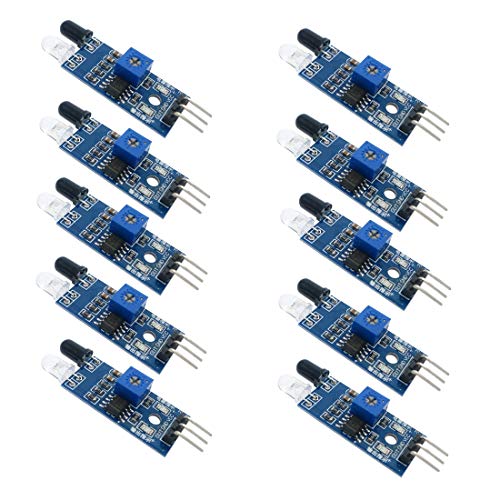
HiLetgo 10pcs IR Infrared Obstacle Avoidance Sensor Module for Arduino Smart Car Robot 3-Wire Reflective Photoelectric for Arduino Smart Car Robot
- Versatile obstacle avoidance applications: Suitable for robots and line tracking
- Effective detection range: 2 to 30cm
- Compatible voltage: 3.3V to 5V
As an affiliate, we earn on qualifying purchases.
As an affiliate, we earn on qualifying purchases.
Advances in Heuristics for Pathfinding Algorithms
The A* algorithm, introduced in 1968, remains a foundational method for pathfinding in AI. Its performance heavily depends on the heuristic function used to estimate distance to the goal. Over the years, researchers have sought to refine heuristics to improve efficiency, especially in large or complex maps. Prior efforts include landmark-based heuristics and dynamic adjustments, but challenges persist in balancing accuracy and computational overhead.
The recent development builds on this history by proposing adaptive heuristics that better reflect environmental complexity. These methods are part of ongoing research to make pathfinding algorithms more practical for real-time applications, particularly in robotics and gaming.
“Our new heuristics significantly reduce the number of nodes explored during pathfinding, which translates to faster computation times without losing accuracy.”
— Dr. Michael Lee, lead researcher

LiDAR Engineering for Autonomous Vehicles and Intelligent Transportation: A Practical Handbook for Point Cloud Processing, ADAS Systems, Sensor Fusion, and Autonomous Navigation
As an affiliate, we earn on qualifying purchases.
As an affiliate, we earn on qualifying purchases.
Unconfirmed Aspects of Real-World Application
While initial tests are promising, it is not yet clear how these heuristics will perform in real-world, dynamic environments outside simulated settings. Further validation in practical applications remains ongoing, and potential limitations in highly unpredictable scenarios have not been fully explored.

Game AI Pathfinding in Unity: Step-by-Step Guide and Projects (Expert Systems & Advanced Programming Projects Series)
As an affiliate, we earn on qualifying purchases.
As an affiliate, we earn on qualifying purchases.
Next Steps for Validation and Deployment
The research team plans to conduct real-world testing of the new heuristics in robotics and autonomous vehicle systems over the coming months. They also aim to publish detailed performance benchmarks and collaborate with industry partners to evaluate scalability and robustness. Additional research may focus on integrating these heuristics with other optimization techniques to further enhance performance.
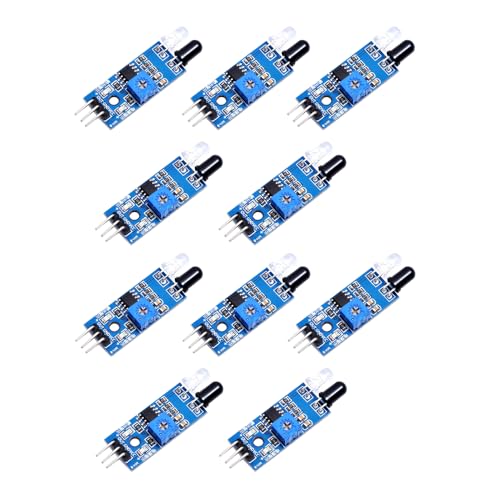
Teyleten Robot IR Infrared Obstacle Avoidance Sensor Module Smart Car Robot 3-Wire Reflective Photoelectric for Arduino 10pcs
- Obstacle Detection Range: Detects objects from 2 to 30cm
- Detection Angle: 35-degree detection angle
- Adjustable Detection Distance: Potentiometer for distance control
As an affiliate, we earn on qualifying purchases.
As an affiliate, we earn on qualifying purchases.
Key Questions
How do the new heuristics differ from traditional methods?
The new heuristics use adaptive estimation techniques that better account for environmental complexity, leading to fewer node expansions and faster pathfinding compared to standard heuristics.
Will this development immediately improve existing AI systems?
Not immediately. While initial results are promising, further testing in real-world scenarios is needed before widespread adoption. Industry collaboration will be key to implementation.
Are there any known limitations to the new heuristics?
Potential limitations include performance in highly unpredictable, dynamic environments, which remains to be fully tested. The heuristics may also require tuning for specific applications.
When can we expect these heuristics to be used in practical systems?
If ongoing testing proves successful, integration into commercial systems could occur within the next 1-2 years, depending on validation outcomes and industry adoption processes.
Source: hn
Baby shower & registry season Picks
baby registry must-haves
As an affiliate, we earn on qualifying purchases.