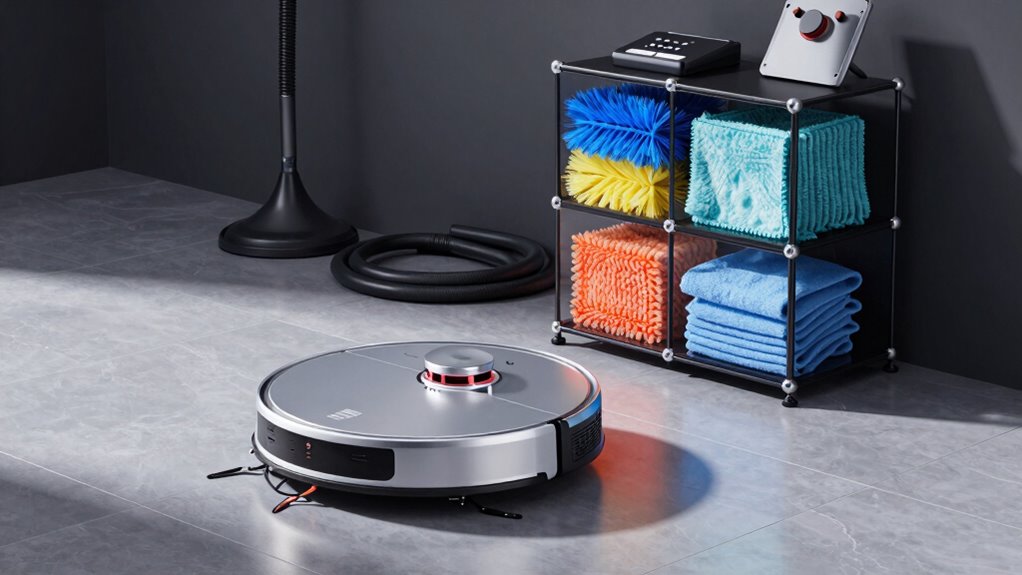

To build a robot-supported cleaning system, focus on integrating advanced navigation like SLAM for accurate mapping and real-time localization. Combine data from sensors such as infrared, ultrasonic, and lidar to improve obstacle detection and environment understanding through sensor fusion. Position sensors strategically to cover the area thoroughly and avoid blind spots. Guarantee the system adapts to moving obstacles and changes in the environment for efficient cleaning. Keep exploring these keys to develop a smart, reliable cleaning robot.

Prime made for students and young adults
- Fast, free delivery for dorm and study essentials
- Prime Video and Amazon Music included
- Member-only deals
Key Takeaways
- Incorporate advanced SLAM technology for accurate real-time mapping and navigation.
- Utilize multiple sensors (LiDAR, ultrasonic, IR) for comprehensive environment perception.
- Design adaptive path planning algorithms for efficient and thorough cleaning coverage.
- Ensure robust sensor placement to minimize blind spots and improve obstacle detection.
- Implement sensor fusion techniques to enhance obstacle avoidance and environment understanding.
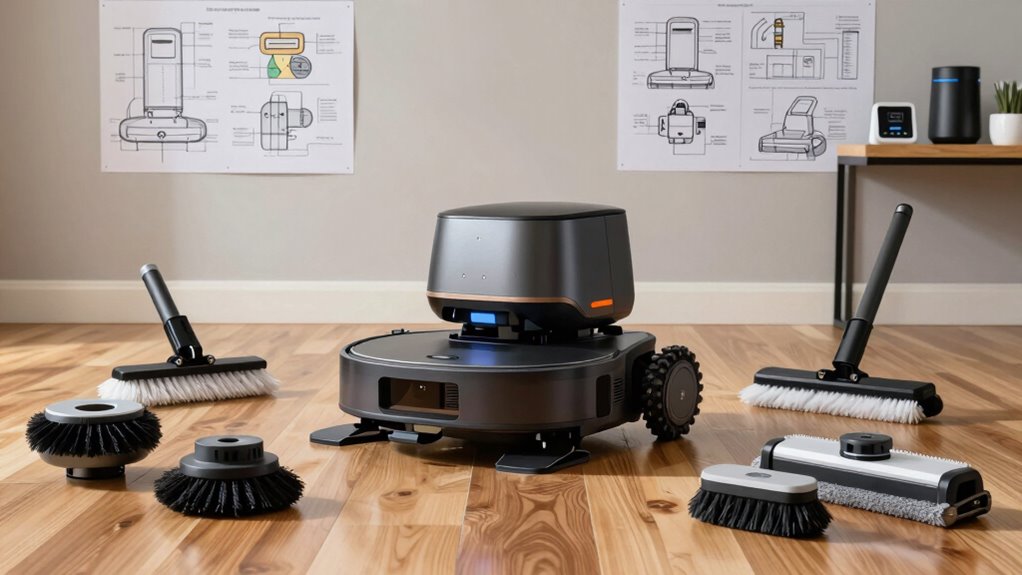
Creating a cleaning system that a robot can support requires careful planning and design. You need to focus on how the robot will move around and interact with the environment, which means paying close attention to robot navigation and sensor integration. These elements are essential because they determine the robot’s ability to clean efficiently without getting stuck or missing spots.
Start by considering how your robot will navigate your space. You want it to move smoothly and intelligently, avoiding obstacles while covering every inch of the area. To do this, you should implement a reliable navigation system that combines various techniques, such as simultaneous localization and mapping (SLAM). SLAM allows the robot to build a map of your environment and keep track of its position within that map in real time. This way, it can plan the most efficient cleaning path and adapt if furniture moves or new obstacles appear. Incorporating sensor fusion techniques can further improve the robot’s understanding of its surroundings by combining data from multiple sensors for more accurate perception.
Sensor integration plays a key role in enhancing navigation capabilities. Equipping your robot with a variety of sensors—like infrared, ultrasonic, or lidar—helps it detect objects and boundaries accurately. For example, lidar sensors can create detailed 3D maps of your space, enabling precise obstacle detection and navigation. Ultrasonic sensors provide additional safety layers by sensing nearby objects and preventing collisions. Infrared sensors can help the robot detect edges, such as stairs or ledges, reducing the risk of falls. When you properly integrate these sensors into your system, the robot gains a more thorough understanding of its environment, which greatly improves its cleaning efficiency and safety. Additionally, sensor placement is crucial to ensure comprehensive environmental coverage and avoid blind spots. Proper sensor placement and integration help your robot create accurate maps, recognize obstacles, and optimize its cleaning route.
robot vacuum with SLAM navigation
As an affiliate, we earn on qualifying purchases.
As an affiliate, we earn on qualifying purchases.
Frequently Asked Questions
What Are the Cost Implications of Implementing a Robotic Cleaning System?
Implementing a robotic cleaning system involves upfront costs for equipment and installation, but can lead to long-term savings. You should conduct a thorough cost analysis to understand expenses like maintenance and software updates. Incorporate these findings into your budget planning to guarantee you allocate sufficient funds. While initial investments might be high, automation can reduce labor costs and improve efficiency, making it a worthwhile financial decision over time.
How Do I Ensure My Cleaning System Is Eco-Friendly?
To guarantee your cleaning system is eco-friendly, choose eco-friendly materials like biodegradable wipes and non-toxic cleaning solutions. Incorporate sustainable practices such as using energy-efficient robots and reducing water waste. Regularly maintain your equipment to prolong its lifespan, minimizing waste. Opt for recyclable packaging and support brands committed to sustainability. By prioritizing eco-conscious choices, you create a cleaning system that’s environmentally responsible and healthier for everyone involved.
Can Existing Cleaning Systems Be Upgraded for Robot Support?
Yes, you can upgrade existing cleaning systems for robot support, turning them into smart, responsive machines. Think of adding smart sensors as giving your system eyes and ears, while integrating advanced power management keeps the robot energized without waste. With these upgrades, your current setup transforms into a more efficient, robot-friendly environment. It’s like giving your cleaning system a brain and stamina, making robot integration seamless and effective.
How to Train Staff to Maintain Robotic Cleaning Systems?
You need to focus on staff training that emphasizes proper maintenance protocols for robotic cleaning systems. Start with hands-on sessions to familiarize your team with the robots’ functions and troubleshooting steps. Regularly update training materials to reflect system upgrades, and encourage open communication for reporting issues. By empowering your staff with knowledge and clear protocols, you’ll guarantee smooth, efficient operation and longevity of your robotic cleaning systems.
What Are Common Troubleshooting Issues With Robotic Cleaning Systems?
You might encounter troubleshooting issues with robotic cleaning systems related to sensor calibration and navigation algorithms. If the robot struggles with mapping or avoiding obstacles, check and recalibrate sensors to guarantee accuracy. Also, update or reset navigation algorithms if the robot veers off course or gets stuck. Regularly maintaining these components helps prevent common problems, keeping your robotic cleaner running smoothly and efficiently.
As an affiliate, we earn on qualifying purchases.
Conclusion
Now that you’ve laid the groundwork, think of your cleaning system as a sturdy bridge your robot can confidently cross. When you guarantee proper design, quality components, and smart integration, you’ve built a highway for your robot’s efficiency. With this solid foundation, your robot will glide smoothly through chores like a boat sailing effortlessly on calm waters. Remember, a well-supported system isn’t just a tool—it’s the backbone of a cleaner, smarter future.
ultrasonic obstacle detection sensor
As an affiliate, we earn on qualifying purchases.
As an affiliate, we earn on qualifying purchases.
infrared edge detection sensor for robots
As an affiliate, we earn on qualifying purchases.
As an affiliate, we earn on qualifying purchases.
Halloween Picks
halloween
As an affiliate, we earn on qualifying purchases.